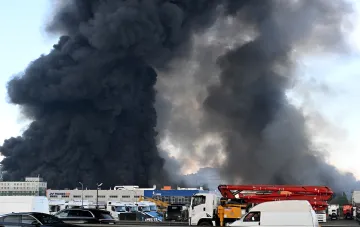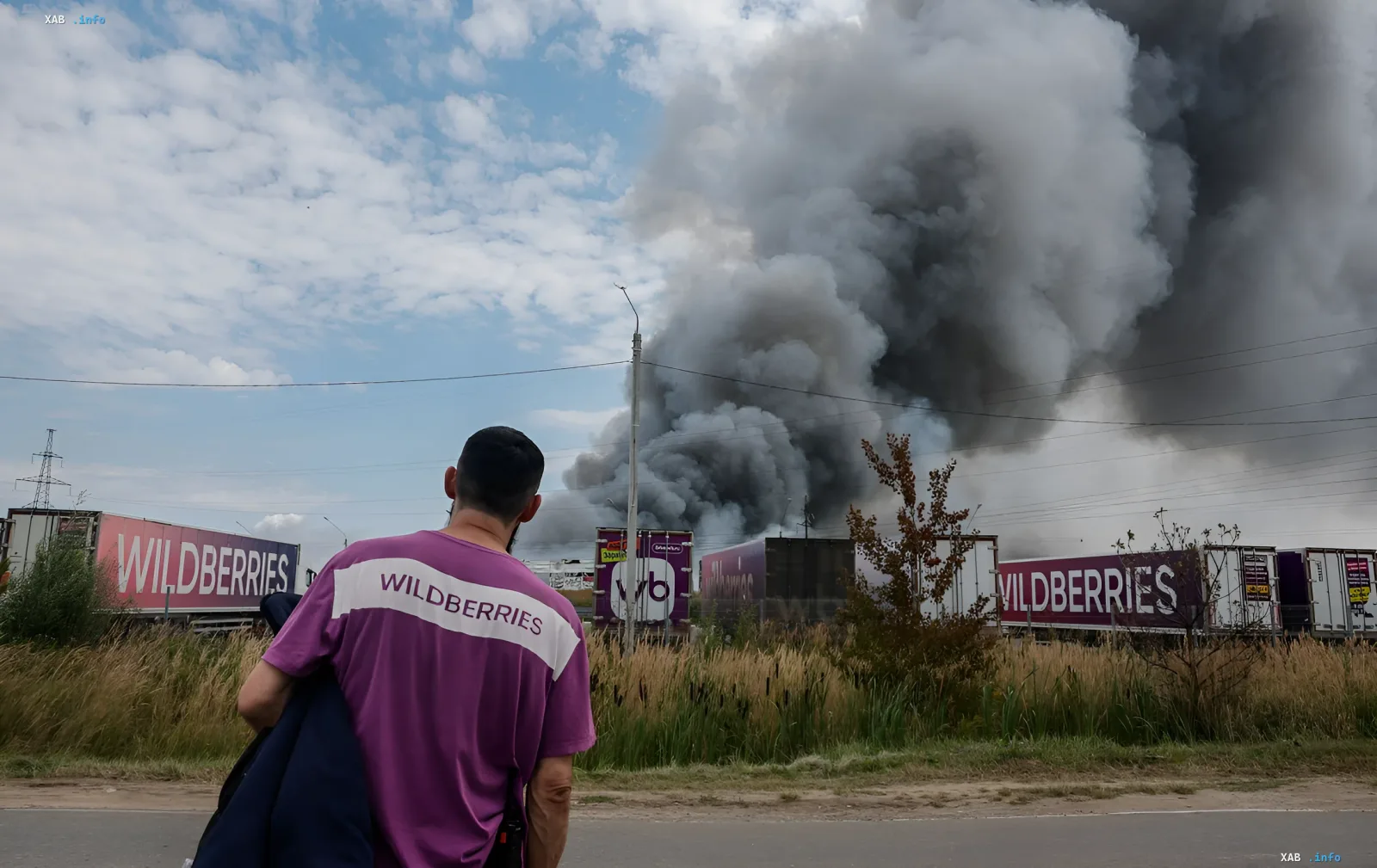
On the night of August 26, 2026, Ukrainian drones struck the logistics infrastructure of Russia's largest marketplace, Wildberries. According to local authorities, the company's logistics center in Kotovsk, Tambov Oblast, was attacked and a fire broke out; reports say the complex burned down completely or almost completely and has ceased operations. This incident marks the eighth time one of the marketplace's ten largest logistics hubs has been disabled since mid-July, when, according to available information, a series of strikes on Wildberries' warehouse network began.
Course of strikes on the marketplace's logistics
According to the summary, by August 26 Ukrainian strikes had already disabled seven of Wildberries' largest warehouses, and the attack on Kotovsk brought the number of non-operational facilities to eight out of ten. At the same time, it is noted that not all sites under fire have ceased functioning: the warehouses in Yekaterinburg (around 157,000 sq. m) and in Tatarstan (around 150,000 sq. m) continue to operate after the attacks. Thus, the strikes are concentrated on the largest nodes of the network, but their effect is uneven — some facilities are being restored or operating in a limited mode.
Scale of losses: over 81% of the area
In total, Wildberries' ten largest warehouses occupy about 1.6 million sq. m, according to the data provided. If more than 1.3 million sq. m have been disabled, this amounts to losses of over 81% of the area of the marketplace's flagship warehouse network. This means that the strikes affect not individual facilities but systematically undermine the bulk of the company's logistics framework, which inevitably impacts delivery times, warehouse stock levels, and the business's operational model on a nationwide scale.
Repeated strike on Kotovsk
The key detail of the night of August 26 is that Kotovsk is not being targeted for the first time. As early as July 18, the Wildberries warehouse in this city was hit: then, according to available data, a fire killed seven employees, and the facility temporarily suspended operations. The repeated strike, nearly six weeks later, reportedly led to the complex burning down almost entirely. The fact that the same node has been hit again indicates that the marketplace's logistics centers are being treated as sustained, rather than one-off, targets.
Contradictory data
Accounts of the consequences of the night strike on August 26 specifically diverge. The core of the story and some reports emphasize the fire and the shutdown of the complex, while the human casualties (seven killed) are tied to the earlier incident of July 18. At the same time, some sources report deaths directly during the August 26 attack, while others mention only a single injured person. Thus, the exact number of casualties and fatalities resulting specifically from the latest attack on Kotovsk is not unambiguously confirmed at the time of writing and requires additional verification from official sources.
Geopolitical context: the "coalition of the willing"
Against the backdrop of these events, according to available information, as a result of the work of the "coalition of the willing," world leaders concluded that Ukrainian "long-range sanctions" against Wildberries could become an additional lever of pressure to force Russia back to negotiations. This framing underscores that strikes on civilian logistics infrastructure are being moved beyond a purely military operation and are being understood as a tool of economic and political pressure. Regardless of assessments, the combination of large-scale losses of warehouse area and repeated strikes on the same nodes makes the marketplace's logistics one of the most vulnerable and simultaneously significant targets in the current campaign.