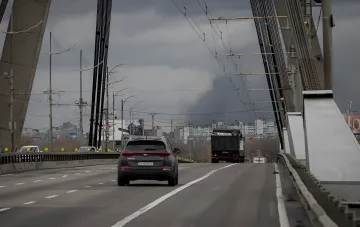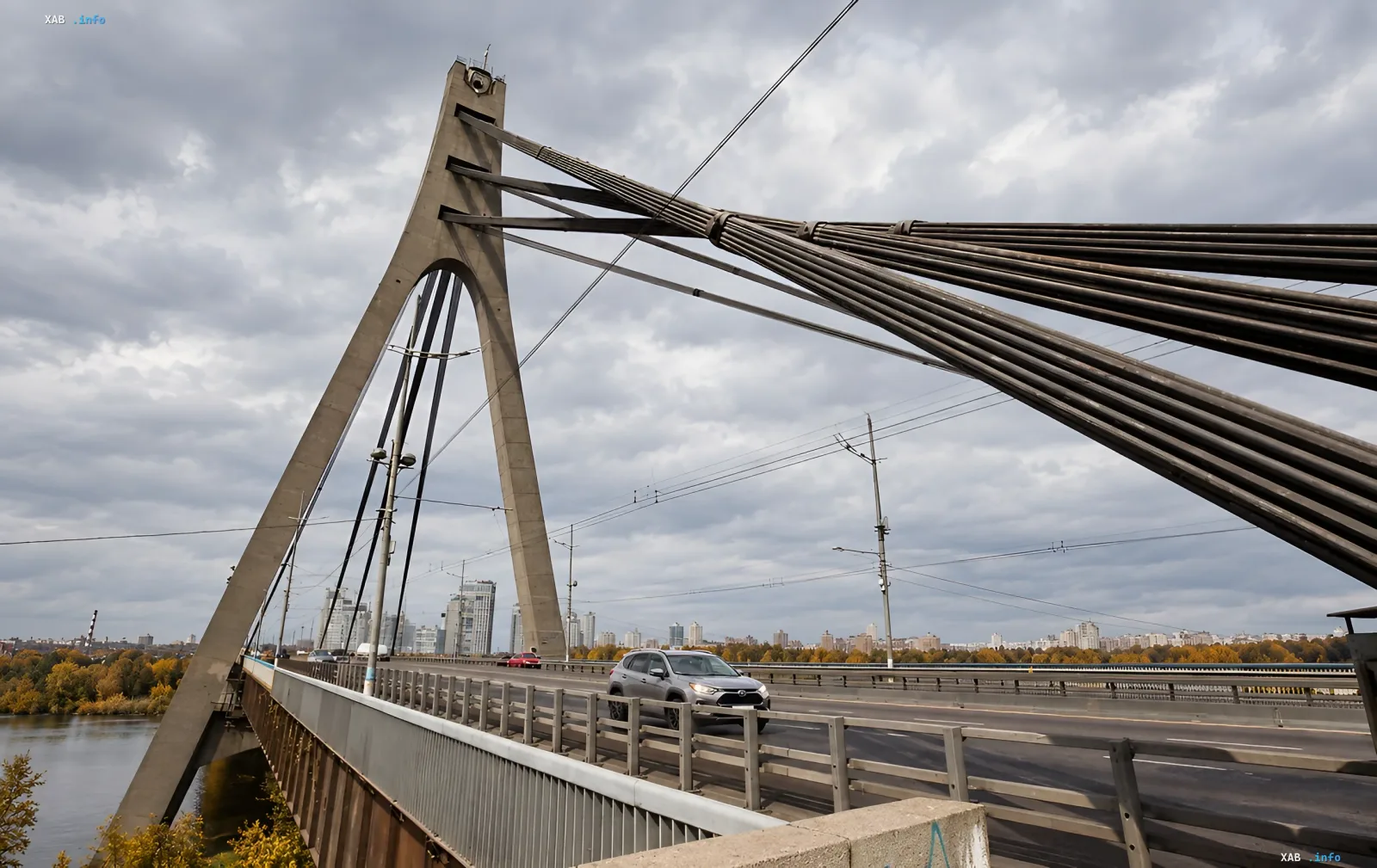
The threat to infrastructure objects in the Ukrainian capital remains one of the most discussed topics in the expert community. The question of whether Kyiv's crossings can withstand targeted missile strikes by the Russian Federation has acquired special relevance amid regular air attacks. Transport planning expert Dmytro Bespalov in his recent interview analyzed in detail the technical condition of the bridges across the Dnipro and assessed the real scale of potential destruction.
Strike precision and structural stability of crossings
The specialist admitted that he is still shocked by the enemy's ability to deliver pinpoint strikes on critical infrastructure elements. Hitting a specific connection, such as where a beam rests on a support, is an extremely difficult task even for modern high-precision weapons. According to some experts, such precision may be ensured through the use of special repeaters.
What happens if stays and cables are damaged
One of the most alarming scenarios considered by citizens and the media is the damage or complete severing of cable-stayed ropes on the capital's bridges. However, the engineering features of such structures provide a certain margin of safety. Even if all cables are seriously damaged, a cable-stayed bridge can actually be converted into a beam structure. Similar technological solutions are already used on the Metro Bridge, where temporary supports maintain the arch system, and can also be installed under the South Bridge in case of critical necessity.
Contradictory data
In the expert community and open sources, there are various assessments of the goals and scale of potential strikes on Kyiv's transport arteries. Some analysts claim that the enemy's goal is the complete isolation of the left and right banks of the capital to paralyze logistics. At the same time, transport experts lean towards the fact that destroying massive bridges using a limited number of drones or missiles is impossible, and the main goal of the attacks is psychological pressure and the destruction of the urban economy through transport collapse.
Experts emphasize that transport plays a key role in the ability of business to function, create regional gross product, and pay taxes. Strikes on bridges are aimed not so much at military targets as at the city's life support infrastructure, which experts qualify as a terrorist act aimed at destabilizing the rear.