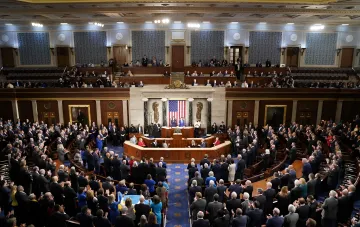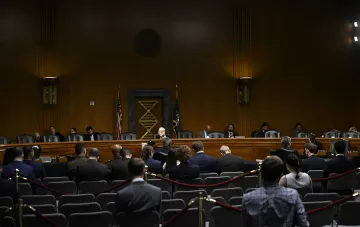
A political campaign is gaining momentum in Washington to introduce a new, unprecedented package of sanctions against the Russian Federation. A bipartisan group of US senators has issued a resolute call: the bill, which the late Senator Lindsey Graham worked on for over two years, must be put to a vote as soon as possible. The document, which has the support of the White House, contains pressure mechanisms that were previously proposed by President Donald Trump.
Political Consensus and Rejection of Amendments
On July 14, a group of lawmakers held a joint press conference where they voiced their position: the document has already been coordinated with the administration and enjoys broad support among both Democrats and Republicans. The senators emphasized that it is inadvisable to open the bill to new amendments. According to them, this is the result of nearly two years of negotiations, containing complex technical mechanisms that do not require revision.
House Speaker Mike Johnson supported the initiative, stating that an overwhelming majority of Republicans share this position. He noted that the Senate and the White House have already developed a formula that, in their opinion, will work effectively.
Response to Trump's Proposal
The senators' decision to advance the document in its current form became a direct response to recent statements by Donald Trump. The President previously suggested that sanctions related to Iran or the "Hezbollah" group could be added to the bill.
However, the bill's co-author, Democratic Senator Richard Blumenthal, stated that the President supports precisely this bill, and progress should be made with it rather than diluting it with other objectives. "If the administration wants to propose separate legislative initiatives regarding Iran or 'Hezbollah', Congress can consider them separately," Blumenthal emphasized.
According to the senator, the adoption of the law should be a response to Russian attacks against the civilian population of Ukraine, and any delay could lead to new casualties.
Targeted Sanctions and "Shadow Fleet"
The new document provides for strict measures against Russian companies, oligarchs, and intermediaries. A key change is the sphere of secondary sanctions and duties regarding buyers of Russian oil and gas. During negotiations with the White House, lawmakers significantly narrowed the scope of application: while the first draft covered more than 60 countries, the document now focuses only on five major oil importers and five natural gas importers.
Furthermore, the authors reported an important innovation: for the first time, a separate section of the bill is aimed at combating Russia's so-called "shadow fleet." This refers to a network of tankers that Moscow uses to bypass international restrictions and export energy carriers. Blumenthal noted that the new edition contains effective tools to limit the activities of this fleet, which should significantly hinder Russia's ability to generate revenue from the sale of resources.
Lindsey Graham's Legacy and Voting Timelines
The senators also view the adoption of the bill as a tribute to Lindsey Graham, who was one of the main initiators of strengthening sanctions pressure on Russia. Graham managed to coordinate the final version with the Trump administration shortly before his death.
Lawmakers expressed confidence that the document will be adopted before the August recess. Republican Majority Leader John Thune is ready to put it to a vote as soon as the necessary number of votes is confirmed. In the opinion of the authors, such support already exists.