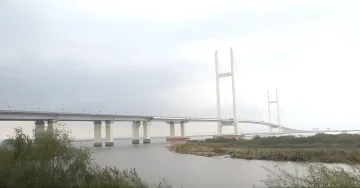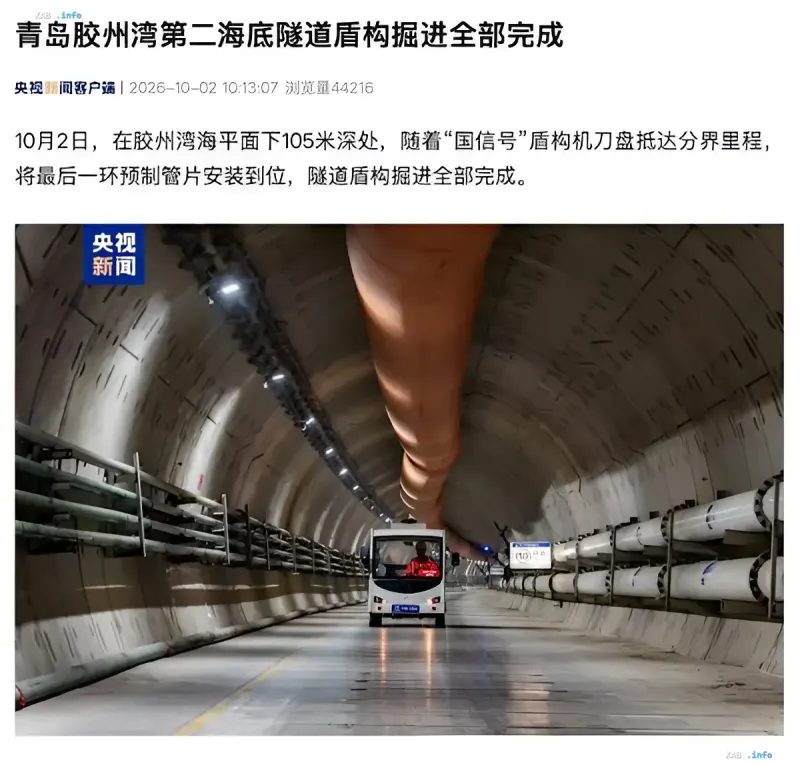
China has successfully completed a critical phase of a massive infrastructure project — the shield tunneling of the second underwater road tunnel beneath Jiaozhou Bay in the coastal city of Qingdao. The final heavy-duty tunneling machine reached its designated point at a record depth of 105 meters below sea level, marking the complete conclusion of all shield excavation work on the project. This grandiose engineering triumph reinforces China's leading position in the field of complex underground and underwater construction.
Project Scale and Technical Parameters
The new transport facility is striking in its physical characteristics and designed capacity. The total length of the grandiose tunnel is 17.48 kilometers, with the main section accounting for 14.37 kilometers. The project is designed for full-scale six-lane vehicle traffic with a speed limit of up to 80 kilometers per hour. The engineering system itself consists of two parallel main tunnels and an auxiliary service tunnel located directly between them to ensure safety and maintenance.
Complex Geological Conditions and Innovative Methods
Construction was carried out using a combined method involving advanced drilling and blasting technologies and giant tunnel boring machines. Three specialized machines worked on the most difficult sections: two huge units with a diameter of 15.63 meters laid 3.25 kilometers of the main tunnels, and an 8.18-meter diameter complex completed 5.85 kilometers of the service corridor. Over 80% of the route in the main sections and 90% in the service tunnel passed through the hardest rock formations with a maximum strength of up to 224 MPa, forcing engineers to inspect and change cutting tools on average every 20 meters.
World Records and Transport Significance
The project has already received global recognition, being included by the World Tunneling Association among the 50 landmark industry objects. During construction, five world records were set: the structure is recognized as the world's largest underwater road tunnel by scale, and the total volume of excavated rock exceeded the figures of the legendary Seikan Tunnel in Japan and the Channel Tunnel between England and France. The new highway in Qingdao, combined with existing infrastructure, will create a powerful and ramified transport network in the region.
Contradictory Data
During the analysis of open sources and news feeds, certain discrepancies in the assessments of the object's readiness status were identified. Thus, in August 2026, state media citing Xinhua news agency reported the commissioning of the largest underwater tunnel (Source ID 2), however, fresh data from October 2026 clarify that currently, the shield tunneling has been completed and the object is at the final stage of readiness for full launch (Source ID 1).