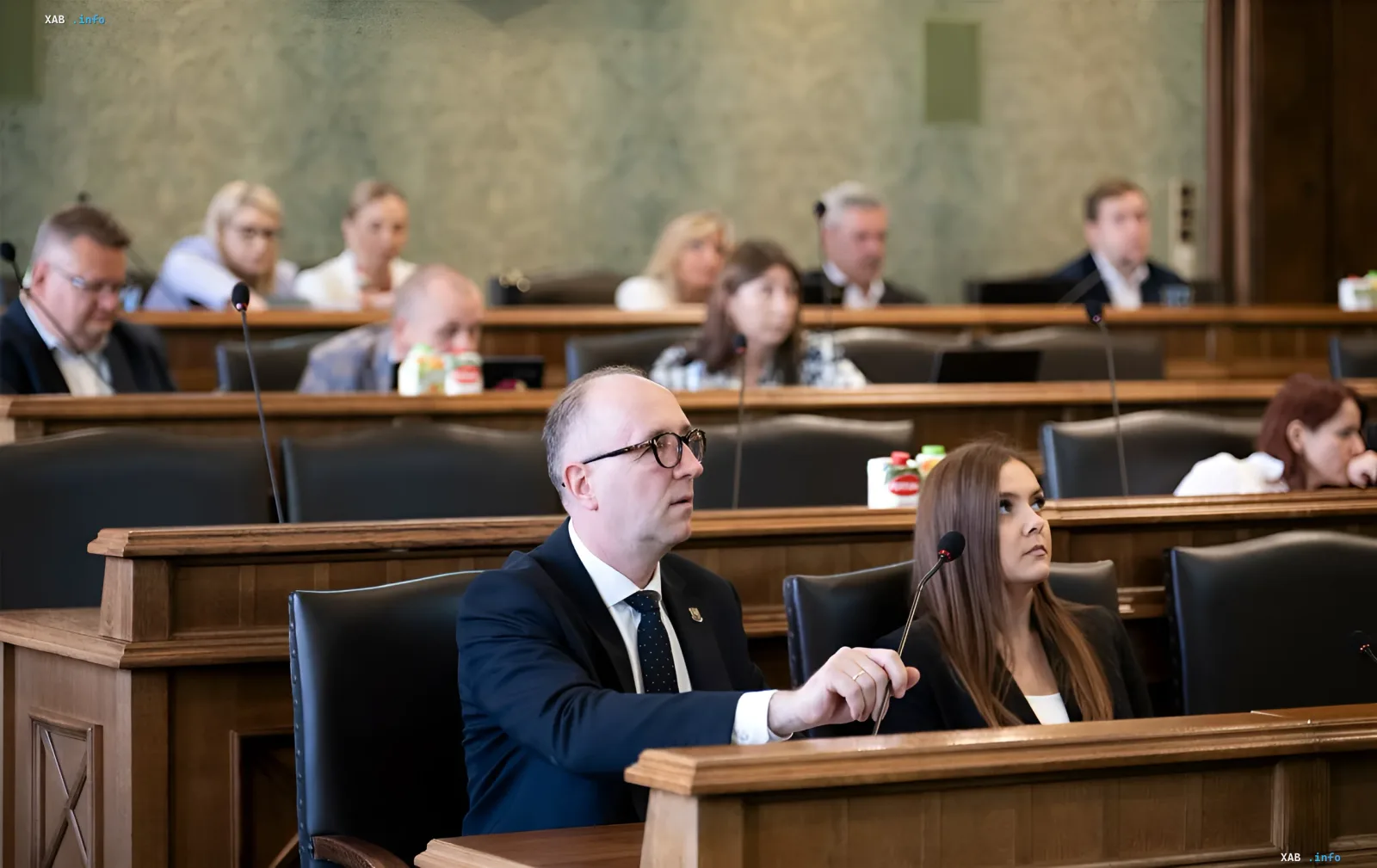
At a session of the Wrocław City Council, councilors backed a resolution condemning violence on ethnic grounds. The document declares that the city must remain open and hospitable to everyone who has chosen it as their home, regardless of nationality. However, the adoption of the resolution took place against the backdrop of a heated public dispute over exactly how to protect Ukrainian citizens, turning into a clash between two political lines.
The resolution on the city's openness
The central thesis of the adopted document is Wrocław's inclusiveness. The authors of the resolution emphasize that the city is obliged to be hospitable to every resident regardless of their origin. In the initiators' intent, this approach should set a norm of tolerance and signal that violence on ethnic grounds is unacceptable in any form and in any direction.
Instances of violence mentioned in the document
In justifying the resolution, the authors cited several specific episodes that, according to their data, occurred in Wrocław. Among them were an attack by three men on two Ukrainian citizens, as well as a brutal knife attack on a Polish woman, which, according to the text of the document, was carried out by a Ukrainian. Thus, the resolution condemns violence in both directions, without tying it to a single nationality.
The Law and Justice amendment and demands on Kyiv
During the debate, councilors from the Law and Justice party (PiS) proposed an amendment: to condemn generalized accusations against Poles, Polish women, and the Wrocław community of aggression, xenophobia, or ethnic hatred. Moreover, the party's representatives called on the government and the Sejm to "immediately settle the status" of Ukrainian citizens of conscription age who are in Poland without a valid permit, demanding their return to their homeland and the start of military service.
"A slap in the face": accusations of ingratitude and the vice-mayor's reaction
The accusations against Kyiv were voiced by PiS representative Sławomir Szmigiel, who stated that Ukraine is ungrateful to Poland for its help amid the war with Russia. "What have we received in return? Enormous ingratitude. President Zelensky is naming one of the military units after the heroes of the UPA. We consider this a slap in the face to Poland and to Poles," he declared. The left-wing vice-mayor Ryszard Kessler tried to cut off the rhetoric, stating that such words strike at the country's reputation: "We are disgracing our city and our country with such terrible words. We are making a scandal and will be ashamed of it before the whole world."
Contradictory data
The positions of the parties at the session diverged significantly. The authors of the resolution and Vice-Mayor Kessler insisted on the city's openness to all residents regardless of nationality and on the fact that accusations of xenophobia against Poles should not overshadow the condemnation of violence against Ukrainians. PiS councilors, in turn, demanded that the document include a condemnation of "generalized accusations" against Poles and Polish women, and linked the protection of Ukrainians to their return to Ukraine and conscription into military service, and also accused Kyiv of "ingratitude" for naming a military unit after the heroes of the UPA. These two lines — the inclusive resolution and the amendment with demands on Ukrainian citizens — constituted the main contradiction of the session.
The outcome was the adoption of a resolution against violence on ethnic grounds, but the course of the debate once again exposed the growing tension in the Polish public sphere over the status of Ukrainian refugees and military mobilization, which, according to recent polls, remains one of the main reasons for the deterioration of the attitude of some Poles toward Ukrainians.