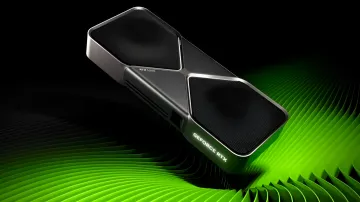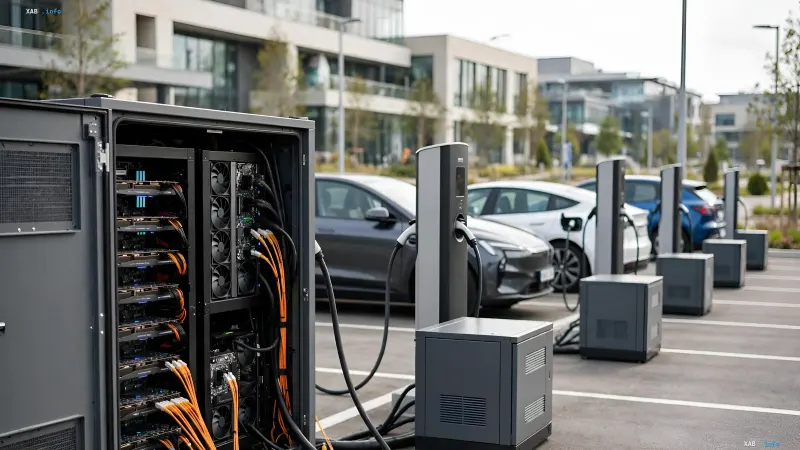
American company Xeal has unveiled an innovative initiative aimed at addressing the severe shortage of power capacity for modern artificial intelligence systems. The enterprise intends to leverage electric vehicle charging infrastructure as a reliable power source for distributed compact data centers. The new platform, named Laitent, is designed to place computing modules directly in parking lots, directing electricity that normally remains unused into them. The company's large-scale plan involves deploying up to 100,000 Nvidia graphics processors within a unified distributed network.
Network Scale and the Potential of Idle Energy
To date, Xeal's operational footprint covers charging infrastructure across 500 cities in the United States. According to official company data, its sprawling network of 1,600 specialized locations already possesses a colossal permitted and grid-connected capacity exceeding 200 MW. However, the operational nature of charging stations is such that they utilize less than 10% of their maximum permitted load under standard operating conditions. As a result, a massive volume of accessible yet completely untapped energy is generated, which can be redirected toward commercial computing needs without compromising the core business profile.
Technological Features and Laitent Pods Modules
To implement such an ambitious project, Xeal engineers developed specialized Laitent Pods computing modules, whose dimensions are comparable to a single standard parking space. Each such module is engineered to accommodate up to 48 advanced Nvidia Hopper or Blackwell architecture graphics processors. A vital technical advantage of this development is the complete absence of any need for water supply connections. This drastically simplifies logistics and installation, allowing computing centers to be deployed in locations where constructing traditional data centers would involve insurmountable difficulties and prohibitive financial costs.
Software Management and Focus on AI Inference
The intelligent software of the Laitent platform takes charge of comprehensive power management and dynamic computing workload distribution based on currently available grid capacity. The system is capable of flexibly utilizing only a fraction of an individual GPU's performance or combining the resources of multiple autonomous modules within a single locality. Xeal has prioritized the artificial intelligence segment associated with inference—the direct execution and commercial deployment of already trained neural network models rather than their labor-intensive and energy-heavy initial training.
Implementation Timelines and Economic Impact
The company's management expects to install the first pilot module at one of its locations before the end of the current year. According to Xeal representatives, such a decentralized approach will cut the deployment timelines for new computing capacity from many years down to mere months. This is achieved through a primary advantage: property owners no longer need to go through complex procedures for grid connection permits and construct expensive auxiliary energy infrastructure from scratch. Furthermore, the project promises tangible financial benefits for parking owners, as the market value of each such property could increase by approximately $1 million with minimal capital investment on their part.
Contradictory Data
Despite the uniqueness of Xeal's approach to utilizing parking spaces, the expert community points out the existence of similar initiatives in the distributed computing market. Specifically, in March of this year, Auddia announced plans to deploy solar-powered GPUs in medical real estate parking lots in the Dallas area, while Belgian startup Tonomia is developing a similar infrastructure using solar parking carports. Meanwhile, analysts differ in their assessments of cooling reliability and the protection of server equipment against external climatic impacts in open outdoor modules like Laitent Pods, creating certain debates surrounding the scalability of such projects.