Commander of the Ground Forces of the Armed Forces of Ukraine, General Sviatoslav Zayts, in an interview reported by Interfax-Ukraine and published by RBC-Ukraine, described mobilization as a "great burden" placed upon his subordinates. According to him, without mobilization measures, the Ground Forces would not be able to fulfill their assigned combat tasks and, in essence, would not exist as an operational formation. The statement comes amid ongoing discussions in Ukrainian society regarding the mechanisms and pace of conscription, as well as the role of military structures in ensuring citizens report to recruitment offices.
"Not the best job": Military logistics of conscription
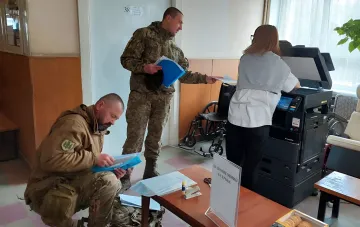
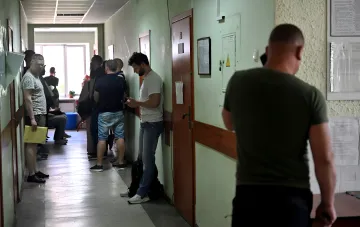
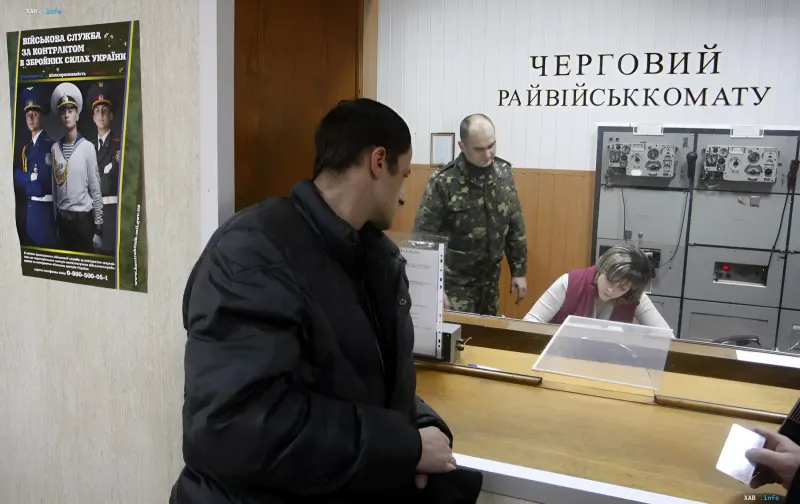
Zayts did not hide the fact that the direct involvement of military personnel in delivering citizens to medical examinations and recruitment offices is a task he characterizes as "not the best job, actually." The general noted that in the information space, this activity is covered primarily in a negative light, which creates additional pressure on personnel. Nevertheless, in his estimation, there is no alternative: the joint actions of military personnel and National Police officers ensure the physical delivery of citizens, without which the mobilization process would come to a halt. Zayts emphasized that without this mechanism, the Ground Forces could not perform their tasks and called on society to acknowledge this systemic necessity.
Priority — training and saving the soldier's life
Zayts named high-quality training of personnel as the second key area of the Ground Forces' work. The general elaborated on this point by listing several levels: basic general military training, professional training in specific specialties, subsequent adaptation in the combat zone, and finally, competent and reasonable application of the soldier in battle. "To protect him," the commander added, emphasizing that the ultimate goal of training is not only combat effectiveness but also the minimization of losses. In conditions where mobilization is perceived by society as a heavy burden, the issue of training becomes, in essence, the answer to the main question of conscripts: how long and under what conditions they will have to serve.
Context: Stricter control over medical commissions and updated reservation rules
Zayts' statement follows a series of administrative decisions aimed at adjusting the mobilization process. In particular, control over the work of military medical commissions (MMC) has been tightened in the Armed Forces of Ukraine: the goal is to improve the quality of medical examinations and exclude the possibility of registering citizens who are unfit for military service due to health conditions. In parallel, Ukraine has updated the rules for reserving workers at defense-industrial and fuel-energy complex enterprises. Some companies may lose their status as critically important, which automatically deprives them of the ability to reserve employees from conscription. These measures, as intended by legislators, should narrow the circle of persons actually protected from mobilization and simultaneously increase trust in the system by eliminating cases of "reservation" based on formal grounds.
Information background and public reaction
The public admission by the Ground Forces commander that mobilization is a "great burden" and "not the best job" is a significant signal in itself. In the Ukrainian media space, the topic of conscription remains one of the most sensitive: criticism from civic activists, human rights organizations, and part of the population focuses on the methods used by recruitment offices and the fact that it is the military, rather than civilian structures, performing the functions of delivering citizens. Zayts, while not denying the negative coverage, effectively shifted the focus to systemic necessity: without mobilization, the army is unable to fulfill its tasks. Thus, his statement can be viewed as an attempt to legitimize the current approach in conditions where public trust in conscription mechanisms remains in question.
As of the time of this writing, no additional official comments from the Ministry of Defense of Ukraine or the General Staff have been received regarding Zayts' statements. RBC-Ukraine reports the general's words citing Interfax-Ukraine, making the source primary and direct.