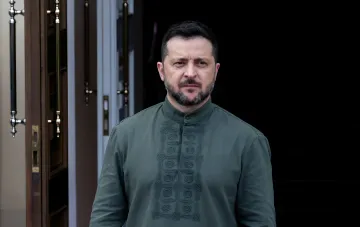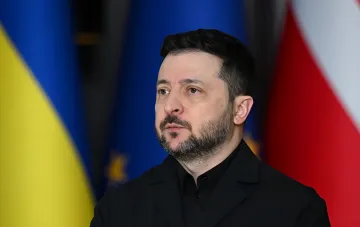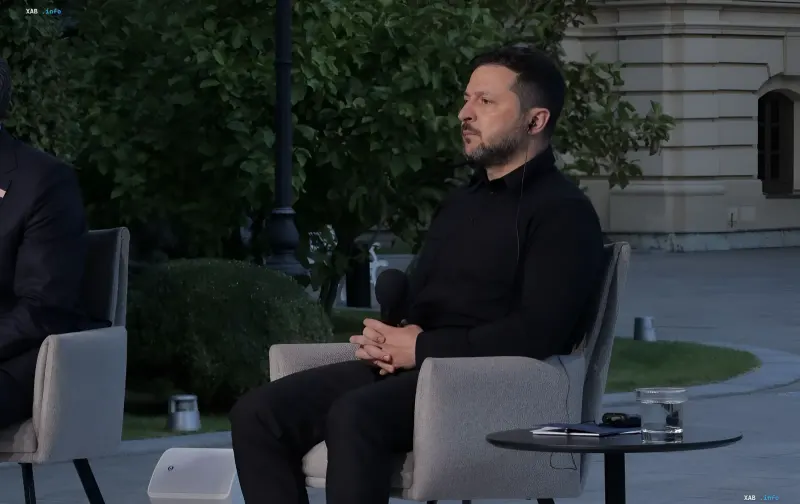
On September 6, in Kyiv, following three rounds of negotiations with U.S. special envoys Steve Witkoff and Jared Kushner, as well as with European partners, Ukrainian President Volodymyr Zelensky held a briefing centered on the Donbas question. According to the head of state, this point was raised directly during the negotiations and, in the view of the Ukrainian side, is a key issue in the current war. "The Donbas question is, with all due respect, the question of our citizens who live in the Donbas or were forced to leave it," Zelensky emphasized, expanding the discussion beyond a purely territorial agenda to the fate of people who continue to live in these territories or were forced to abandon them due to hostilities.
The Donbas as Part of a War of Attrition
The President insisted that the Donbas cannot be torn out of the broader context of the conflict. "The Donbas question is not just a question of the Donbas. Between us, I believe, it is a question of this war. A war for survival and a war of attrition," he stated. In his assessment, the Donbas territories remain one of the Russian side's targets, while this direction retains critical importance for Ukraine's defense. Zelensky also noted that Russian forces have increased their presence in the east, while Ukrainian troops continue to hold the line against the enemy, and he suggested that after the elections in Russia a mobilization may occur, which, in his view, is linked to the strengthening of precisely this direction.
A Strong Position on the Battlefield as a Condition for Diplomacy
Zelensky placed a separate emphasis on the role of military operations in creating the conditions for negotiations. "Without a strong position on the battlefield, a strong Ukrainian position, there will only be ultimatums. As it is, diplomacy is possible today," he stated, linking the possibility of dialogue to the military balance. According to him, over the past 10–12 months Ukraine has become stronger, although a number of serious challenges remain ahead, among which he cited the winter period, as well as the state's financial needs: a shortage of funds, the need to finance the army, humanitarian efforts, and the production of its own defense equipment.
What Comes Next: New Discussions in the Coming Weeks
At the conclusion of the meeting, Zelensky reported that the parties had discussed several new ideas that require further development, and that in the coming weeks Ukraine, the U.S., and Europe may hold new discussions. At the same time, he declined to disclose all the details. "Give us the opportunity to analyze this deeply for now, to understand what details, what steps may be possible, and whether this will bring us closer to peace, and then we will speak with society," the President said. A reminder of the day's format: on September 6 in Kyiv, three rounds of negotiations with U.S. representatives and European partners were held, during which possible further diplomatic steps and conditions capable of bringing an end to the war were discussed.