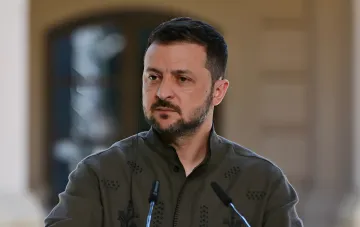
Ukrainian President Volodymyr Zelensky, while speaking with media representatives in Canada, stated that the first Ukrainian anti-ballistic system FREYJA should be ready by the end of 2026. According to him, Ukraine's partners involved in the development reported that creating a similar system would have taken them 20–30 years, but under the conditions of a real war, Kyiv has no opportunity to wait that long. "Right now we have new technologies and a new Ukraine, and we can do all of this faster. And we expect that by the end of this year we will have the first system," the head of state emphasized.
Canadian context and expectations from New York
The statement was made against the backdrop of a visit to Canada, where the FREYJA anti-ballistic program became one of the key items of discussion. Zelensky noted that in Canada the project is already being actively discussed, and a clearer understanding of the timeline for all steps in its implementation is expected during events in New York. According to Gazeta.ua, Canada intends to join the European Freyja air defense program and strengthen its support for Ukraine within the framework of this project, which gives the statement on deadlines an additional institutional context.
International consortium and technological base
Previously, Zelensky reported that ten states have already joined the creation of the FREYJA anti-ballistic system, and the number of partners continues to grow. Leading Ukrainian and European defense companies are involved in the project: Kongsberg, Weibel, Saab, FirePoint, Diehl Defence, Hensoldt, Thales, Safran, Sener and Leonardo. The project envisages the creation of a common European anti-ballistic system, into which Ukraine contributes its own technologies and, crucially, real combat experience in countering missile strikes accumulated during the full-scale war.
Scientific potential and historical rarity of the task
Zelensky emphasized that developing ballistic weapons of its own and creating a new anti-ballistic system is a task that only a limited number of countries in the world have managed to solve. At the same time, according to him, Ukraine has the necessary scientific base and competencies to accomplish it. This thesis is supported by the participation of dozens of major defense conglomerates in the project, which indicates international recognition of Kyiv's technological potential in the field of air and missile defense.
Contradictory data
The project's chronology contains a certain inconsistency in the timelines. On the one hand, Zelensky states that the first FREYJA system will be ready by the end of 2026. On the other hand, it was previously reported that Fire Point plans to carry out the first interception of a ballistic missile within the Freyja project only by mid-2027. This may mean that "readiness" refers to the completion of integration and the system being brought on duty, while the first combat or demonstration interception is scheduled for a later date. An alternative interpretation is that the deadlines stated by Zelensky are politically motivated and do not fully correlate with the contractors' technical plans. Final clarity on the schedules, according to the president himself, should emerge after the negotiations in New York.
Strategic significance for Europe's security architecture
The FREYJA project goes far beyond Ukraine's national interest. The formation of a common European anti-ballistic system with Ukrainian participation changes the paradigm of the continent's collective defense: Kyiv ceases to be exclusively an object of protection and becomes a co-author and co-producer of defense technologies. The inclusion in the consortium of companies from Norway, Sweden, Germany, France, Spain and Italy creates a multi-level industrial chain, while the combat experience of Ukrainian operators becomes a unique competitive advantage unavailable to any of the Western partners. Thus, the deadline of the end of 2026 stated by Zelensky is not just a technical milestone, but a signal of Ukraine's rapid transformation into a center of European missile defense architecture.