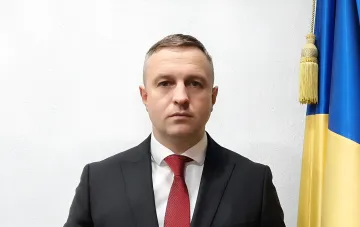
Next week, the Verkhovna Rada is set to officially relieve Prosecutor General Ruslan Khrachenko of his duties, yet according to RBC-Ukraine, the Presidential Office has still not even compiled a long list of possible successors. As the outlet's piece “The Fall of 'Carthage': How Corruption and Scandals Are Shaking Zelensky's Power” explains, the question of appointing a new head of the Office of the Prosecutor General has effectively been put on pause: after the fallout from the scandal surrounding the so-called “umbrella” structure within the Prosecutor General's Office, Volodymyr Zelensky departed on official visits to Norway and Canada, and no work on the personnel decision was carried out until his return.
Parliamentary Confusion and Fear of the “Signature”
According to the outlet's sources in the corridors of parliament, the resignation of the incumbent Prosecutor General has caused considerable confusion among the lawmakers. Deputies fear that the new head of the Prosecutor General's Office, given the circumstances under which his predecessor was effectively “removed” by the Special Anti-Corruption Prosecutor's Office (SAP), will be compelled—or will have an interest—in “blindly” signing every suspicion that the SAP sends against parliamentarians. This is precisely why the idea is being actively discussed among MPs that the new Prosecutor General should be “one of their own”—that is, drawn from among sitting deputies—which would allow them to maintain intra-parliamentary control over the process of signing suspicions. At the same time, sources note that it remains unclear whether any of the lawmakers are willing to take on such a politically vulnerable position.
The “Safety Catch” and the Debate Over the Balance of Powers
A source for RBC-Ukraine in the Servant of the People faction recalled that the lifting of parliamentary immunity was a consensus decision of all factions, after which a so-called “safety catch” was introduced: suspicions against MPs are signed by the Prosecutor General, not by the head of the SAP. “No one forced us to lift immunity at the time, which exists in every country in the world. But it was our promise, we did it, and then by consensus of all factions we introduced a safety catch—the Prosecutor General signs suspicions against deputies. And now the 'Soros people' are pushing the idea that the head of the SAP should sign them—which is a violation of that balance,” the source stated. Thus, the personnel question over the new Prosecutor General is intertwined with a broader institutional dispute over the distribution of powers between the Prosecutor General's Office and the SAP.
Chronology of the “Carthage” Scandal: From Searches to Resignation
On the evening of September 4, the NABU and the SAP announced the unmasking of a criminal organization that, according to the investigation, had been “providing cover” for a network of fraudulent call centers within the structure of the Prosecutor General's Office. At the same time, detectives detained Serhiy Kropyva, deputy head of the Department of International Cooperation of the OPG. On September 5, the Prosecutor General's Office itself reacted to the overnight searches, promising to check whether the investigators had gone beyond the scope of the court-issued authorizations. The following day, September 6, Khrachenko publicly refuted rumors about his own “disappearance” for the first time, declared his non-involvement in shielding the call centers, and stated that he had granted the investigation full access to his office. On the same day, SAP prosecutors sought a bail of 200 million hryvnias with detention for Kropyva, and in the evening the court partially granted the motion, placing the defendant under custody with the alternative of a 120 million hryvnia bail.
A “Political” Resignation and a Wave of Dismissals
In the early hours of September 7, Khrachenko commented on his own appearance in the video footage released by the NABU, calling the talk of a safe with money “just talk.” That same evening he announced that he was submitting a resignation, characterizing his decision as “political” and emphasizing that his position on the accusations brought against him had not changed. On September 9, against the backdrop of the ongoing scandal, three more prosecutors lost their positions: First Deputy Prosecutor General Mariya Vdovychenko and two officials of the Cherkasy Regional Prosecutor's Office. Thus, by September 10, the institutional structure of the Prosecutor General's Office found itself in a state of deep restructuring, and the question of who will occupy the chair of the head of the department remains open—and, it seems, will not be resolved until after the president returns from his foreign visits.