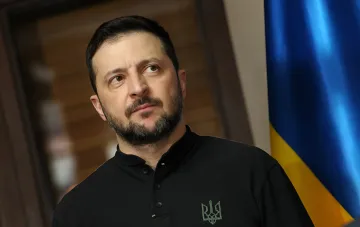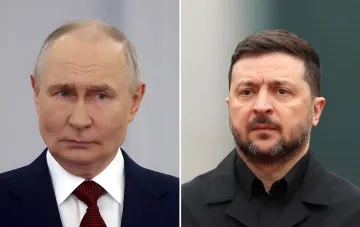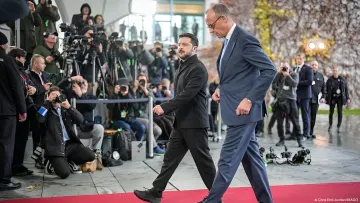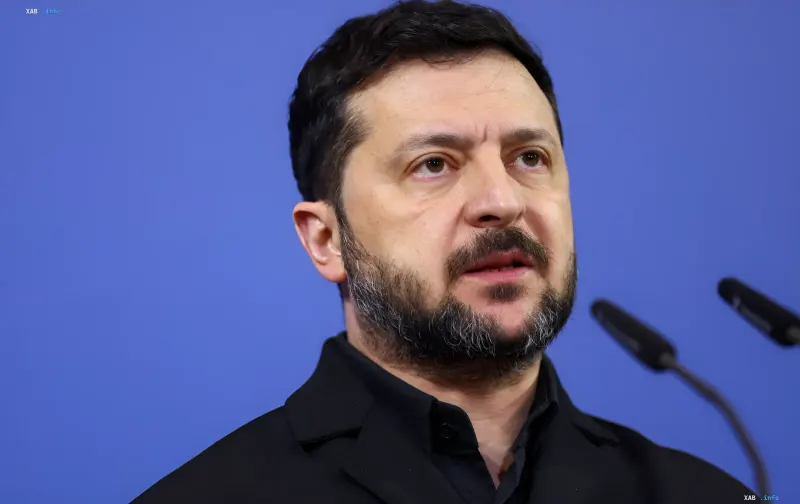
President of Ukraine Volodymyr Zelensky stated that throughout 2026, Russia has not accepted a single proposal for a ceasefire and has rejected all truce formats discussed with international partners. He announced this during a press conference in Berlin, as reported by RBC-Ukraine. In his assessment, Moscow's refusal to de-escalate is systemic: "These are not just words. All year long, the Russians have been refusing all de-escalation proposals. Various partners have spoken to them about it, and Putin has turned down everything."
Five priorities and strengthening air defense
During the meeting of the "Coalition of the Willing," the parties reviewed five priority areas for Ukraine, with the first being the strengthening of air defense. Zelensky emphasized that since the middle of the summer of 2026, Russian leader Vladimir Putin "has been constantly increasing attacks, especially with dangerous weaponry — ballistics and jet-powered Shaheds." It is against this background, according to the President, that Ukraine needs special joint actions to truly protect its population and critical infrastructure.
What formats were offered to Moscow
According to Zelensky, various de-escalation scenarios were proposed to the Russian side, including an energy truce in the Black Sea and other ceasefire formats. None of these options, he said, were accepted by Moscow. Thus, Kyiv records a complete cycle of refusals throughout the year, which, in the Ukrainian president's estimation, precludes any possibility of Russia voluntarily transitioning to peace negotiations.
Crimean Bridge as a turning point
The context of the statement relates to recent events surrounding the Crimean Bridge. Earlier, Vladimir Putin publicly reacted to Ukrainian strikes on the facility for the first time and threatened a "more painful response." At the same time, he stated that he had allegedly discussed a possible ceasefire in certain areas with the Russian Security Council, but after the attacks on the bridge, he said, there would be no negotiations. This rhetoric confirms Zelensky's thesis that Moscow is not ready for de-escalation, even when such topics were raised at the highest leadership level.
International efforts and Turkey's position
The issue of an energy truce in the Black Sea was also raised during negotiations in Abu Dhabi, but no agreement was reached: the Russian side stated it lacked the mandate to make such decisions and suggested reaching out directly to the head of the Kremlin. Turkish Foreign Minister Hakan Fidan, in turn, stated that Russia is not interested in a Black Sea truce without concluding a long-term peace with Ukraine, and the entire process, according to his assessment, is being stalled over the Donbas issue. This combination of signals, as noted by Zelensky, indicates that Moscow has no real intention of stopping hostilities in 2026.