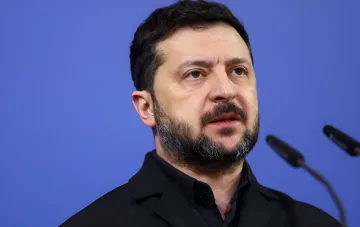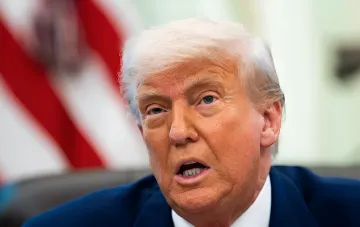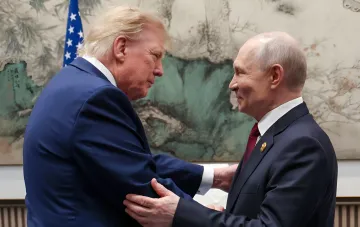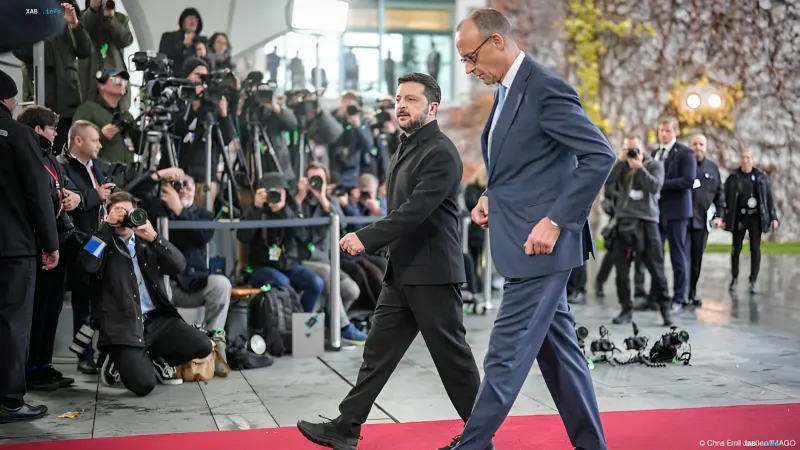
On November 19, 2026, an event took place in world diplomacy that observers are calling a "dual summit": tripartite talks between US President Donald Trump, Chinese President Xi Jinping, and Russian President Vladimir Putin were held in Shenzhen, China, while a "coalition of the willing"—allies of Ukraine from about 40 countries—gathered in Berlin on the same day. Both events drew the close attention of European politicians and experts, who attempted to determine what real threat or opportunity each of these meetings holds for Kyiv.
Berlin: The 'Coalition of the Willing' Agenda Extends Beyond Winter Aid
According to Austrian political scientist and professor of international relations at the University of Innsbruck, Gerhard Mangott, the meeting in Berlin is of greater significance for Ukraine than the negotiations in China. On the agenda in the German capital are not only short-term support for Kyiv, such as the supply of air defense systems to survive the winter period, but also long-term security guarantees for a country that, according to the expert, has been defending itself against Russian aggression for almost five years. A separate point of discussion was the potential military presence of the "coalition" countries in Ukraine after the establishment of a ceasefire, which, as Mangott notes, "is still a distant prospect." At the same time, according to Politico, a number of European diplomats and officials have expressed concern that in recent months, the initiative—which brings together more than 30 countries—has lacked leadership and its activity has lost momentum. The political authority of the co-chairs—France, Germany, and the UK—is, in the opinion of the publication's interlocutors, of decisive importance for Ukraine's success, yet it is currently weaker than in previous years.
Shenzhen: What the Three Leaders Discussed and What Remained Behind the Scenes
Donald Trump, who announced his intention to discuss the war in Ukraine at the meeting in China, noted that "various things are happening" regarding the peace settlement plan. According to Professor Mangott, the brief summary of the negotiations published by the Chinese side mentioned neither the war in Ukraine nor the conflict in Iran. However, in the expert's opinion, this does not mean these topics were not discussed: "They were likely discussed. However, the Chinese side preferred not to record them in the official summary." Thus, the true depth of the tripartite talks remains a matter of speculation, and the public rhetoric of the parties does not allow for an unambiguous assessment of whether any concrete decisions were made regarding the Ukrainian settlement.
'Yalta 2.0': Kyiv's Fears and Expert Reactions
In early November 2026, Ukrainian President Volodymyr Zelenskyy stated in an interview with CNN journalist Jake Tapper that Kyiv does not want a "Yalta 2.0"—a reference to the meeting of leaders from the USSR, the US, and the UK in February 1945, after which Europe was effectively divided into spheres of influence. Gerhard Mangott acknowledges that "Yalta has a certain connotation—it is the decision of great powers about the fate of smaller states," and that Zelenskyy's statement "can be taken seriously and understood." At the same time, the expert does not consider the meeting in Shenzhen to be an analogue of Yalta: "The composition of participants was completely different. Of course, it is true that these three conferred on the topic of big wars—the war in Ukraine and the war in Iran. So yes, the great powers talked about Ukraine without Ukraine. But I don't think decisions were made there regarding what happens next with the war in Ukraine and negotiations on this topic."
'Big Dog and Small Dog': The Nuclear Factor as a Constraint
European Policy Centre (EPC) expert Amanda Paul does not share concerns about the formation of a "strong alliance" between Putin, Trump, and Xi. In her assessment, Xi Jinping understands the importance of maintaining good relations with both Washington and Europe while simultaneously maintaining ties with Russia. "But for Putin, these relations are likely more important than for Xi Jinping," Paul notes. She considers the statement by Xi Jinping on the inadmissibility of using nuclear weapons and the demand to reduce nuclear arsenals an important outcome of the meeting in China. "This is a very strong message to the Russians regarding their outrageous statements about the possibility of using nuclear weapons against Ukraine. In this relationship, China is the big dog, and Russia is the small dog. And Putin has become so dependent on China that he cannot go against Xi Jinping's wishes," the expert formulates.
Who is in Charge of the World: A Warning from the European Parliament
Chair of the European Parliament's Subcommittee on Security and Defence, Marie-Agnes Strack-Zimmermann, commenting on the upcoming meeting in Shenzhen in a Politico podcast, expressed the opinion that Trump, Xi, and Putin "want to show who is in charge of the world." At the same time, she urged Europeans to "watch this with great attention, but not start gasping from nervous over-excitement." This warning reflects the general mood in European capitals: tripartite negotiations are viewed with caution, but without panic, and European politicians are betting on the work of the "coalition of the willing" in Berlin to ensure Ukraine's sovereignty and security.