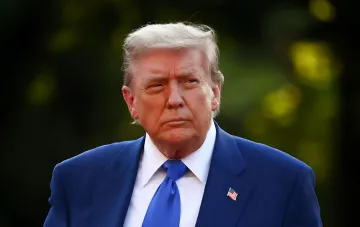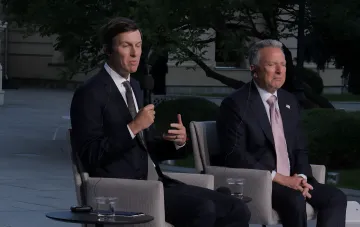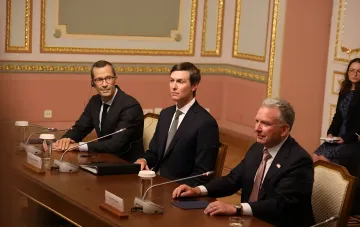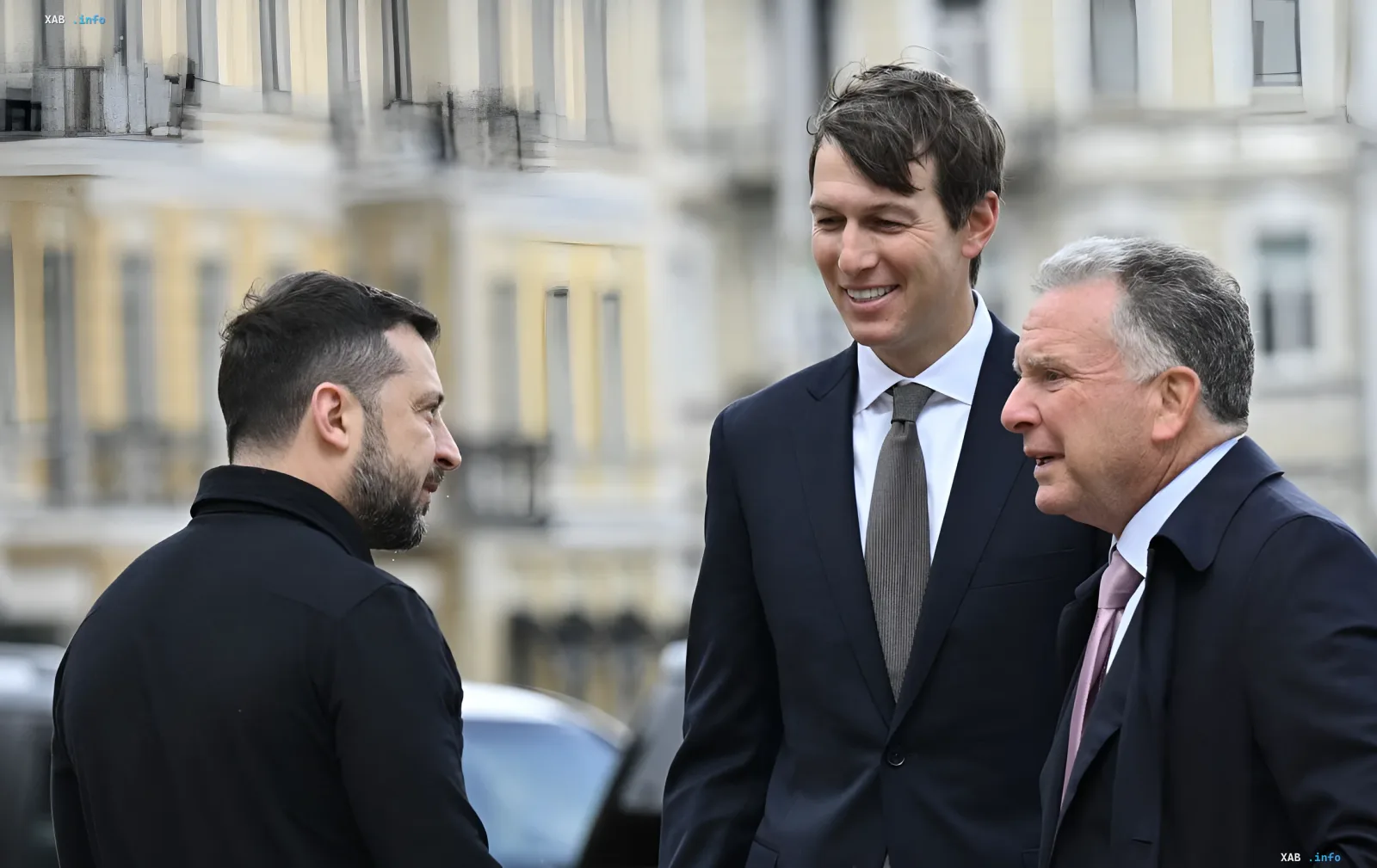
In a statement to journalists, Ukrainian President Volodymyr Zelensky revealed details of the preparations for the visit to Kyiv by the special representatives of the US administration, Steve Witkoff and Jared Kushner. According to him, the Ukrainian side was technically ready to receive the American aircraft and could have used two airfields for this purpose: Boryspil and Zhuliany. However, as the head of state stated, Russia struck the runway at Zhuliany and Boryspil, which, in his assessment, was aimed at disrupting the delegation's arrival. At the same time, Zelensky emphasized that 'everything was technically working,' and shifted the key question to Moscow: is Russia providing a safe corridor for such flights?
Readiness to receive the American flight
In his remarks, Zelensky stressed that the infrastructure readiness to receive the American aircraft had been fully ensured. He explicitly pointed to two alternative airfields — Boryspil and Zhuliany — which, in his logic, rules out the version of technical impossibility of receiving the flight. Thus, the president presented the situation as the readiness of the Ukrainian side, which was disrupted by an external factor — missile strikes on the airfield infrastructure. This formulation effectively turns the question of the American mediators' arrival into a question about the safety of the airspace and who is responsible for ensuring it.
Strikes on the airfields and the safe corridor question
A key element of Zelensky's statement was the direct link between the strikes on Boryspil and Zhuliany and the attempt to disrupt the visit of Trump's representatives. The president noted that, despite the hits, the airfields were 'technically working,' and shifted the focus to the political aspect: the presence or absence of a guaranteed safe corridor on the part of Russia. This rhetoric allows Kyiv to simultaneously acknowledge the fact of the strikes and level accusations at Moscow of deliberate sabotage of the diplomatic channel, even if the flight formally did not take place.
Alternative routes: Belarus and the train
In addition to the airfield option, Zelensky described a worked-out alternative route through Belarusian territory: according to him, there was an option to fly into Belarus and proceed from Gomel, and this route had been 'fully worked out' by the Security Service of Ukraine (SBU). In the end, however, the delegation chose the train. The president also outlined a scenario for the future: if next time the American side does not want to use its own aircraft, it can fly into Poland, and a Ukrainian flight could then deliver the guests to Kyiv. Thus, Zelensky presented several reserve logistical scenarios, emphasizing the flexibility of the preparations.
Outlook: meeting with Trump and the UN venue
Against the backdrop of the discussion of the visit's logistics, Zelensky announced a possible meeting with US President Donald Trump in the latter half of September, at which the issue of supplying missiles for Ukraine's 'Freyja' program is expected to be raised. Separately, he proposed holding a new round of negotiations with US participation at the venue of the UN General Assembly in New York at the end of September. These statements indicate that the visit by Witkoff and Kushner is being viewed as part of a broader diplomatic campaign aimed at consolidating American involvement in the settlement and in arms supply issues.
Contradictory data
There are inconsistencies in the parties' statements and in the presentation of facts that should be honestly noted. On the one hand, Zelensky and a number of Ukrainian media outlets (including RBC-Ukraine) interpret the strikes on Boryspil and Zhuliany as a deliberate attempt by Russia to disrupt the arrival of the American representatives, linking these strikes directly to the visit. On the other hand, the actual outcome was different: the delegation did not fly on an American aircraft but arrived by train, while the alternative ground route through Gomel had been worked out by the SBU in advance. In other words, the causal link 'strikes → disruption of the air visit' is the president's assessment, whereas objectively the fact of strikes on the airfields and the fact of the delegation's arrival by ground transport are recorded. The exact chronology — whether the strikes were carried out precisely at the moment the flight was expected and for what purpose — is not unambiguously clarified in the provided materials, so the interpretation of motives remains on the Kyiv side.
The outcome of Zelensky's statement was a picture in which the logistics of the American mediators' visit turned into a public argument directed at Russia: Ukraine demonstrates its readiness to receive the flight and alternative routes, while responsibility for the safety of the air corridor is shifted to Moscow. In parallel, the announced meeting with Trump at the end of September and the negotiation round at the UN signal Kyiv's desire to elevate the topic of American involvement and missile supplies to a new level, using the visit by Witkoff and Kushner as a springboard for more extensive contacts.