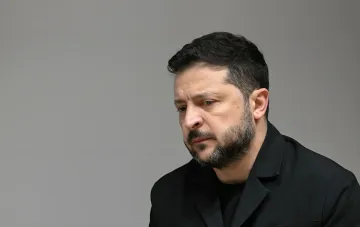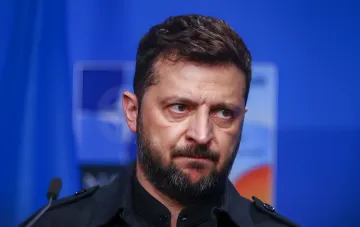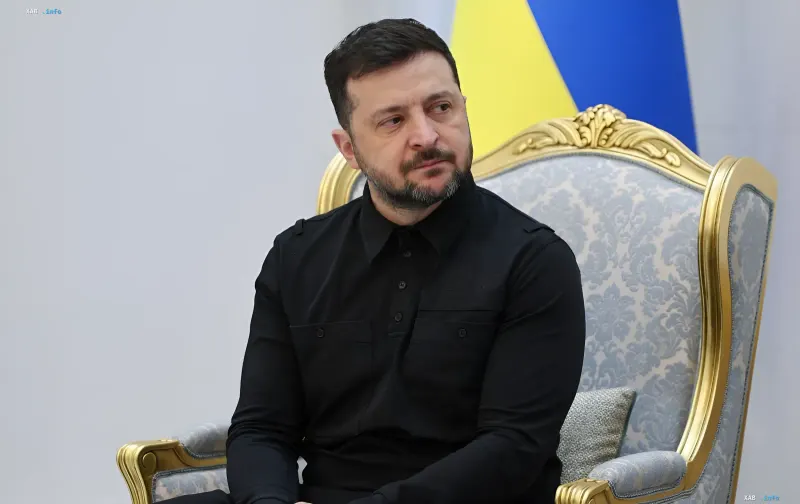
Ukrainian President Volodymyr Zelenskyy told the British broadcaster BBC that the Ukrainian air defense system is now capable of intercepting approximately 70 percent of the fastest Russian unmanned aerial vehicles — jet-powered drones. According to the Head of State, this figure is gradually increasing, which indicates an improvement in the operational capabilities of the air defense. The statement came against the backdrop of an overnight massive attack, during which Russia launched 162 drones of various types at Ukraine, including 74 jet-powered UAVs.
Interception rate: dynamics and operational constraints
Zelenskyy emphasized that the efficiency in countering jet drones shows a positive trend. At the same time, in the same BBC interview, testimony from frontline units emerged: Ukrainian interceptor operators reported that some Russian drones, specifically certain modifications of the 'Shaheds', are already impossible to catch up with. According to them, this allows the enemy to penetrate deeper into Ukrainian territory. Thus, the total percentage of interceptions is growing, but at the level of individual tactical episodes, the problem of speed and range of interceptors persists.
Acute shortage against ballistics and Patriot delivery delays
The most vulnerable area, according to Zelenskyy, remains countering ballistic missiles. The President pointed to an "acute shortage" of means to intercept them, primarily anti-aircraft missiles for the American Patriot systems. The supply of these munitions, according to him, is delayed. "The shortage of these missiles is people's lives," Zelenskyy stated, directly linking the lack of ammunition to the risk to civilians.
Dissatisfaction with US priorities and focus on the Middle East
In the interview, the President expressed open dissatisfaction that the United States has focused its main attention on the Middle East and is sending more aid there. "It is a pity that they focused on the Middle East and are helping them more. It is a pity. We have huge questions about this," RBC-Ukraine quotes Zelenskyy as saying. The statement was made in the context of discussing the pace and volume of anti-aircraft missile supplies for Ukrainian air defense systems.
Starlink, Starshield, and 'ping-pong' with SpaceX
Responding to a question about maintaining restrictions on the operation of the Starlink satellite network and its military version, Starshield, in occupied areas of Ukraine, Zelenskyy confirmed that such restrictions remain in place. When asked by journalists who exactly made this decision, the President replied: "Technically, it is SpaceX; politically, I do not know, I really do not know. It is like ping-pong. We ask one side, and they say it is the other." Thus, Kyiv publicly records the presence of restrictions without naming a specific political actor responsible for their implementation.
Night of November 28: 162 drones and 141 shot down
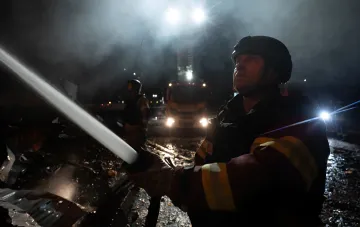
According to the Air Force of the Armed Forces of Ukraine, on the night of November 28, Russia used 162 drones of various types, including strike Shaheds, Gerbera drones, and 'Parodiya' decoy drones. Out of the total number, 74 units were jet-powered UAVs. The Ukrainian air defense, according to official data, destroyed or neutralized 141 enemy drones, including 54 jet-powered 'Shaheds'. This corresponds to a total interception percentage of about 87 for all types and approximately 73 for jet-powered ones, which is consistent with the 70 percent estimate stated by Zelenskyy with an upward trend.
Context and significance of the statements
Zelenskyy's statements to the BBC come at a time when the issue of supplying air defense with ammunition remains one of the key topics in Kyiv's dialogue with Western partners. The combination of data — a growing percentage of jet drone interceptions, remaining vulnerability to ballistics, public criticism of delivery rates, and the confirmation of Starlink restrictions — forms a picture in which the Ukrainian side simultaneously demonstrates progress in some areas and identifies systemic gaps in others. The night attack of November 28, involving 162 vehicles, again confirmed the scale of the air threat that air defense must cope with under conditions of limited anti-missile ammunition reserves.