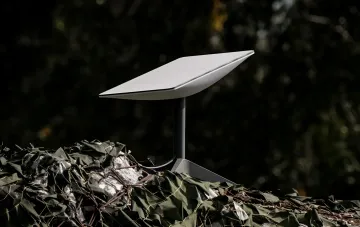
In an interview with the British broadcaster BBC, Ukrainian President Volodymyr Zelenskyy stated that the Starlink and Starshield connection has returned to normal in Ukrainian-controlled territory, while restrictions still apply in temporarily occupied lands. According to him, this is precisely why it is harder for Ukrainian forces to intercept jet-powered Shahed drones along parts of the frontline. RBC-Ukraine reports this citing a recording of the conversation with the head of state.
Complaints from military drone units
BBC journalists asked Zelenskyy about complaints from frontline drone unit operators who claim that Starshield and Starlink restrictions continue to complicate their work. The president replied that there used to be more problems, but "the American side has sent some positive signals." According to him, the system has started working normally in Ukrainian-controlled territory, whereas restrictions persist in temporarily occupied lands.
The problem with intercepting jet drones
Zelenskyy explained that in temporarily occupied territory interceptors cannot "catch up" with jet-powered Shaheds, whereas in controlled territory this is possible, but "it is often too late." He pointed out that such drones strike infrastructure and energy facilities. He compared the situation to the supply of missiles for Patriot systems, noting that in both cases the outcome depends on a political decision.
Who imposed the restrictions: SpaceX or the White House
When asked whether the restriction is a White House decision, Zelenskyy replied that technically it was introduced by SpaceX, and he does not know who made the political decision. "It is like ping-pong: we ask one side, they say it is the others; we ask the others, they say it is not them," the president said. Thus, no specific body or person who made the decision to restrict has been publicly named.
Chronology of restrictions and discrepancies in assessments
On November 13, Axios, citing a Ukrainian official, reported that 100% of drone missions were failing due to new Starshield restrictions; SpaceX stated at the time that no changes had occurred. The next day, Zelenskyy shared that a Starshield speed limit of a maximum 161 km/h is in effect in the occupied territories, and repeated that, in his opinion, the restrictions were introduced by SpaceX rather than the US authorities. On November 25, Ukraine's Chargé d'Affaires in the US, Denys Senik, called the situation a "vicious circle," emphasizing that it remains unclear who in the US is responsible for the restrictions.
Potential consequences for SpaceX and bypassing restrictions
According to open-source information, restrictions could prompt action against SpaceX in the US Congress: Democratic Representative Jim Himes stated that Elon Musk could face government funding cuts if it is not figured out who made the decision to restrict. Certain commentators, in particular political analyst Oleg Tsaryov, linked the connection disruptions on Ukrainian drones to terminal speed checks (around 160 km/h on standard tariffs) and claimed that Ukrainian specialists previously bypassed the restriction by changing terminal location data, while in October SpaceX began additionally checking device speeds. These claims have not been confirmed by independent sources.