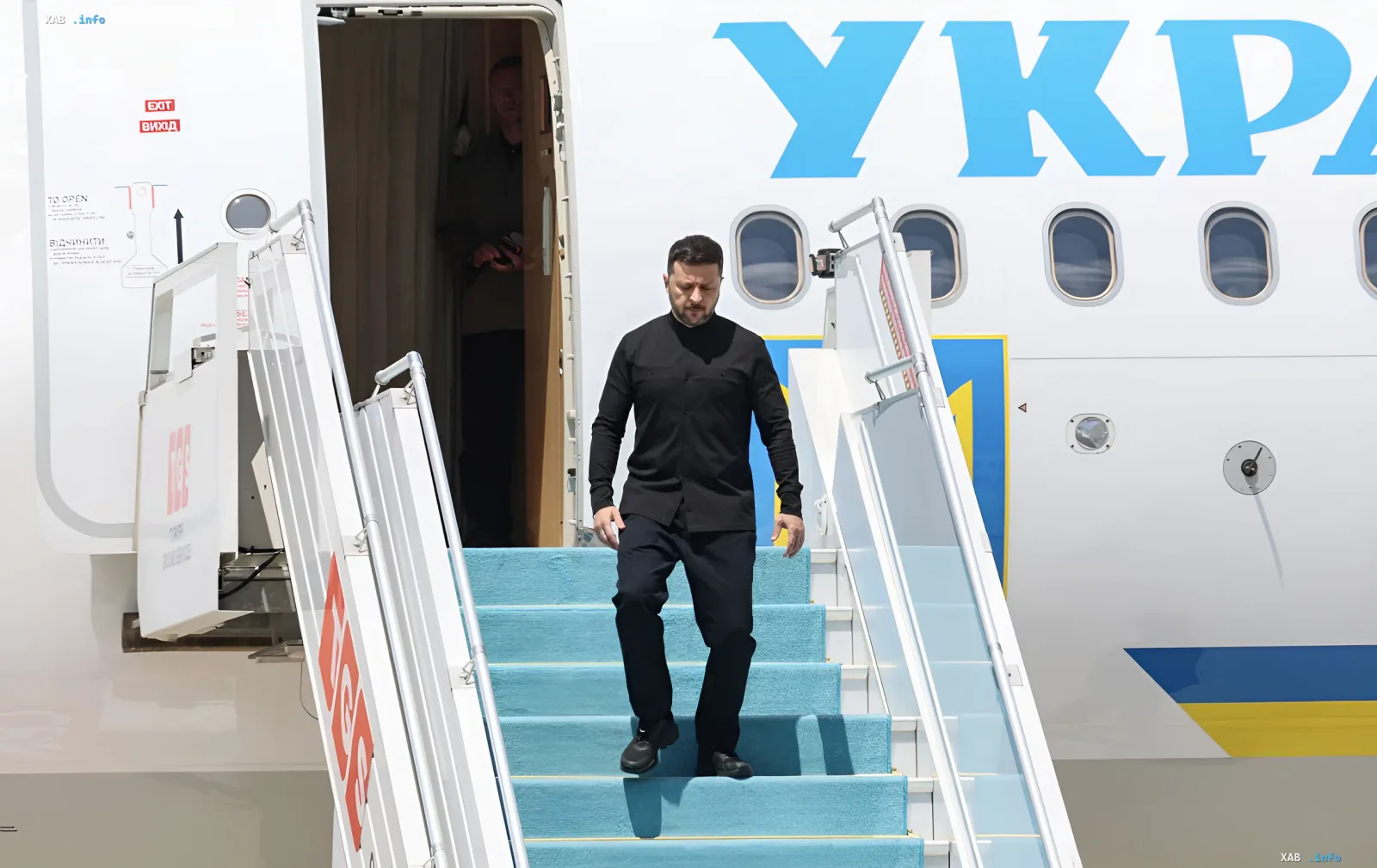
On Friday, August 7, 2026, Ukrainian President Volodymyr Zelenskyy made a historic visit to Serbia, marking his first official trip to Belgrade since assuming office as head of state. The arrival of the Ukrainian leader became a significant event in bilateral relations, which have been developing in recent years against the backdrop of a complex geopolitical situation.
Negotiations with Vučić and Mačak: economy, security, and the EU
According to a statement by Volodymyr Zelenskyy himself, published on the day of his arrival, his agenda for today and tomorrow includes meetings with Serbian President Aleksandar Vučić and Prime Minister Djuro Mačak. The main topics of the negotiations include expanding economic ties between the countries, issues of interaction with the European Union, as well as security matters relevant to both peoples.
Zelenskyy emphasized that Ukraine is ready for constructive dialogue based on mutual benefit and respect. This is particularly important in the context of current challenges faced by both countries — from energy dependence to pressure from external players.
Historical context: why this visit is so important
Although the leaders of Ukraine and Serbia have met repeatedly at international forums — including OSCE summits, G20, and other platforms — Zelenskyy's official visit to Belgrade is the first of his entire term. Previously, in 2024, Aleksandar Vučić visited Kyiv, where cooperation issues were also discussed, although at that time Belgrade did not support new sanctions against Russia.
This visit could become a turning point in the relations between the two countries, especially if progress is achieved in the areas of trade, investment, and energy security. For Ukraine, this is a chance to strengthen its position in the Balkans; for Serbia, it is an opportunity to diversify partnerships without damaging relations with Moscow.
Contradictory data
The question of Serbia's possible accession to sanctions against Russia remains one of the most acute. Aleksandar Vučić, commenting on Zelenskyy's visit, stated that Belgrade's position was determined almost five years ago and will not change. However, some analysts believe that under pressure from the EU and in the context of growing pressure from the West, Serbia may make partial concessions — for example, limiting imports of Russian energy carriers or reducing military supplies.
On the other hand, official sources from Belgrade insist on the unchanging course: Serbia continues to maintain neutrality and does not plan to introduce sanctions against the Russian Federation. Thus, there is a gap between Kyiv's expectations and Belgrade's real intentions.
Reaction of the international community
Zelenskyy's visit caused a wide resonance in international media. European countries are following the development of events with interest, hoping that the dialogue between Kyiv and Belgrade can become an example of constructive interaction even in the face of disagreements. The United States also noted the importance of this step, pointing out that strengthening ties between Ukraine and the countries of the Balkan Peninsula is a key element of the region's security strategy.
At the same time, Russia expressed concern, calling the visit a "political step aimed at isolating Moscow." However, experts believe that the real impact of this visit will depend on specific agreements reached during the negotiations.
What's next? Prospects for cooperation
If the negotiations are successful, new agreements in the fields of trade, energy, and transport can be expected. It is also possible to create joint investment funds or technology exchange programs. For Ukraine, this is a chance to gain access to new markets; for Serbia, it is an opportunity to modernize its economy with the support of Western partners.
However, as practice shows, the implementation of such plans requires time and political will. The results of the visit will only become known after the conclusion of negotiations and the publication of official statements by the parties.