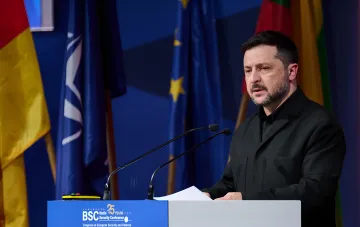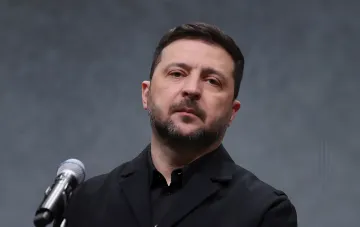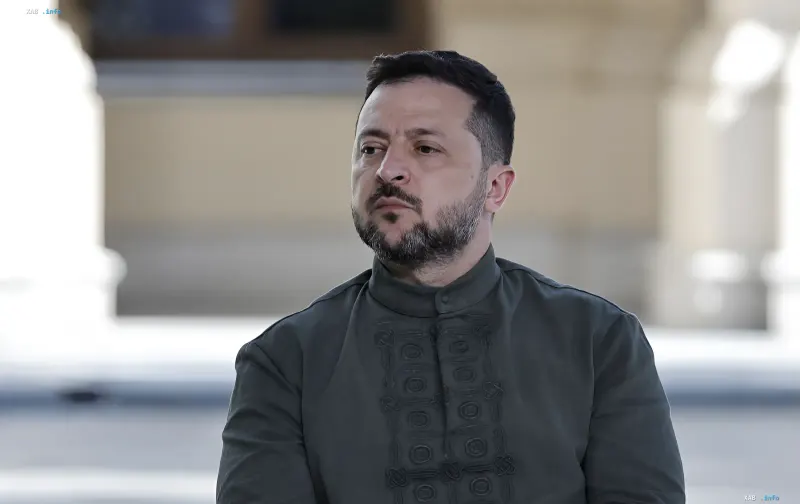
On November 3, at the Berlin Security Conference, Ukrainian President Volodymyr Zelenskyy assessed Moscow's long-term intentions, stating that Russia views a peaceful and united Europe as its enemy. According to him, the military infrastructure built up by the Russian Federation in recent years is far too massive to be directed exclusively against Ukraine. This was reported by RBC-Ukraine, citing the Telegram channel of the President of Ukraine.
«Russia has already made up its mind»
At the core of Zelenskyy's speech was the thesis that Moscow has already made a strategic decision regarding Europe, and this threat will not disappear in the near future. «We see that Russia has already made up its mind. It has decided that a peaceful and united Europe is its enemy. And this situation will not simply vanish in a year», the president stated, emphasizing that this is not about a temporary escalation, but a sustained position of the Kremlin.
Europe as a source of security
At the same time, Zelenskyy called it a positive trend that other countries around the world increasingly perceive Europe as a source of security. In his assessment, this potential is largely unrealized as yet, but capable of becoming very powerful. Separately, he noted the importance of keeping the United States within the alliance: «It is good that there is still a chance that America will remain part of the security alliance so vital to Europe».
«Ukraine will never surrender»
The president described the situation for Ukraine as very difficult, yet assured that the country will not break. Addressing the European audience, he highlighted the state's resilience while simultaneously raising a question about the future of the continent itself: «But Ukraine will never surrender. Ukraine will always be strong. And Ukraine will always be European. But what will happen here?»
Russian military infrastructure as an argument
As proof of the scale of the threat, Zelenskyy invited Europeans to look at the military facilities Russia has built in recent years. In his view, their size and nature do not fit the logic of deterring Ukraine alone and point to a broader range of potential targets. Earlier, according to him, Vladimir Putin himself stated that Russia is ready for war with Europe, even though, as claimed, it does not seek conflict.
Reaction in Europe
In European capitals, such risks are taken seriously. UK Defence Secretary John Healey stated that the country must prepare for a potential war with Russia by 2030. German Chancellor Friedrich Merz, in turn, urged the EU not to become complacent, noting that, according to him, Putin seeks not only the defeat of Ukraine but also the undermining of democracy in Europe. The combination of these statements indicates that the theme of a long-term military threat from the Russian Federation is firmly establishing itself on the public agenda of European capitals.