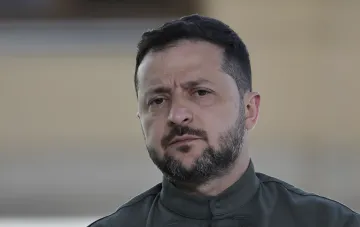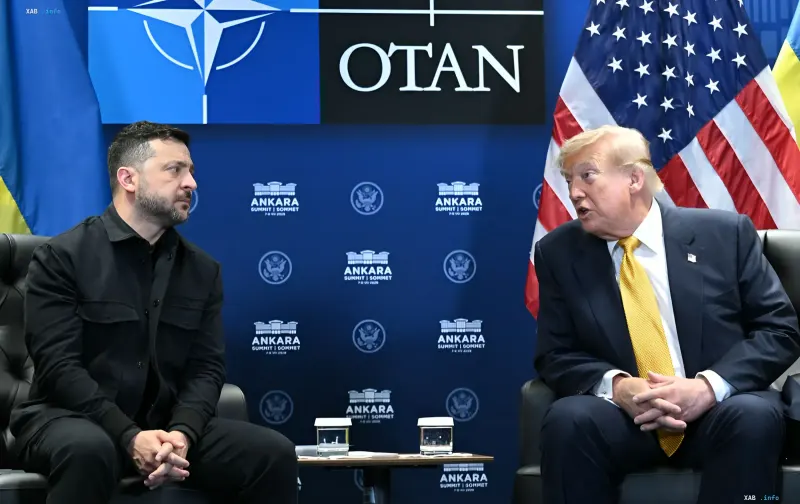
On November 19, 2026, Ukrainian President Volodymyr Zelenskyy, responding to journalist questions, could not unequivocally recall whether US President Donald Trump had ever addressed him as a friend. According to RBC-Ukraine, when asked directly if the American leader had called him his friend, Zelenskyy initially chuckled and gave an affirmative answer, but then clarified that throughout their communication, Trump had addressed him in various ways. 'He said different words to me, and positive ones too,' the Ukrainian president noted.
Zelenskyy's Response: From Affirmation to Caveat
Zelenskyy's wording captures the duality of his response: starting with a positive note, he shifted to a more cautious assessment, emphasizing that Trump's rhetoric toward him had varied. His public statement neither confirmed nor denied that Trump had ever called him a friend; the president limited himself to stating that the American leader's words were 'different' and included positive evaluations.
Hours Earlier: Trump's Address to Putin in Shenzhen
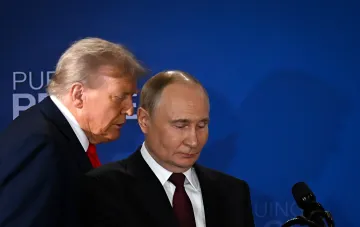
On the same day, November 19, on the sidelines of the APEC summit in Shenzhen, China, US President Donald Trump and Russian President Vladimir Putin held a meeting. Reports indicate that at the beginning of the conversation, Trump called Putin his friend, emphasizing that they had known each other for a long time and expressing hope that the meeting would bring 'a lot of wonderful things.' Thus, just hours before Zelenskyy's response, the word 'friend' was uttered by the American leader regarding the Russian president.
Contrast in Diplomatic Rhetoric
Comparing the two episodes, which occurred on the same day, highlights the difference in public rhetoric toward the two leaders. While in Shenzhen Trump used the word 'friend' openly and at the beginning of the conversation, regarding Zelenskyy the same term was not confirmed — the Ukrainian president merely pointed out the ambiguity of the addresses. This contrast makes the two episodes indicative of current diplomatic communication.
Context and Significance of Statements
The statements were made against the backdrop of ongoing international contacts, in which the personal tone of communication between leaders remains a noticeable element of public diplomacy. Zelenskyy's response and Trump's words in Shenzhen, recorded on the same day, sparked discussion on how formulations about 'friendship' are used in public statements and how they are perceived by recipients. The future dynamics of relations will depend on subsequent contacts between the parties.