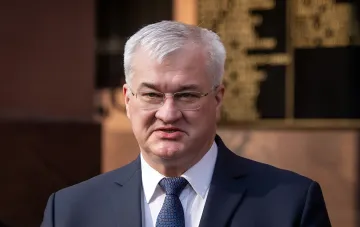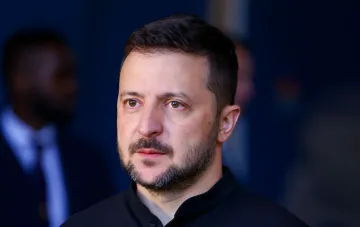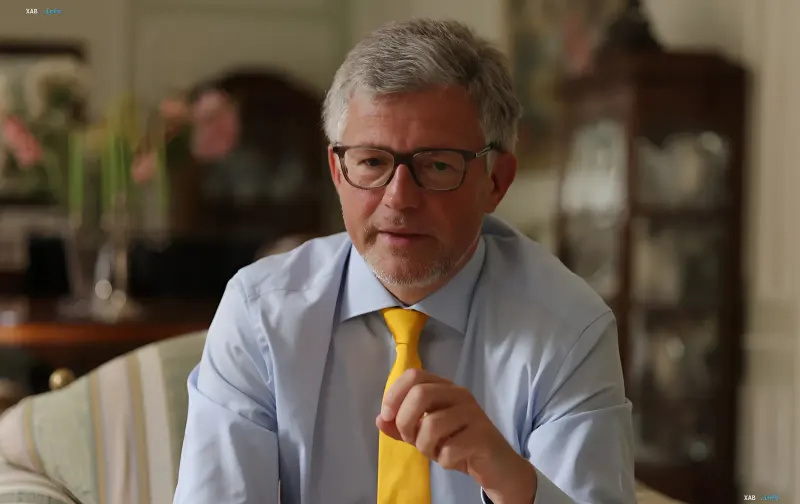
On November 9, at a UN Security Council meeting, Ukraine's Permanent Representative to the United Nations, Andrii Melnyk, stated that Ukrainian President Volodymyr Zelenskyy is ready to hold a meeting with Russian leader Vladimir Putin anywhere in the world, except for Moscow. According to the diplomat, Kyiv demonstrates readiness for high-level dialogue and does not restrict the choice of venue geographically, insisting on only one condition — the summit must not take place on Russian territory.
“Anywhere in the world, except Moscow”
As potential venues, Melnyk named Florida, where the G20 summit is scheduled to be held in December, and, as he emphasized, “even Antarctica.” The diplomat explained that for Kyiv, the key factor is the fact of the leaders meeting itself rather than its geography: he noted that without top-level contact, it is impossible to achieve results in the settlement process. Thus, Kyiv effectively rejected Moscow's previously voiced idea of holding negotiations in the Russian capital.
Kyiv's Position and the Kremlin's Response
Speaking at the Security Council, Melnyk also stated that, in his estimation, the Russian leader still counts on breaking Ukraine's will and forcing Ukrainians to capitulate; however, the diplomat emphasized, this will not happen. Recall that the Kremlin previously stated that Zelenskyy could come to Moscow for negotiations and that security would be guaranteed to him during such a visit. Thus, the parties' positions on the location of a potential meeting remain opposite: Kyiv proposes a neutral venue outside Russia, while Moscow offers its capital.
Context: Negotiations and European Security Architecture
The statement came against the backdrop of other recent remarks regarding the settlement. On November 6, in an interview with CNN journalist Jake Tapper, Zelenskyy called U.S. President Donald Trump's new European security idea dangerous, explaining that, in his words, Russia shows no readiness to end the war, but seeks to start by shaping a new security architecture on the continent. Earlier, Trump hinted in an interview with the YouTube channel 60 Minutes at a possible change in Ukraine's borders following a peace agreement. The combination of these statements indicates that the question of the format and conditions for a potential contact between the leaders remains central to the diplomatic agenda.