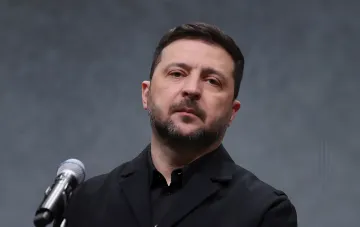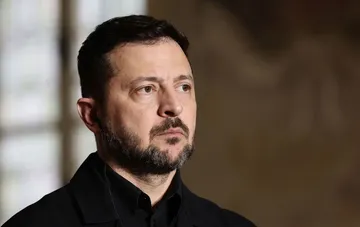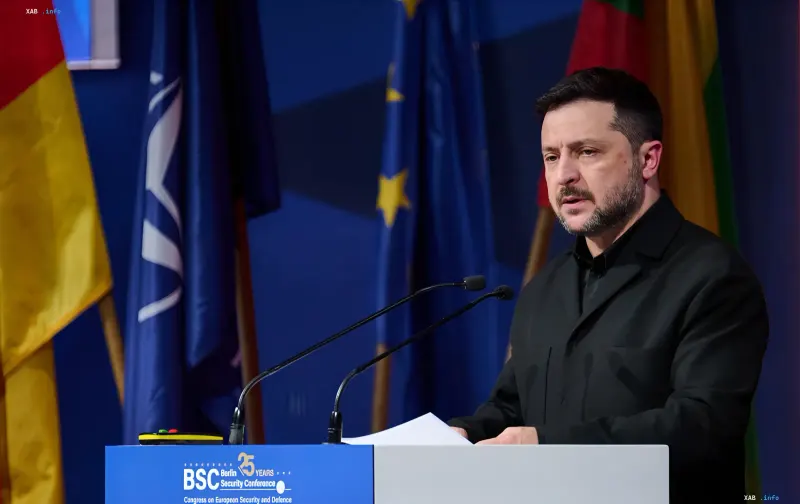
Ukrainian President Volodymyr Zelenskyy, speaking at the Berlin Security Conference (BSC), which marks the 35th anniversary of the congress on European security and defense, called on European leaders to carefully assess the scale of military construction that Russia has been conducting in recent years. According to the Ukrainian leader, the volume of military facilities being created significantly exceeds the needs dictated solely by the conflict on Ukrainian territory.
"Is all this just for Ukraine?"
Zelenskyy directly asked those present: "Look at the military infrastructure that Russia has built in recent years. Is all this just for Ukraine?" According to him, the volume of facilities being built is "too large for one country – for Ukraine." Thus, the Ukrainian President effectively stated that part of the Russian military infrastructure might be intended for use against European countries, which requires Brussels and national capitals to review their own defense strategies.
Context: Moscow's statements on readiness for war
Zelenskyy's speech came against the backdrop of previously published reports by RBC-Ukraine that Russia is demonstrating readiness for a military conflict with European states, while the official Kremlin publicly denies any desire to engage in an open conflict. This dissonance between military preparation and diplomatic rhetoric, according to Kyiv, only reinforces the need for Europe to increase its own defense capabilities.
UK position: Preparation for 2030
Statements from London echo the same sentiment. UK Defense Secretary Wes Streeting previously stated that Britain must be ready for a potential war with Russia as early as 2030. This means that British leadership views the scenario of a direct military clash with Moscow not as hypothetical, but as a working planning horizon that requires concrete budgetary and organizational decisions within the next four years.
Merz: A threat to democracy in Europe
German Chancellor Friedrich Merz, for his part, warned EU member states against complacency. According to him, Vladimir Putin's strategic goal goes beyond the defeat of Ukraine and includes undermining the democratic order in Europe. This statement emphasizes that Berlin views Russian aggression not as a local conflict, but as a systemic threat to the European political order.
What this means for European security
The combination of statements by Zelenskyy, Streeting, and Merz forms a unified signal: European capitals are increasingly coming to the opinion that the military threat from Russia is not one-sided, but multi-vector. The Berlin Security Conference, held as part of the 35th congress on European security and defense, served as a platform where this thesis was voiced publicly and pointedly—with a direct appeal to European allies. For Ukraine, this means that the issue of expanding defense support and integration into the European security system remains at the center of the agenda.