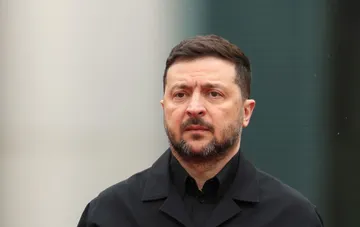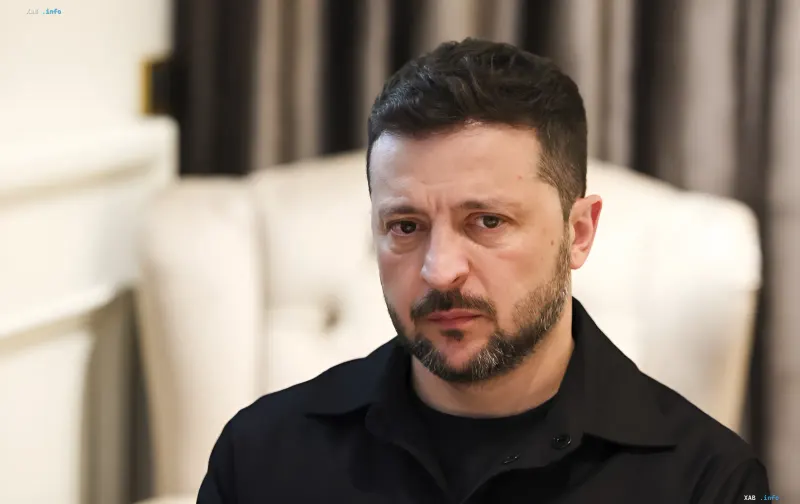
During a briefing in Brussels, Ukrainian President Volodymyr Zelenskyy stated that the Starlink satellite communication system is still not operating at full capacity on the front lines, which prevents the Armed Forces of Ukraine from completing a number of tasks. According to him, the United States did not shut down the network, but reduced its speed; later, partners increased this parameter, yet it has not returned to its previous level. This was reported by RBC-Ukraine with reference to the head of state’s address.
Why the AFU does not use Starlink for deep strikes
Zelenskyy emphasized that Ukrainian military personnel do not use Starlink for so-called deep strikes — attacks or retaliatory strikes on Russian territory. He explained that this was precisely why Kyiv had previously appealed to SpaceX and the White House with a request to enable such a capability. “If we had it, we certainly wouldn’t have asked,” the president noted, adding that the restriction on Starlink’s capabilities became a “very unpleasant and dangerous surprise” for Ukraine.
Intercepting Shaheds and the speed problem
According to Zelenskyy, Starlink is used at the front to intercept Shahed jet drones, which he claims strike civilian objects. Special interceptors are used for this — drones that move at high speed and operate via Starlink. The president pointed out that after the speed reduction, Ukrainian forces were unable to shoot down a certain number of these devices. The Shaheds were flying at speeds of over 400 kilometers per hour, while the communication speed, according to him, was reduced to 78 km/h, which he assesses hindered the protection of the population.
Use in occupied territories
The second area of application mentioned by Zelenskyy is work in occupied territories, where he says Starlink is used to engage military targets in a mid-strike format. He also stated that drones are used to deliver water and food to people at positions. The president estimates that the reduction in connection speed impacted Ukraine’s ability to defend the population.
What partners say and the international context
Zelenskyy reported that partners relayed signals from the White House regarding the restoration of Starlink's high-speed capabilities. When asked if the network had returned to its previous speed, he replied in the negative but confirmed that the speed had been increased. Earlier, according to media reports, Republican senators proposed that Ukraine stop strikes on Russian energy facilities for 100 days in exchange for expanding Starlink coverage for the AFU. Additionally, German Foreign Minister Johann Wadephul criticized the US restriction on Starlink speed in Ukraine, which he says Germany also pays for.