Every second, billions of invisible particles traveling from the far corners of the Universe pass through the Earth, buildings, and human bodies. Most people are completely unaware of this constant cosmic "rain," yet physicists have long since learned to measure its intensity and explain its nature. According to Michael Pervik, a physics professor at the University of Nevada, Las Vegas, roughly 100 trillion neutrinos — elementary particles with no electric charge that interact almost not at all with ordinary matter — pass through every person's body each second. This is no metaphor or exaggeration: it is a continuous stream that begins with thermonuclear reactions in the Sun's core and ends with supernova explosions in distant galaxies.
Where neutrinos come from and why they are "invisible"
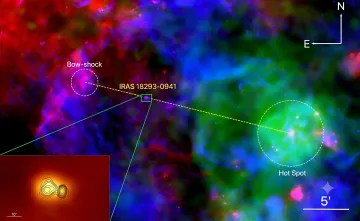
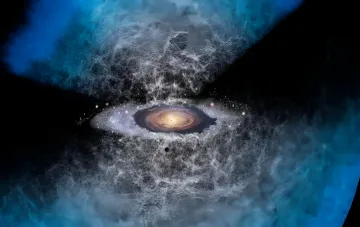
Most of the neutrinos passing through us are born in the thermonuclear fusion occurring in the Sun's core, where protons are converted into helium, releasing energy and, in the process, neutrinos. A smaller but more energetic portion of the stream arrives from extreme astrophysical events: supernova explosions, and the accretion of matter onto supermassive black holes at the centers of galaxies. It is precisely the lack of electric charge and the negligible mass of neutrinos that allow them to fly freely through planets, stars, and human bodies without being deflected or slowed down. Over an entire human lifetime, only one or a few of these particles are likely to collide with an atom in the body — the probability of interaction is so small that neutrinos are rightly called "ghost particles."
Muons and primary cosmic rays: the second front of the bombardment
In addition to neutrinos, the Earth is continuously bombarded by primary cosmic rays — protons and the nuclei of heavy elements (from helium to iron) accelerated to speeds close to the speed of light. Upon colliding with air molecules in the upper layers of the atmosphere, they generate cascades of secondary particles, among which muons — heavier, negatively charged analogs of electrons — predominate. Unlike neutrinos, muons reach the Earth's surface at a measurable intensity: at sea level, roughly one such particle passes through an area of one square centimeter every minute. Tens to hundreds of muons pass through a human body each second, with only 1–2 particles crossing the area of a palm in the same second. Despite their electric charge, the contribution of muons and the accompanying neutrons to the natural radiation background remains minimal.
Radiation risk: the numbers that reassure
The total dose of cosmic radiation received by the average person is about 0.4 millisieverts per year — a value comparable to the dose from several chest X-ray images. For context: the overall natural radiation background, including radiation from the soil, building materials, and radionuclides in food, amounts to roughly 2.4 millisieverts per year. Thus, the cosmic component is only a small part of what a person receives from nature on a daily basis. Due to their lack of charge and minimal mass, neutrinos create no additional radiation risk whatsoever, while muons, although charged, pass through tissues without causing ionization in significant quantities. The physicists' conclusion is unambiguous: the cosmic "bombardment" is safe for health.
How scientists catch the invisible: the IceCube Observatory and muon tomography
Despite the rarity of interactions, neutrinos can be detected. A prime example is the IceCube observatory in Antarctica, where a cubic kilometer of ice is equipped with thousands of light sensors that catch the rare flashes of Cherenkov radiation produced when neutrinos collide with atomic nuclei in the ice. In parallel, muon sensors find application in a completely different field: with their help, physicists have already scanned the internal cavities of the ancient Egyptian pyramids, revealing hidden chambers without any destructive intervention. High-energy neutrinos, in turn, allow astrophysicists to peer into the most extreme corners of the Universe — regions from which ordinary light or radio waves cannot escape because of the colossal density of matter. Thus, the invisible particles that pass through us every second become a key to understanding the most distant and mysterious processes in space.