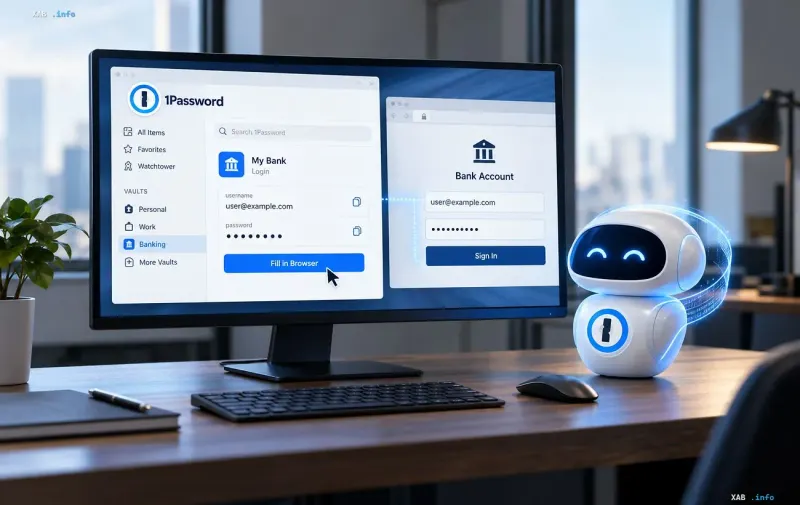
1Password has officially introduced the 1Password for Agents tool, allowing artificial intelligence systems to authorize user accounts without exposing the actual passwords. The emergence of this technology in October 2026 came in response to the widespread adoption of autonomous digital assistants and growing concerns within the financial sector regarding the security of such operations.
How the Secure Ecosystem Works
The new platform builds a secure communication chain between three key participants: the account owner, the AI agent itself, and the password manager. When the digital assistant attempts to log into a target resource, it does not request a username and password from the user, but instead sends a unique digital key to the 1Password system to verify its authenticity.
Next, the account owner receives a special notification on their device and manually confirms the operation. Afterward, the password manager independently fills in the credentials, allowing the AI to complete the task without leaving copies of sensitive information in third-party service memories.
Bank Anxiety and Financial Sector Reaction
The launch of the innovative tool comes amid serious concern from American banking institutions. Axios reports that financial organizations have begun recording regular AI system activity inside customer accounts when citizens voluntarily delegate routine tasks to them.
The main issue for banks remains the inability to accurately identify whether the operation is being performed by the owner themselves via a trusted agent or if the algorithm is acting bypassing established protocols. Representatives of major banks, particularly Chase, insist on the unacceptability of transferring confidential credentials to third-party services.
Context of Security Industry Development
Direct transfer of secret combinations to artificial intelligence is recognized by 1Password developers as an extremely risky practice, as data copies settle in assistant internal databases and escape human control. The new tool aims to return full sovereignty over credentials to users while maintaining the flexibility to choose any digital assistant.