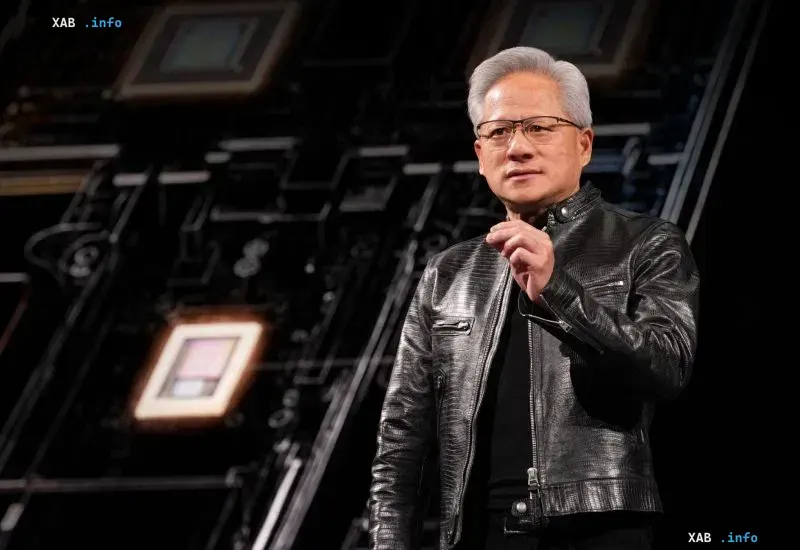
Nvidia CEO Jensen Huang, in an interview with Fortune during a visit to London as part of his European tour, made a sharp statement regarding the acceptable risks associated with artificial intelligence. According to him, all high-profile cybersecurity incidents involving AI agents could have been prevented with stricter oversight. 'I am not willing to accept any cybersecurity incidents. We should not tolerate a single one. We must do everything to avoid them,' Huang emphasized. His stance sounds like a direct response to recent remarks by OpenAI CEO Sam Altman, who in an interview with Politico urged society to accept unintended harm from AI models, arguing that the good they create 'outweighs' potential harm by orders of magnitude.
Analogy with the Early Internet: AI Agents Must Live in a 'Sandbox'
Justifying the need for strict limitations, Huang drew a direct parallel with the early days of the internet. Back then, navigating to an unknown website could lead to a computer virus infection. The problem was solved by opening web pages within an isolated browser environment, which prevented malicious code from affecting the rest of the system. According to the Nvidia chief, AI agents should operate on a similar principle: staying within a secure container where they cannot cause damage beyond their granted authority. In his belief, this approach would eliminate most incidents that have already been recorded in corporate and government system infrastructures.
'If You Believe in Civilizational Collapse, Stop Working on It'
Huang also addressed the rising wave of alarming predictions about an 'AI apocalypse.' Taking a jab at the head of Anthropic, who actively promotes such sentiments in the public sphere, the Nvidia CEO stated: 'I don't know why anyone would be willing to support the development of a technology that will lead to the collapse of civilization as we know it. And if they believe that, they should stop working on it.' In another context, as reported by industry publications, Huang suggested that AI labs unable to control their own experiments should be shut down. Thus, his position boils down to the fact that responsibility for safety lies with developers, not with society, which is being asked to 'accept risks.'
European Context: $2 Billion in Investments and a Bet on Open-Source
The comments to Fortune came amid Huang's active European tour, during which he stated that 'Europe must join the AI race.' The week following the interview, the Nvidia CEO will announce where $2 billion in European investments on behalf of the company will be directed. This figure does not include the $8 billion Nvidia has already promised to invest in the Old World's economy. Huang believes that open-source models are a sensible choice for European countries striving to catch up with the US in the AI sector. The company already supports the French startup Mistral, which develops open-weight models. According to Huang's assessment, such models are cheaper to develop, although their creators are still forced to invest in hardware resources, including Nvidia chips.
Diverging Positions: Altman vs. Huang
Huang's stance forms a notable contrast with Sam Altman's rhetoric. In a recent interview with Politico, Altman warned that humanity will face a wave of cybersecurity issues driven by the proliferation of open-source models competing with OpenAI's developments. At the same time, he urged not to fight this process, but to accept it as an inevitable consequence of technological progress. Huang, however, insists that no incident is 'inevitable' and that with the right control architecture, all of them are preventable. This divergence in approaches — 'accept risks' versus 'exclude risks' — is becoming one of the central debates in the AI industry at its current stage of development.