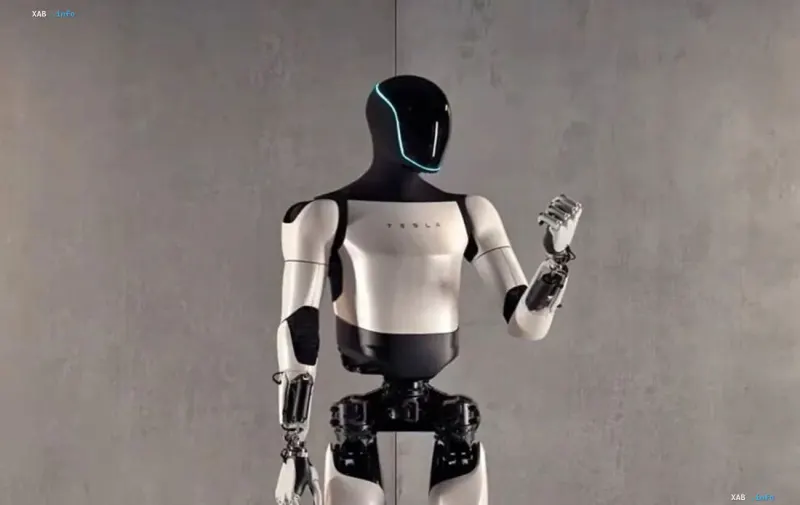
Tesla has officially transitioned to assembly-line production of Optimus humanoid robots at its facilities in California, which were previously used for manufacturing electric vehicles. This was announced in the company's third-quarter shareholder report for 2026, published in October of this year. Elon Musk announced plans for a large-scale ramp-up in the production of this innovative product.
Plant Conversion and Production Scaling
The production lines in California were completely retrofitted to robotics standards, enabling the launch of the first phase of full-scale humanoid assembly. According to Tesla management plans, the weekly production volume of robots is expected to reach 20,000 units by the end of 2027. At the same time, Musk emphasized that the process will occur gradually due to the novelty of the product category.
To ensure stable operation and autonomy for the robots, the company is actively expanding its computing infrastructure. By the end of 2026, the power of clusters dedicated to artificial intelligence training is planned to reach 400 megawatts. Concurrently, a new manufacturing facility is being built in Austin, scheduled to begin operations in 2027 to improve the robots' spatial navigation capabilities.
Financial Performance and Automotive Business Challenges
Massive investments in robotics and autonomous driving development coincide with a stabilization in Tesla's automotive segment. The company's revenue for the third quarter of 2026 reached 28.04 billion US dollars, showing virtually no change compared to 2025. Meanwhile, net income dropped by 43 percent due to high expenses in new technological directions.
An additional factor in manufacturing optimization is addressing battery supply constraints. Tesla is expanding battery production in Berlin, building a facility in Texas, and deploying LFP cell assembly lines in Nevada. Concurrently, the company is ramping up shipments of Megapack energy storage units and increasing the output of 4680 battery cells.
Significance of the New Stage for the Robotics Market
Tesla's transition to assembly-line production of humanoids marks a major milestone in the commercialization of general-purpose robotics. The company's ability to integrate artificial intelligence developments with industrial manufacturing could significantly transform the global labor and automation market. The project's future success will depend on the pace of overcoming technological barriers and the company's ability to maintain funding for Musk's ambitious plans.