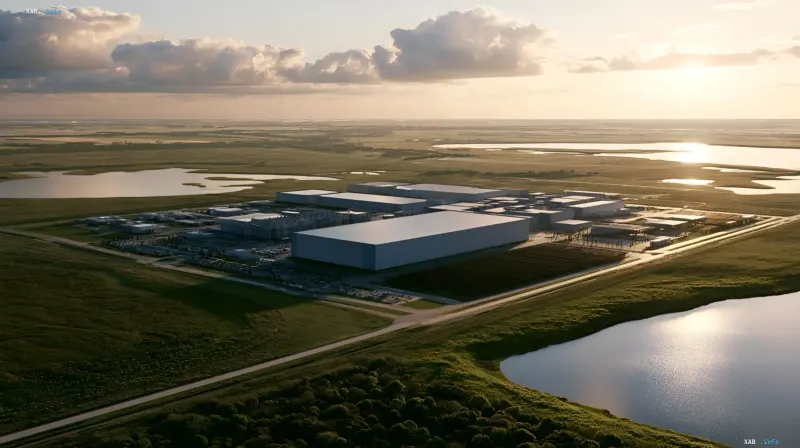
Tesla has submitted an application to build a large-scale ultra-high-purity polysilicon manufacturing plant in Nueces County, Texas. According to documents, investments in the project between 2027 and 2030 will exceed $3.1 billion. The facility will become a key link in Tesla's vertically integrated manufacturing chain in the US and will produce raw materials for high-efficiency solar cells. The company's decision reflects a strategic drive to reduce the American solar market's dependence on imported raw materials, a significant portion of which are currently produced outside the country.
Vertical Integration: Why Tesla Needs Its Own Polysilicon
Polysilicon is a fundamental material for photovoltaic cell manufacturing. Without it, the creation of next-generation solar panels—including high-efficiency N-type cells that provide higher solar energy conversion efficiency—is impossible. Today, a significant share of global polysilicon production is concentrated outside the US, creating vulnerability for American solar energy manufacturers. Tesla, expanding its own solar lineup and energy storage infrastructure, views control over the raw material tier as a prerequisite for competitiveness. The new plant in Texas will allow the company to close the production cycle: from raw materials to the finished photovoltaic module.
Technology and Production Process
At the Nueces County plant, polysilicon will be produced from ultra-pure trichlorosilane, an organochlorine compound that serves as the starting reagent in the chemical-thermal process for obtaining electronic- and photovoltaic-grade silicon. The technology requires strict control of temperature, pressure, and reaction environment purity, which imposes high demands on the enterprise's engineering infrastructure. The finished polysilicon will be supplied to Tesla's own manufacturing facilities for solar cell production, allowing the company to guarantee the stability of quality and raw material volumes without ties to external suppliers.
Construction Timeline and Launch
Construction of the facility is scheduled for 2027 and, according to company estimates, will last about four years. Commercial operation of the plant is targeted for 2030. By 2032, the enterprise is expected to provide 515 permanent jobs for qualified personnel. During the construction phase, the project will annually support the creation of approximately 1,770 jobs in Texas, encompassing both direct construction workers and employees in related industries such as logistics, engineering services, and equipment supply.
Economic Impact for Texas
According to Tesla's own estimates, the total economic impact of the enterprise on the state by 2065 will reach $63.5 billion. This figure includes not only direct investments and wages, but also the multiplier effect: purchases from local suppliers, development of supporting infrastructure, and growth of the Nueces County tax base. For a region whose industrial structure has historically relied on the oil and gas sector, the emergence of major high-tech manufacturing in solar energy represents a notable structural shift. Nueces County, located in southwest Texas, thus gains a new anchor employer with a planning horizon spanning decades ahead.
Context: US Dependence on Polysilicon Imports
The American solar market has experienced growth in recent years, spurred by government renewable energy support programs and corporate carbon neutrality commitments. However, the supply chain remains fragmented: a significant share of polysilicon, crystalline wafers, and even finished modules is imported from Asia. Tesla's initiative fits into the broader trend of "reshoring"—bringing high-tech manufacturing back to the US. If the Texas plant is launched on schedule, it will become one of the largest American polysilicon production facilities and significantly reduce the import share in the domestic solar industry's raw material base.