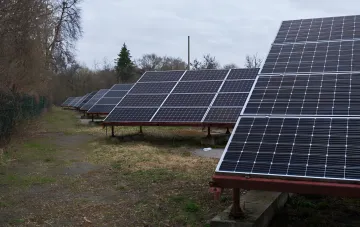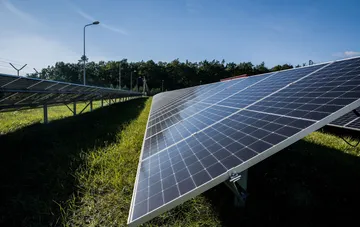
Extended blackouts and communication disruptions present a serious challenge for Ukrainian businesses, going far beyond simple fuel storage or backup generators. Preparing for the 2026/2027 winter has turned into a matter of building a complex system of autonomy, enabling enterprises to continue operations, serve clients, and maintain communication even during prolonged power outages and electronic warfare (EW) interference. According to industry observations, demand for alternative power generation and reliable satellite communication among civilian users has now approached the level of military orders — the number of civilian requests is roughly equal to military ones. It is in this context that the Ukrainian publication RBC-Ukraine presented a special project where three domestic companies — iSolar (solar power plants and energy storage systems), TOKMAK DIESEL MASH (backup and industrial power plants), and Adaptis (Starlink satellite communication solutions) — offered specific technological responses to the issue of business continuity.
Why a generator is no longer enough
Practically every working day of any enterprise depends on the availability of stable voltage in the grid and the cost of securing it. Most production machines, server equipment, and climate control systems function only with stable power, and sudden voltage spikes shorten the lifespan of equipment and often disable it. Diesel and gasoline generators, which companies traditionally turn to first, are indeed well-suited for short-term backup, but they require a constant supply of fuel, regular maintenance, and the presence of service personnel. The real cost of such a solution consists not only of the price of the unit itself but also of fuel logistics, depreciation, personnel costs, and the risk of breakdown at a critical moment. Alternative energy, conversely, offers not just stable power and lower electricity bills, but also the opportunity to monetize one's own generation depending on the project configuration and energy market conditions.
Sun, storage, and smart management: How a hybrid system works
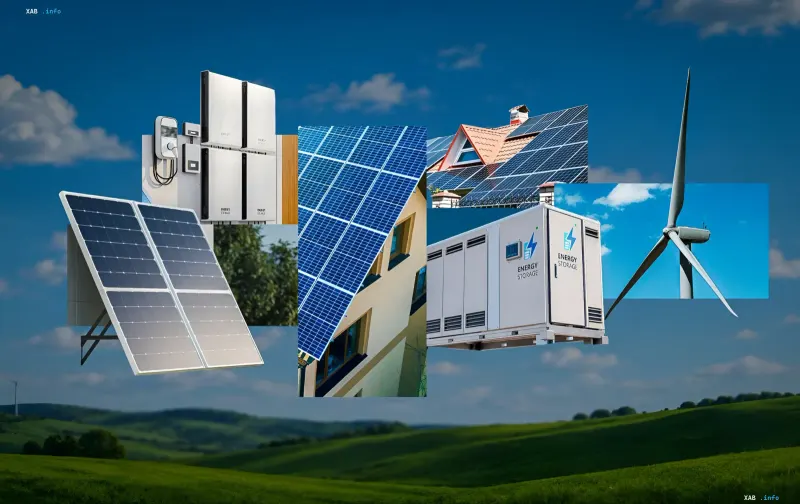
A solar power plant generates electricity during daylight hours, while an energy storage system stores it for use at the most advantageous moments: during outages, when lighting and equipment operation are critical for the enterprise, or during "peak rate" hours, when selling the stored energy yields maximum margin. The Ukrainian electricity market functions on a model where prices are set a day ahead and change throughout the day based on demand. Morning and evening peak consumption hours are traditionally the most expensive. An Energy Management System (EMS) tracks these fluctuations and automatically determines when to store, when to feed energy into the grid, and when to draw power from the public grid. As a result, the enterprise not only meets its own needs but can also sell excess stored electricity during the most profitable time windows. Collectively, the three components — generation, storage, and intelligent management — address three key business tasks: ensuring continuity of operations and team retention, reducing operational electricity costs, and generating additional income from the sale of stored energy.
Payback period and specific iSolar cases
This is why hybrid energy solutions are increasingly seen not as an expense item, but as an investment in operational resilience. Compared to other popular investment areas — real estate or stock instruments — projects in alternative energy are distinguished by a noticeably shorter payback period: according to iSolar Development estimates, it averages about four years. In over eight years of operation, iSolar has implemented more than 3,000 projects. Among the notable examples is a hybrid plant for a business center in Western Ukraine, combining solar panels and energy storage systems: according to the company's calculations, the annual savings for the client exceed 6.46 million hryvnias. For a manufacturing enterprise, iSolar built a grid-connected solar power plant with a capacity of 200 kW, which, according to internal calculations, provides savings of about 2.25 million hryvnias per year. In Khmelnytskyi, a backup power system based on FOX ESS equipment was installed for a HoReCa facility, supporting key processes during outages and providing, according to the company, about 2.34 million hryvnias in annual savings. "We separately calculate the economics of each project: we study the company's needs, prepare a technical solution and a commercial proposal. The team accompanies the project from calculations to launch, ensuring the system meets the tasks and financial model of a specific business," explains Yevhen Didenko, head of iSolar Development.
Distribution, ratings, and expansion
In addition to project activities, iSolar is developing its own distribution arm, iSolar Partner Hub, which works directly with international manufacturers and supplies equipment to Ukraine. This allows clients to receive certified equipment with a warranty and on competitive supply terms. In 2026, the company entered the TOP-20 largest energy equipment installers in Ukraine according to Forbes Ukraine. Simultaneously, iSolar began developing a separate area focused on expanding the line of solutions for corporate and industrial clients, which points to steady growth in demand for complex energy autonomy in conditions where winter blackouts and communication interruptions become a systemic planning factor for any Ukrainian enterprise.