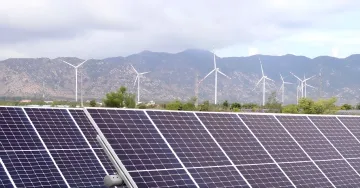
At the Forbes «Business Energy» conference, D.Solutions CEO Serhii Kovalenko presented data that significantly reevaluates the payback periods for investments in renewable energy. According to him, solar power plants and industrial energy storage systems, which until recently were viewed exclusively as a defensive tool against blackouts, have turned into a full-fledged source of additional income for enterprises. The standard payback period, which historically stood at 10–12 years in the energy sector, has dropped to 2.5–3 years, making such projects competitive even amid high borrowing costs.
Three Waves of Transition to Energy Independence
According to D.Solutions estimates, about 30% of medium and large Ukrainian companies have already fully secured their energy independence. Another approximately one-third of enterprises have taken the first steps in this direction by installing individual generation or storage elements. The remaining share of businesses, according to Kovalenko, is at the stage of choosing appropriate solutions. Thus, the market is passing through three consecutive waves: from pilot installations to complex systems, and then to full autonomous generation.
From Generators to Comprehensive Solutions
Kovalenko noted a structural shift in the business approach to backup power. While in the first months of the energy crisis enterprises relied predominantly on diesel and gas generators as the only way to survive outages, today the market is moving toward comprehensive energy solutions. These include solar panels, industrial battery storage, and load management systems that allow not just surviving a blackout, but systematically reducing electricity costs throughout the year.
The Energy-as-a-Service Model
«As a supplier, we are transitioning from selling electricity to the Energy-as-a-Service model. We supply electricity to businesses, design dedicated generation based on consumption data, finance its installation, and manage it for the client,» explained Serhii Kovalenko. This model removes the need for large initial capital expenditures from the enterprise: the supplier takes care of design, financing, and operation, while the client receives electricity at an agreed tariff, which is generally lower than grid prices.
Practical Recommendations for Business
For companies that have not yet decided on a strategy, Kovalenko advises viewing energy independence through the lens of energy efficiency: first and foremost, reducing consumption and optimizing the price per unit of electricity. As a tool for small businesses and residential consumers, D.Solutions has launched a free «Autopilot» feature within the YASNO Power platform, which automatically reduces electricity costs and maintains the necessary home battery charge in case of outages. The combination of these measures, according to the company, forms a sustainable model where energy independence ceases to be an expense item and turns into an element of operational efficiency.