The 20th mental health center of the nationwide “Return” network, founded by Viktor and Olena Pinchuk, has opened in the Lviv region. The new facility is located in the town of Vynnyky at 31 Ivasyuka Street. According to the organizers, more than 4,000 service members, veterans, and their family members will be able to receive free outpatient psychological, psychiatric, and psychosocial assistance here annually. The opening of the center is the latest milestone in expanding the network, which already covers the majority of Ukraine's regions.
A Barrier-Free Designed Space
Inside the center, there are four individual therapy rooms, two group session rooms, a two-bed day hospital ward with multifunctional medical beds, a manipulation room, a reception desk with a waiting area, and inclusive restrooms. Special attention during the design phase was paid to accessibility: wide doorways, no thresholds, non-slip flooring, and adapted restrooms for wheelchair users. According to project manager Svitlana Hrytsenko, such solutions allow people with any mobility restrictions to seek help, which is especially important for veterans following mine-blast injuries.
Evidence-Based Methods and Modern Equipment
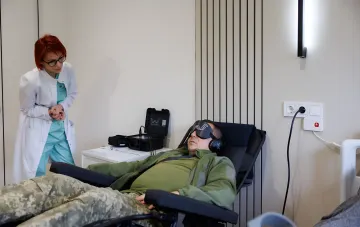
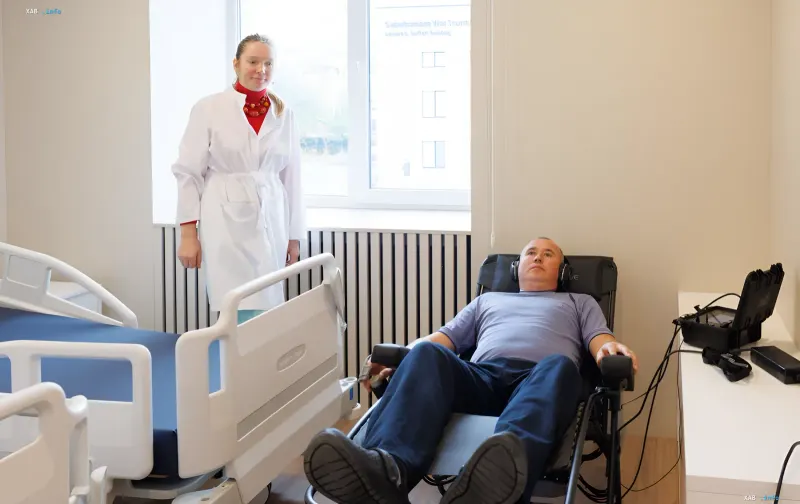
The center is equipped with the Shiftwave System (USA) for psychological unloading and stress management, as well as art therapy materials, metaphorical associative cards, psychological games, and anti-stress tools. The professional library has been replenished with 40 books on psychology, psychiatry, and psychotherapy. A multidisciplinary team works with visitors: psychiatrists, a clinical psychologist, a psychotherapist, and nurses. When necessary, a veteran support specialist and a hospital social worker are involved. Cognitive behavioral and trauma-informed therapy, stabilization and self-regulation techniques, and psychoeducation are applied in practice. Individual and group consultations, art therapy sessions, and online counseling are conducted. The stated principles of work are confidentiality, respect for human rights, an empathetic approach, and the prevention of stigmatization.
Addressing the Consequences of Combat Experience and Families
Olha Kytura, the head of the center, noted that the consequences of combat experience can manifest as sleep disorders, increased anxiety, intrusive memories, and impairments in memory and attention. According to her, special attention is required for people after mine-blast injuries, which can be accompanied by cognitive impairments and emotional-behavioral changes. The multidisciplinary team provides a comprehensive assessment of patients' conditions, an individualized approach to treatment, psychiatric support, psychotherapy, and psychological backing. “An important part of recovery is also working with families, because the consequences of combat experience affect not only the military, but also their relationships with loved ones and the quality of life of the entire family,” Kytura emphasized.
Combating Stigma: “Seeking Support Should Be as Natural as Caring for Physical Health”
Svitlana Hrytsenko pointed out that the fear of judgment and prejudice still deters many people from consulting a specialist. “Sleep disturbances, constant anxiety, emotional exhaustion, or relationship difficulties are already sufficient reasons to consult a specialist,” she said. According to her, the project's task is not only to provide access to free assistance, but also to change the attitude towards mental health care so that seeking support becomes the norm rather than a reason for stigmatization.
A Network of 20 Centers: Public-Private Partnership
The “Return” project represents a public-private partnership model: philanthropists create modern, comfortable, and barrier-free mental health centers on the basis of state and communal medical institutions, ensuring access to free professional care. To date, the network unites 20 centers in various regions of Ukraine — in Vinnytsia, Dnipro, Zhytomyr, Ivano-Frankivsk, Kyiv and the Kyiv region, Kremenchuk, Kropyvnytskyi, the Lviv region, Lutsk, Odesa, Poltava, Rivne, Ternopil, Uzhhorod, Khmelnytskyi, Chernivtsi, Cherkasy, and other localities. The opening of the Lviv center completes the next stage of network scaling and brings professional psychiatric and psychological care closer to patients' places of residence.