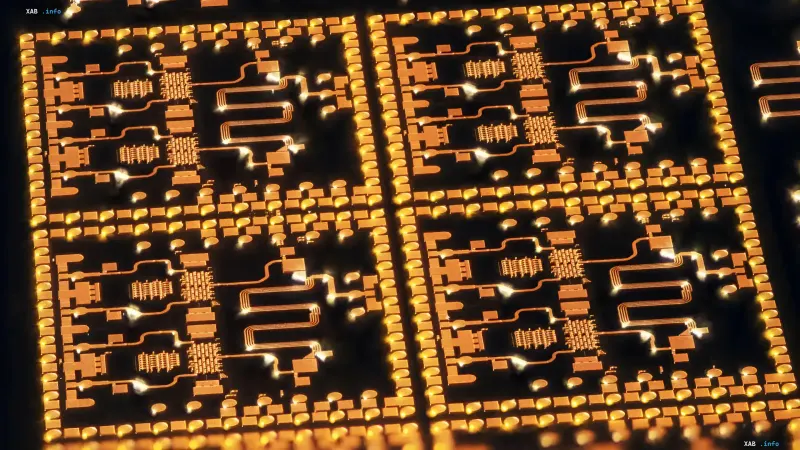
Northrop Grumman has officially unveiled a revolutionary new radio frequency chip named FORTITUDE, built on advanced gallium nitride (GaN) technology. According to the developers, this miniature microcircuit is capable of fundamentally transforming the design of modern radio electronic equipment by combining multiple signal processing functions into a single unit.
Innovative Architecture and Superlattice
At the core of FORTITUDE's semiconductor structure lies a patented technology of numerous ultrathin semiconductor layers combined into a so-called superlattice. This architecture allows engineers to control electron movement within the crystal much more efficiently and significantly increase charge density. As a result, the chip can withstand roughly ten times the load compared to standard GaN-based counterparts without requiring an increase in the semiconductor's physical dimensions.
Multifunctionality and Miniaturization
Traditional radar and communication systems require a vast number of discrete components for radio frequency filtering and switching, which inevitably leads to heavier equipment and higher power consumption. The FORTITUDE chip handles both tasks simultaneously while fitting into a package roughly the size of a rice grain. This unique layout delivers triple the power and up to 20 times higher signal quality and purity.
Controversial Data
Despite the impressive technical specifications claimed by Northrop Grumman — including the ability to switch signals in under a nanosecond across a range from kilohertz to 20 GHz and reduced energy losses — independent experts note a lack of detailed publicly available field tests. The company itself positions the technology as a versatile solution for military and commercial needs, including radars, satellites, and 6G networks, though mass production timelines and pricing remain undisclosed.
Application Prospects
Potential deployment areas cover critical communication and defense sectors, including electronic warfare systems, GPS navigation equipment, and counter-drone systems. The emergence of such compact and powerful semiconductor components paves the way for fundamentally new onboard systems capable of operating under severe radio interference and extremely congested frequency spectra.