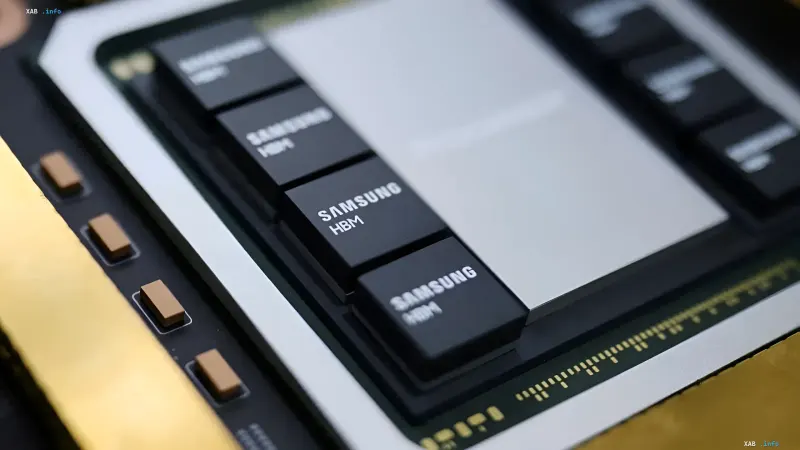
South Korean tech giant Samsung is preparing to significantly strengthen its position in the high-performance memory market by taking its product lineup to the next level. According to recent analytical reports and industry leaks, the company is considering pricing its next-generation HBM4 memory at $4 to $5 per gigabyte. By comparison, the previous generation HBM3E was priced at roughly $1.50 for the same capacity, representing a potential threefold increase in cost for a critical component in modern computing systems.
Background and Long-Term Contracts for 2027
While the industry's transition to the HBM4 standard is still taking shape, Samsung is already holding active preliminary consultations with key customers regarding deliveries for 2027. A unique characteristic of the high-speed memory market is the necessity of securing long-term strategic agreements in advance. Market participants lock in required volumes and basic conditions beforehand, after which manufacturers transition to mass production and finalize financial terms. This approach minimizes overproduction risks and guarantees steady utilization of advanced fabrication lines.
Cost Growth Factors and Technological Features
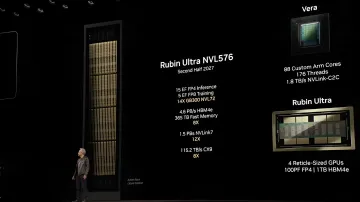
The primary drivers behind this notable price jump include not only general semiconductor and DRAM shortages but also the significantly enhanced technical specifications of HBM4. The new memory offers unprecedented bandwidth, which is critically important for AI accelerator developers and data centers. Because the performance of end AI systems directly relies on memory subsystem capabilities, chip creators are willing to pay a premium for top-tier solutions, allowing Samsung to expect higher profit margins.
Financial Context and Business Diversification
An aggressive pricing policy for HBM4 is crucial for Samsung against the backdrop of forecasts for other corporate divisions. According to analyst estimates, the operating profit of the company's non-memory businesses could decline significantly compared to previous periods, shifting from 6.74 trillion won in 2025 to 3.92 trillion won in the current year, 2026. Amid such fluctuations, the successful launch and high profitability of the new memory generation will become a vital factor for the tech giant's financial stability.
Contradictory Data
While Maeil Business reports that pricing is being discussed at $4–5 per gigabyte, some alternative industry sources and analytical publications point to different estimations regarding agreements with key clients, particularly Nvidia. Certain experts note that actual payments for future modules may vary depending on order volumes and the degree of integration of custom logic dies produced with the involvement of third-party TSMC facilities. Nevertheless, the general trend toward a multiple increase in the cost of advanced memory modules is confirmed by most market participants.