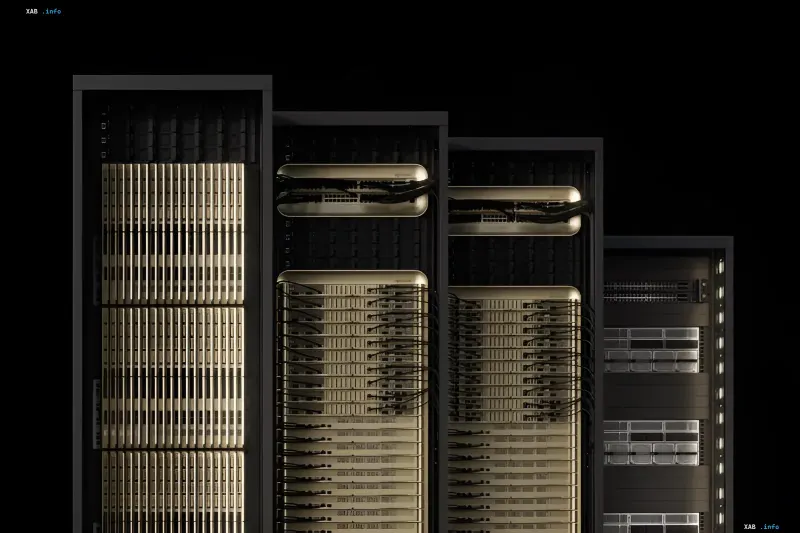
The world's largest producer of graphics accelerators, Nvidia, has instructed its partners in the data center (DC) and cloud services segment to significantly reduce the share of services provided to Chinese clients. According to industry sources, the company has notified cloud providers of the need to limit the volume of services rendered to companies associated with China to no more than 51 percent. Previously, no such quantitative restrictions existed in Nvidia's policy, making the innovation an unprecedented step within the US strategy of technological containment of the PRC.
Verbal Instructions Instead of Official Documents
A key feature of the new regulation is the form in which it was communicated to clients. According to available reports, the requirements were transmitted verbally through sales staff and Nvidia's regional divisions. The company has not issued official written documents regulating the 51-percent threshold. This creates a certain legal uncertainty: on the one hand, partners receive a clear directive; on the other hand, they lack a formal document to refer to when concluding or renegotiating contracts. Nevertheless, industry participants confirm that the instructions have been communicated to clients and are effectively already in effect.
Coverage of All Clients and Future Contracts Only
It is important to emphasize that the new rules apply to all Nvidia clients worldwide, not just data centers located in Asia. At the same time, the requirements apply exclusively to future contracts and do not affect existing agreements. This means that already concluded agreements with Chinese customers will be fulfilled in the previous mode until their expiration, but upon renewal or conclusion of new contracts, partners will have to comply with the established threshold. Nvidia commented on the decision, stating that "data centers and cloud infrastructure built on US chips serve as the foundation necessary for US model and application developers to compete globally," and added that US policy "encourages the use of US infrastructure in cloud services worldwide, strengthening the US position, influence, and creating domestic jobs.">
Black Market and Record Prices for B300
Nvidia's tightening policy comes against the backdrop of an active gray market for advanced accelerators in China. Washington is consistently cracking down on intermediaries helping to organize illegal chip deliveries and restricting Chinese companies' access to advanced equipment through foreign cloud services. A clear indicator of the shortage was an incident in October 2026, when a set of Nvidia B300 accelerators was sold for 18.5 million yuan (about $2.8 million) against an official international market price of $600,000. B300 chips are banned for sale to China and rank among the company's most advanced products; they are used by AI model developers such as Anthropic and OpenAI, among others. A price difference of more than four times indicates a critical shortage of computing power for Chinese tech companies.
"White List" and Reduction of Asian Clients
Throughout 2026, Nvidia more than halved the number of Asian clients authorized to purchase its accelerators and formed a so-called "white list" of organizations that have undergone strict verification to prevent products from reaching China. According to industry observers, this measure has indeed helped reduce shipments of Nvidia's advanced products to China via gray channels, i.e., smuggling. However, Chinese tech companies left without direct access to chips were forced to seek alternative routes—primarily renting computing power from foreign cloud providers. It is this channel that is now becoming the target of the new restriction.
Blow to Data Centers in Southeast Asia
To date, the US and China remain the largest consumers of computing power in the world, and Chinese technology companies are the main clients of data centers in Southeast Asia. Nvidia's new requirements put non-US data center operators before a difficult choice: urgently look for non-China-linked clients or scale down their operations. A representative of a Singaporean company noted that finding enough non-China-linked customers is an extremely difficult task, and strict compliance with the new requirements "will undoubtedly harm the business." Thus, the 51-percent threshold is becoming not just an internal Nvidia rule, but a de facto mechanism for restructuring global cloud infrastructure to serve Washington's geopolitical priorities.