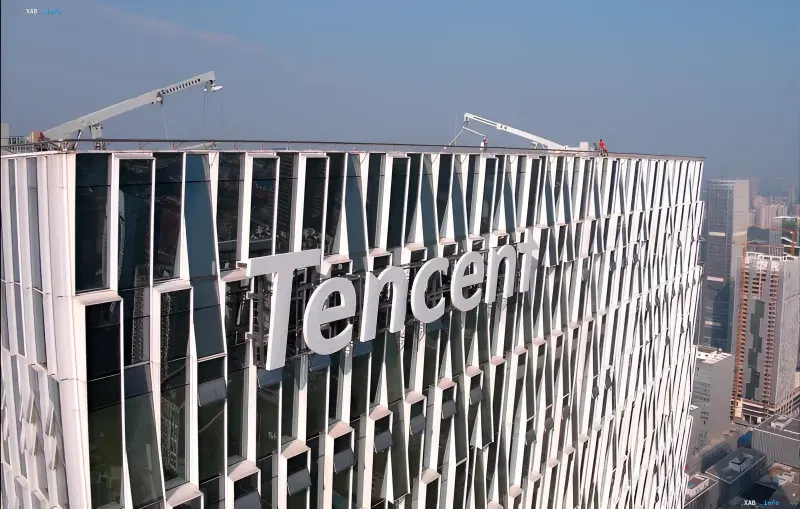
Chinese tech giant Tencent has officially acknowledged that export restrictions imposed by Washington will complicate the development of its new artificial intelligence model. The statement was made by company president Martin Lau during an earnings conference call discussing Tencent's financial results. According to him, the new measures will "set back all market participants in China," and in the short term, the company will likely need more time to build the next version of its AI model.
Washington Closes "Loophole" for Nvidia Chip Access
The admission was prompted by rules introduced by the US Department of Commerce on Monday, November 16, 2026. The new directive restricts Chinese companies' remote access to advanced Nvidia hardware hosted in overseas data centers. Thus, US authorities closed a channel long utilized by major industry players, including Tencent and Alibaba. In addition, updated US licensing requirements have made it harder to import AI accelerators into China via Southeast Asian countries, which previously served as an alternative supply route.
Accelerated Shift to Domestic Semiconductors
According to Martin Lau's assessment, the US directive will instead accelerate the formation of supply chains within China itself. Local companies, he noted, will reduce their heavy reliance on Nvidia hardware, which has become the "gold standard" in the artificial intelligence industry over recent years. "All Chinese players will have to rely on domestic supply chains and domestically produced chips. All development efforts must now focus on accelerating the growth of our own manufacturing," Tencent's president emphasized.
Huawei — The Main, Yet Still Lagging, Alternative Developer
Huawei is the largest alternative solution developer in China; however, as noted in the materials, its products still lag behind global leaders. This means that the transition to domestic accelerators will be accompanied by a certain technological gap and will require time to bring their own chips up to a competitive level. For Tencent and other companies, this means they must rebuild their model architectures and infrastructure around available hardware.
Context: Pressure on Chinese AI Escalates
The introduced measures are part of a broader Washington policy to restrict Chinese developers' access to advanced computing resources. For the market, this has a dual effect: on the one hand, a slowdown in the release rate of new flagship AI models in China; on the other hand, the stimulation of domestic semiconductor production. In the medium term, as implied by Tencent management's statements, the ability of Chinese companies to maintain their position in the global AI race will depend precisely on the development speed of domestic manufacturing.