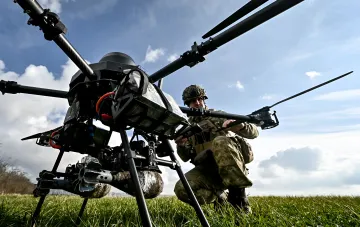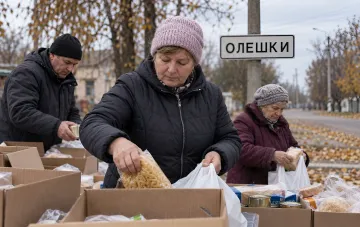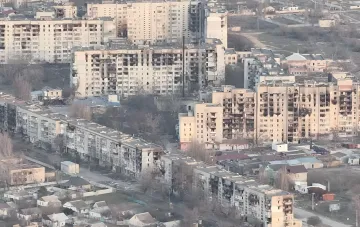

The Ukrainian military has conducted a large-scale humanitarian operation, delivering about 4 tons of food via drones to the temporarily occupied town of Oleshky in the Kherson region. The aid was distributed simultaneously to 100 pre-determined locations to support the local population, which has found itself in critical conditions of isolation.
Humanitarian Catastrophe under Occupation
According to Oleksandr Prokudin, the head of the Kherson Regional Military Administration, about two thousand civilians remain in Oleshky, including around fifty children. People are forced to survive without stable access to electricity, water, and food, as Russian occupation forces have effectively blocked any opportunities for evacuation or the legal delivery of humanitarian supplies.
Large-scale Operation by the Defense Forces
To carry out such a risky mission, efforts were united among various units, including the 30th Marine Corps, the "Hrom" tactical group, the 34th Separate Marine Brigade "Borisfen", the "Bulgarichi" unit of the 11th National Guard Brigade, the 34th National Guard Regiment, and the 79th Border Detachment. Delivering food across the Dnipro River using drones has been carried out systematically since March, but the current operation became one of the largest.
Occupiers' Opposition and Repressions
Contradictory Data
While official Ukrainian sources report regular and successful deliveries of thousands of kilograms of food and document cases of severe harassment of locals for attempting to receive aid, the Russian side traditionally ignores the humanitarian crisis in the region or obstructs the operation of Ukrainian drones by opening fire on them and accusing Ukraine of provocations. According to Kyiv, the occupiers intentionally shoot down drones, confiscate or resell food, and throw civilians into basements for trying to retrieve dropped packages.
International Reaction and Prospects
The Ukrainian authorities qualify the actions of Russian troops in Oleshky as war crimes, emphasizing that creating artificial famine and blocking humanitarian aid are aimed at intimidating the population. Ukrainian Foreign Minister Andrii Sybiha previously stated that city residents are forced to eat grass and weeds. Kyiv is actively raising the issue of the humanitarian catastrophe in Oleshky at UN and OSCE platforms, demanding a harsh international response to the invaders' crimes.