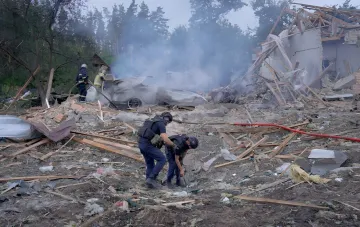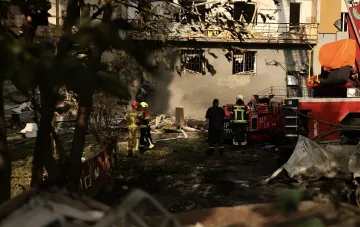

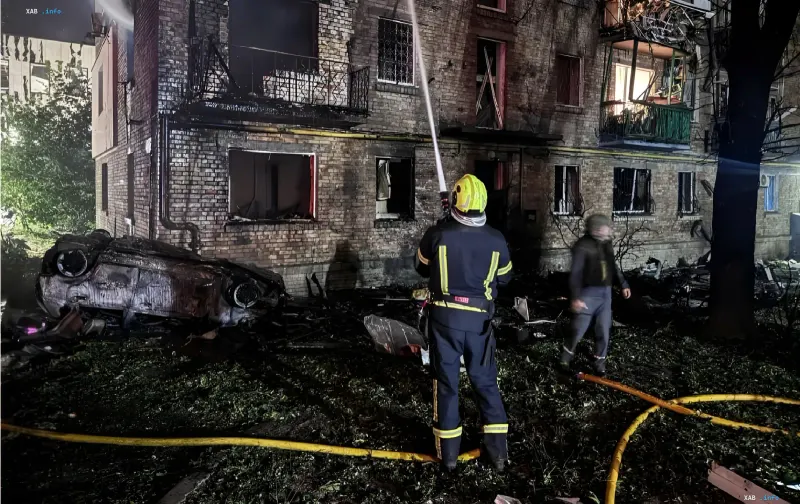
During the night, Kyiv was hit by one of the largest-scale attacks since the start of the full-scale war. Russian forces launched 40 ballistic missiles at the Ukrainian capital, striking residential districts, shopping centers, and public transport stops. The destruction was colossal: burnt-out cars, damaged building facades, and shattered windows were just part of what residents saw in the morning.
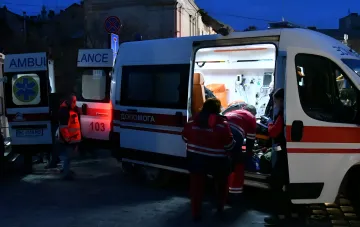
Preliminary data indicates that at least one person died as a result of the attack, with dozens injured. Firefighters and rescuers worked throughout the night extinguishing fires and clearing rubble. At the scene, signs of a powerful explosion are visible: mangled vehicles, charred trees, and debris scattered across the surrounding area.
Estonian Foreign Minister Margus Tsahkna called Russia's actions "outright terrorism." According to him, the Kremlin resorts to such methods when it realizes it cannot achieve strategic success on the front lines by other means. "Russia's brutality continues to primarily target the civilian population. After five years of full-scale war, the human losses are staggering," the diplomat stated.
Tsahkna called on the international community to take decisive action. In his view, the world cannot look away from what is happening, and accountability for crimes must be pursued as quickly and severely as possible. "Our isolation of Russia cannot stop even for a moment. Pressure must be intensified. Sanctions must be deepened," emphasized the head of the Estonian Ministry of Foreign Affairs.
Strategic Isolation as a Response to Terrorism
Estonia advocates for the complete strategic isolation of Moscow. According to Tsahkna, only continuous pressure and the tightening of sanctions can make it impossible for the Kremlin to continue its campaign of terror against the civilian population. "Only a tough, continuous strategic isolation can make it truly impossible for the Kremlin to continue this campaign of terror," he summarized.
The events in Kyiv once again remind us of the price ordinary people pay for war. Destroyed homes, the dead, and the wounded are not just numbers in reports, but real lives ruined and cut short. The world faces a choice: continue to watch or act. Estonia has chosen the latter path.