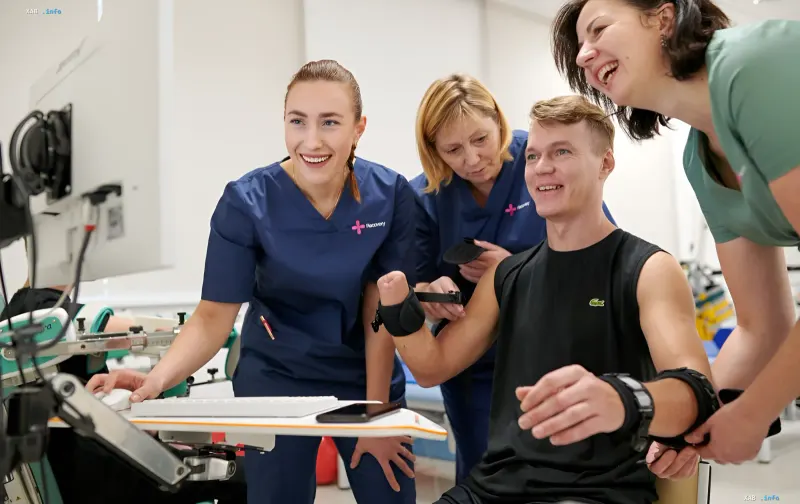
By August 2026, the RECOVERY network of rehabilitation centers marked a significant milestone: 50,000 Ukrainian soldiers have received assistance. This figure is not just a statistic; it is evidence of a massive transformation in the approach to recovery from severe injuries under conditions of a full-scale war. Project Head Svetlana Grytsenko, in an exclusive column for RBC-Ukraine, emphasizes: rehabilitation today is not just a medical procedure, but a path to returning a person to an independent life, family, and future.
From hospital care to life beyond hospital walls
In the first years of the war, rehabilitation was often limited to hospital wards and standard protocols. Today, the approach has changed radically. The RECOVERY network, uniting 20 centers across Ukraine, builds recovery routes based on the individual needs of each patient. "We do not offer a soldier a standard list of procedures," explains Grytsenko. "We determine together what is truly important for them, form an individual plan, and review it in accordance with progress."
This means that rehabilitation goes beyond clinics: soldiers learn to cook, drive, work with tools, and arrange their homes. The goal is not just to restore limb function, but to return the person's right to determine their own future. As Grytsenko notes, "the main result is not the number of procedures performed, but the fact that a person regains independence, confidence, and the right to determine their own future."
Regional accessibility: help where people live
One of the key innovations of the network was the geographical distribution of centers. Instead of concentrating help in a few major cities, RECOVERY is developing infrastructure in the regions so that soldiers can undergo rehabilitation closer to home. This allows them to maintain contact with their families, receive emotional support from loved ones, and gradually return to their usual environment. "Quality care should be available everywhere people live, not just in a few major cities," emphasizes the project head.
Stories that change the system
Behind the figure of 50,000 are real stories. Evgeny, who dreamed of getting behind the wheel again. Vladislav, who trains every day to walk on a prosthesis to hug his wife and daughter. Valentin, who got married after being wounded and is now learning to wash dishes and work with a hammer on his own. These examples illustrate how rehabilitation becomes a tool for returning to life, not just a medical process.
Contradictory data
Although official RECOVERY statistics indicate 50,000 soldiers have undergone rehabilitation, some independent sources and healthcare experts note that exact figures may vary depending on the counting methodology. In particular, some specialists believe that this figure includes both patients who have completed a full course of rehabilitation and those who received only initial consultations or short-term assistance. RECOVERY representatives insist that the statistics include only those who have completed at least one full stage of the recovery program. At present, there is no final consensus on the counting methodology, which requires further clarification.
The future of rehabilitation: from discharge to life
Svetlana Grytsenko emphasizes that returning home is not the end of the road. Often, the most difficult part of recovery begins precisely after discharge: pain, inaccessible housing, employment difficulties, and changes within the family. Therefore, RECOVERY is already preparing soldiers for these challenges within the centers, forming skills that will help them adapt to the new reality. "Respect for the defender must be maintained even after they return home, because that is often where the longest part of recovery begins," she concludes.