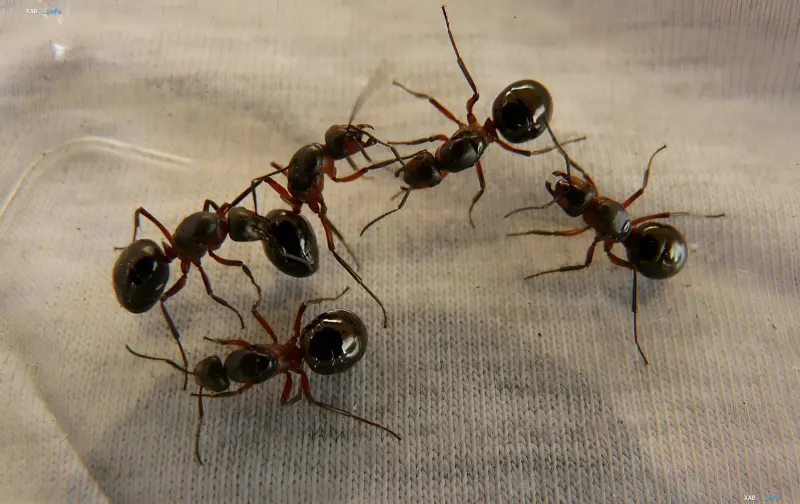
Ants in a house or apartment are not always a sign of poor hygiene, but a signal that insects have found access to food or water. In warm months, their appearance becomes especially frequent, and many homeowners face the problem of how to quickly and effectively get rid of uninvited guests. Experts recommend not rushing to use insecticides, but first understanding the causes of the invasion and cutting off access to resources.
Reasons for the appearance of ants indoors
Ants can penetrate a dwelling through the slightest cracks — in windows, doors, pipes, or the foundation. They are attracted by crumbs, sweet and fatty foods, as well as water. Even small remnants of jam, honey, fruit, or fat on a kitchen surface can cause a mass invasion. It is important to understand that ants leave chemical trails by which other individuals find the food source. This is why one accidentally noticed insect can quickly turn into a whole column.
First steps: cleaning and eliminating food sources
Start with the kitchen. Wipe down the countertop, table, floor, and other surfaces, remove crumbs and food residues. Products, especially sweets, cereals, and pet food, are best stored in tightly sealed containers. Do not leave dirty dishes in the sink overnight and take out the trash regularly. You should also check for a dripping faucet or other sources of constant moisture. These simple measures can significantly reduce the attractiveness of your home to ants.
How to find and block the entry path
If you notice a whole "trail" of ants, it is important not just to remove the visible insects. It is much more effective to find out where they are coming from, cut off access to food and water, and if possible, find the entry point. Look at where their trail starts: it could be a crack near the baseboard, window, door, pipe, or another small opening. After that, the entry point should be sealed with sealant. Specialists advise paying special attention to cracks near windows, doors, and utilities.
Using folk remedies and baits
If there are many ants or they return regularly, cleaning alone may not be enough. In such cases, special ant baits may be a more effective option. Their advantage is that worker ants take the bait to the nest, where other individuals can feed on it. This is why baits work not only on the insects you see. At the same time, the result will not always be instant: such means may take from a few weeks to a longer time depending on the type of ants and the colony.
If you do not want to use aggressive chemicals immediately, you can try simple remedies. They mainly work due to sharp odors that can interfere with ants' ability to navigate by their trails. Lemon juice and zest have a strong aroma that can override the "scent" trails of ants. Orange zest works on the same principle. Chalk can be used to mark places where ants enter the room, as well as to draw a line along their route. Salt can be sprinkled near cracks, crevices, and other potential entry points for insects. The sharp smell of black or hot red pepper can repel ants.
Contradictory data
There are different opinions on how effective folk remedies are compared to professional insecticides. Some sources claim that lemon juice, vinegar, and pepper can completely solve the problem, while others emphasize that these methods only temporarily repel insects and do not destroy the colony. It is important to consider that effectiveness depends on the type of ants and the scale of the invasion.
Expert recommendations
Experts recommend acting in stages: first eliminate food and water sources, then block entry paths, and, if necessary, use baits or folk remedies. If the problem is not resolved, it is worth contacting professionals who can accurately determine the type of ants and select the most effective means of control.