
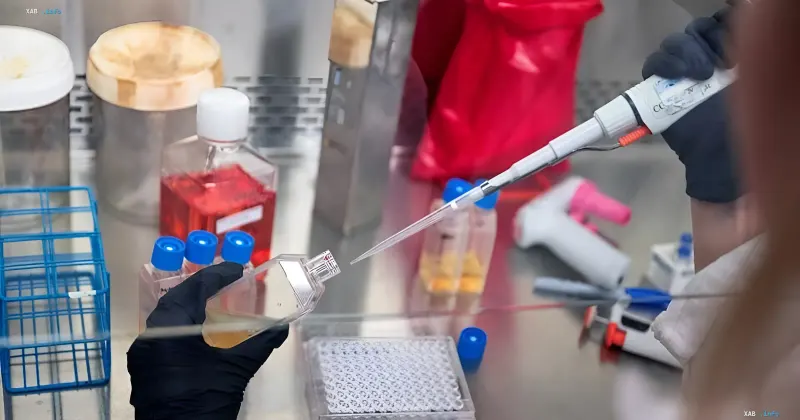
Clinical trials have launched in the USA for an innovative vaccine capable of preventing the development of colorectal cancer in individuals with a genetic predisposition. This study opens a new era in oncology, transitioning from treating existing tumors to preventing them at the molecular level. The focus is on patients with Lynch syndrome, a rare genetic disorder that significantly increases the risk of developing cancer.
Personal Story and Scientific Breakthrough
The initiator of participation in the study was Dr. Stacey Norton from Houston, Texas. Her motivation is deeply personal: at the age of seven, she lost her mother to colorectal cancer. Decades later, as a physician and mother of two, she herself learned that she is a carrier of Lynch syndrome. This is a hereditary genetic mutation that disrupts the body's ability to repair errors in DNA. For such individuals, the lifetime risk of developing colorectal cancer reaches 80%, compared to 5% in the general population.
Dr. Norton, who has already survived one type of cancer caused by this syndrome, hopes that the new therapy will not only protect her but also become a lifeline for her children, who inherited the mutation. "It gives me hope," notes the 59-year-old researcher.
Mechanism of Action of the Vaccine
Traditional methods of combating Lynch syndrome include regular colonoscopies to remove pre-cancerous polyps. However, the new vaccine works differently: it trains the immune system to recognize and destroy abnormal cells before they grow into a full-blown tumor.
The lead researcher of the project, Dr. Eduardo Vilar-Sanchez from the MD Anderson Cancer Center, explains the mechanism: "Lesions developing due to Lynch syndrome tend to accumulate hundreds of mutations, creating new proteins that our normal cells do not produce. We can train the immune system to recognize precisely these proteins."
Trial Results
The vaccine, developed by the Swiss biotechnology company Nouscom, has already shown promising results in early-stage trials. The study involved 45 people, including Dr. Norton. According to data published in the journal Nature Medicine, the drug effectively activated cells capable of destroying tumors. A year after vaccination, colonoscopy showed a significant reduction in pre-cancerous lesions, and no progressing polyps were found in the participants.
Currently, two similar vaccines are in early stages of trials in the USA, and a third is beginning testing in the UK. The vaccine from the American company Moderna, using mRNA technology (similar to that used against COVID-19), is also preparing for clinical trials at the University of Oxford.
Contradictory Data
Despite the optimism, the scientific community calls for caution. Although the results of the first phase look impressive, the scale of the studies is currently limited to a small number of participants (45 people). Furthermore, the long-term efficacy of the vaccine and its ability to prevent other types of cancer associated with Lynch syndrome (endometrial, pancreatic, stomach cancer) has not yet been confirmed. Dr. Vilar-Sanchez expects a larger-scale study to begin only at the beginning of next year, meaning that final conclusions about safety and efficacy will not be made before 2027.