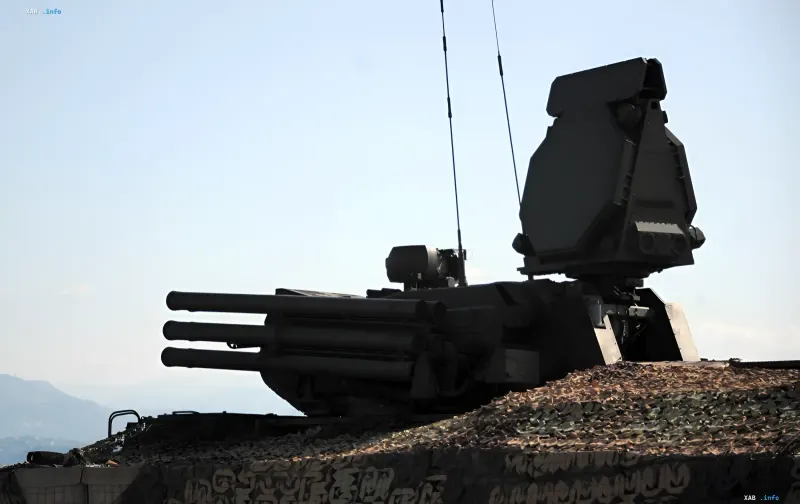
In the night of November 4, 2026, the Ukrainian Defense Forces launched a series of strikes on military facilities of the Russian occupiers in the temporarily occupied territories of Crimea, Zaporizhzhia, and Luhansk regions. This was reported by RBC-Ukraine citing the operational summary report of the General Staff of the Armed Forces of Ukraine. According to the agency, two Pantsir-S1 anti-aircraft missile systems and an enemy firing group were hit in Crimea, while a drone control center and a logistics supply depot were struck in the Zaporizhzhia and Luhansk directions.
Strikes on Air Defense in Crimea
The General Staff of the Armed Forces of Ukraine calls the destruction of two Pantsir systems in the temporarily occupied territory of Crimea a key result of the night strikes. These anti-aircraft missile systems, equipped with anti-aircraft artillery and guided missiles, are used by the Russian side to cover military and other important facilities in Crimea and southern Russia from Ukrainian drone and missile strikes. The General Staff emphasized that the destruction of such systems weakens Russian air defense and creates additional conditions for subsequent operations. Open-source images capture characteristic design elements of the Pantsir — a multi-barrel anti-aircraft gun and a launcher with missiles, which allows identifying the type of destroyed weaponry.
Striking Facilities in Zaporizhzhia and Luhansk Directions
In addition to Crimean targets, near the settlement of Vladivka in the occupied territory of Zaporizhzhia region, the Ukrainian military hit a drone control center of the Russian occupiers. In the Luhansk direction, near Bilovodsk, a logistics supply depot of the Russian army was struck. These strikes, according to the General Staff's logic, are aimed at depriving the enemy of the logistics and control elements necessary to maintain combat potential at the front.
Confirmation of Depot Destruction in Donetsk Region
Separately, the General Staff report records preliminary confirmation of the destruction of a warehouse building at a missile and artillery armament storage facility of the Russian troops in the area of Ohorodne, Donetsk region. The strike on this facility was carried out on October 26, but the final verification of the destruction was completed only by November 4. Such a delay in confirming the results of strikes on storage facilities is typical: assessing the degree of infrastructure destruction requires intelligence data and monitoring analysis.
Strategic Context and Further Plans
The General Staff of the Armed Forces of Ukraine stated that work on key enemy military targets will continue until the complete cessation of Russia's armed aggression against Ukraine. The destruction of air defense assets, UAV control centers, and supply depots is viewed as part of a systemic strategy to weaken the combat potential of the occupiers in the southern and eastern directions. Earlier that day, RBC-Ukraine reported on the advance of the Defense Forces in two regions, as well as the results of repelling a nighttime attack by Russian air defense forces. The combination of these operations forms a picture of mutual pressure on the enemy's logistics and command nodes amid the ongoing conflict.