The Foreign Intelligence Service of Ukraine (SZIU) has published an assessment of the Russian economy stating that a significant portion of the population and businesses has plunged into a debt crisis, while for an ordinary citizen, according to the intelligence, signing a contract with the armed forces has become the only available mechanism for “financial rehabilitation.” The data is summarized as of autumn 2026 and was provided to RBC-Ukraine.
Credit Crisis: Every Fourth Borrower at Risk
According to SZIU, by August 2026, 28% of all borrowers in Russia were experiencing difficulties servicing bank loans. The high cost of loans, driven by the key interest rate and inflationary pressure, has also noticeably affected the corporate sector: over January–September 2026, 33 companies defaulted technically, of which 17 subsequently transitioned into full defaults. Intelligence emphasizes that the debt burden spans all levels of the economy — from large industrial enterprises to individual entrepreneurs.
Salary Debts and Defaults in the Coal Industry
SZIU highlights wage arrears as a separate block of problems. By the end of September 2026, the total amount of overdue wage arrears to employees in Russia reached 2.539 billion rubles, with more than 56% of this amount generated directly in 2026. Enterprises explain the delays by the lack of their own funds for settlements. As characteristic examples, intelligence cites the Spiridonovskaya mine in Kiselyovsk, which lacks funds to boost coal production, and the Severny Kuzbass coal company, whose debt to 1,408 employees exceeded 807 million rubles.
Utility Debts and the "Digital Acceleration" Regime
Payment problems are not limited to industry. Russians are accumulating utility debt: in Krasnodar Krai, gas debts of heat supply organizations increased by 16%. Since October 2026, utility debt collection has been shifted to a regime characterized by SZIU as “digital acceleration”: bailiffs seize debtors' property and salaries, and also confiscate cars during special raids. One such raid took place in the Kaliningrad Oblast, where the total debt of five car owners exceeded 4.5 million rubles.
Army Contract as the "Only" Write-Off Mechanism
Against the backdrop of intensified forced collection, SZIU points out that citizens are left with virtually one alternative way to escape debt obligations — participation in hostilities. According to intelligence information, signing a military contract for a term of one year or more provides for partial debt write-off. Full release from credit obligations without amount limits is possible only under exceptional circumstances: the death of the serviceman, death resulting from injuries, or obtaining Group I disability. “The Russian economy has found itself in a state where a contract with the army becomes the only available tool of financial rehabilitation for an ordinary citizen, while civilian business and the population remain in the grip of seizures, defaults, and forced collections,” RBC-Ukraine quotes SZIU's conclusion.
Macro Background: Budget Cuts and Public Sentiment
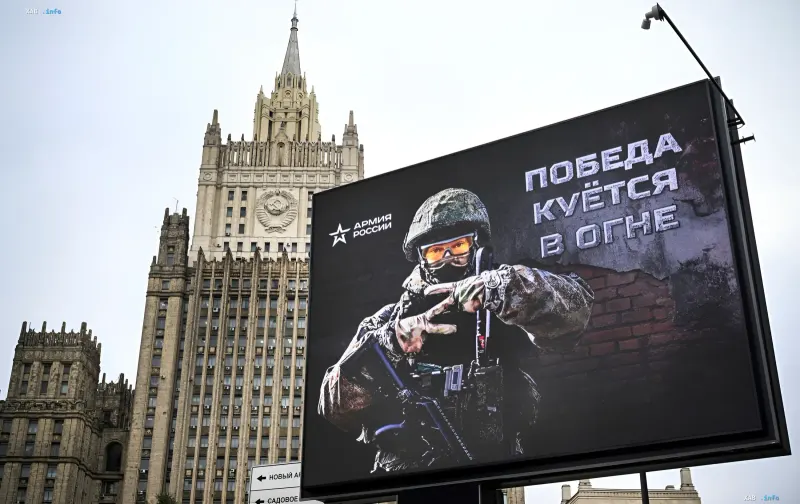
The context for these figures is created by an overall contraction of public spending. According to available reports, due to a lack of funds to finance military operations, Russia has cut civilian budget expenditures by a third, and the government has instructed agencies to postpone secondary expenses and prepare a 15% staff reduction. Public sentiment, according to polls, is also worsening: in July 2026, 66% of Russians expected the onset of “hard times” — an indicator that, according to analysts, was last recorded in the early 1990s during the collapse of the USSR. Recruitment campaigns for the army, such as billboards with the slogan “Victory is forged in fire” in central Moscow, are perceived in this context by observers as part of a comprehensive strategy to attract personnel amid economic pressure.