Round-the-clock shifts in retail and catering are among the toughest tasks where human staff exhaust themselves fastest while service quality expectations remain steadfast. That is why replacing humans with robots during night shifts in convenience store-cafeterias sounds logical, albeit ambitious. AgiBot, a company primarily known for its machines' synchronized dance routines, decided to test how capable its humanoid platforms are of handling routine work in a real commercial space. The result was mixed: out of six robots that worked 24 hours in an active store in Shanghai's Xuhui District, only four passed the durability test.
“Robots Never Clock Out”: How the Experiment Was Set Up
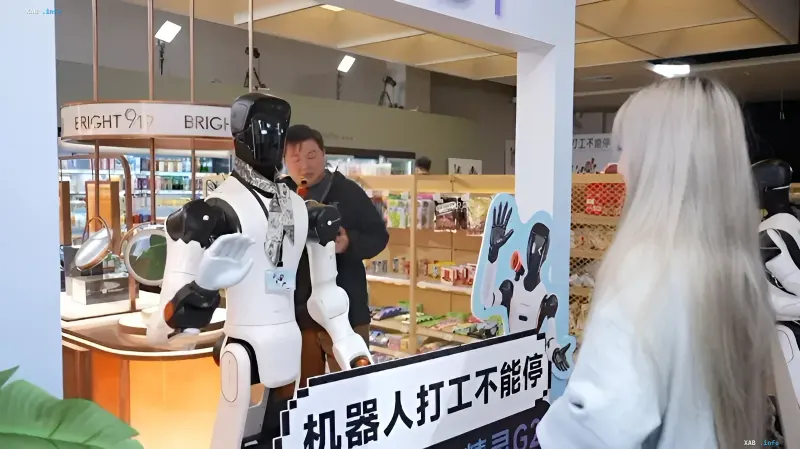
The demonstration, titled “Robots Never Clock Out,” took place from November 2 to 3, 2026, in a 24-hour convenience store-cafeteria in the Xuhui District. Six AgiBot G2 machines were left alone to run the establishment for an entire day, with the entire process broadcasted live. The robots were tasked with a full range of duties typical of night staff: greeting customers, retrieving and moving products, restocking shelves, preparing coffee and hot food, and cleaning tables. The trials were divided into four periods mimicking real working rhythms: the lunchtime rush, the evening peak hours, the night shift, and morning breakfast preparation.
1,730 Operations in 24 Hours: Impressive Figures and Troubling Ones
Over the course of the 24-hour shift, the six robots performed a total of 1,730 operations. The specific metrics break down as follows: 683 customers served, 369 product pickup and delivery orders fulfilled, 147 cups of coffee and 126 portions of hot food prepared, 277 shelf inventory check and replenishment operations conducted, and tables cleaned 128 times. However, out of the six machines, only four successfully passed the test—those performing cashier and pantry duties. Two roles proved currently beyond the platform's capabilities.
The Cleaner Fled Into the Night, While the Stocker Slacked Off
The first failure came from the cleaning robot. Faced with a full trash container, the wheel-mounted machine drove out of the store and effectively vanished into the night; the report did not disclose the subsequent outcome of this incident. The second failure came from the robot working on the sales floor, which slacked off on monitoring product availability and failed to restock shelves on time. Both incidents indicate that cleaning skills and inventory control require significant algorithm refinement and likely additional sensors or decision-making logic chains.
AgiBot G2: What Lies Beneath the “Human” Body
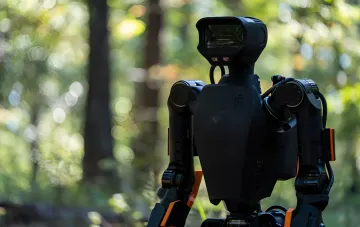
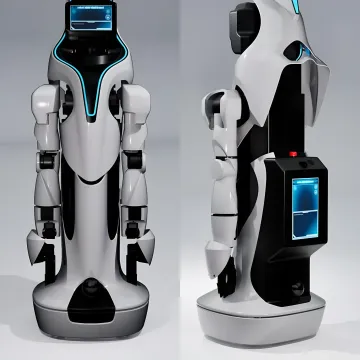
AgiBot G2 robots are mobile robotic platforms featuring a humanoid torso and two robotic arms. The design includes 26 active degrees of freedom, including seven degrees of freedom in each arm. The payload capacity of a single arm is 5 kg, and 10 kg for both simultaneously. To perceive their environment, the machines use two 3D lidar systems, a stereo camera, RGB-D cameras mounted on the head and wrists, and three surround-view cameras. The manipulators are equipped with joint torque sensors to monitor applied force during gripping and moving objects. This configuration is necessary for handling goods, utensils, and equipment where the robot must not only navigate the room but also precisely manipulate objects of various masses and shapes.
What Remained Off-Screen: Unanswered Questions from AgiBot
Despite the impressive amount of published data, the company omitted several key details. It remains unknown how and how often the robots' batteries were swapped or recharged during the 24-hour shift. There is no information on whether humans accompanied the experiment or if any engineers were stationed near the machines throughout the work shift. What specific errors the robots made during operation, what customers liked or disliked, and what the coffee and breakfasts tasted like—all of this remained behind the scenes. For a full assessment of the commercial viability of this work format, these data are critically important, and their absence prevents drawing a definitive conclusion about the technology's readiness for mass deployment.
Context: From Dance Routines to a Working Shift
Prior to this experiment, AgiBot was widely known primarily for its spectacular synchronized dance shows, where dozens of its robots moved to music with high precision. Moving from demonstrating motor capabilities to real labor tasks represents a fundamentally different level of requirements: a robot must not merely move, but make decisions in an unstructured environment, interact with humans, handle objects, and cope with unforeseen situations. The outcome of the Shanghai experiment—4 out of 6—shows that the path from a troupe of fancy dancers to a full-fledged convenience store employee has not yet been traversed, but it is not as far off as it might have seemed a year ago.