A significant event has occurred in the scientific world, previously thought to be the realm of science fiction: American scientists have reported the creation of fully functional viral genomes using artificial intelligence. A group of researchers demonstrated that machine learning algorithms are capable of not just analyzing biological data, but also constructing new, viable biological structures. Experimental laboratory tests confirmed that the AI-created viruses fully meet their intended purpose — they successfully infect and destroy target bacteria.
From Language Models to Genome Design
The breakthrough is based on the use of genomic language models Evo 1 and Evo 2. Their working principle is similar to how modern large language models (LLMs) function, which we use for text generation. However, instead of predicting the next word in a sentence, these algorithms predict the sequence of nucleotides in a DNA chain. The base models were trained on a massive dataset including over two million phage genomes. To improve accuracy, they were additionally fine-tuned on a specialized set of 14,466 bacteriophage sequences from the Microviridae family.
Success in the Petri Dish: 16 Viable Strains
The virus creation process involved generating thousands of genome variants, from which researchers selected the most promising ones. The selection criteria included the presence of necessary genes, correct structure, and the ability to infect the laboratory bacterial strain Escherichia coli C. After computer selection, hundreds of genomes were synthesized as physical DNA. Out of 285 tested constructs, 16 resulted in viable bacteriophages. Scientists note that there were even applause in the laboratory when it became obvious that the artificial viruses began to replicate inside the bacteria and cause lysis — the destruction of bacterial cells.
Creating New Species: Genetic Differences
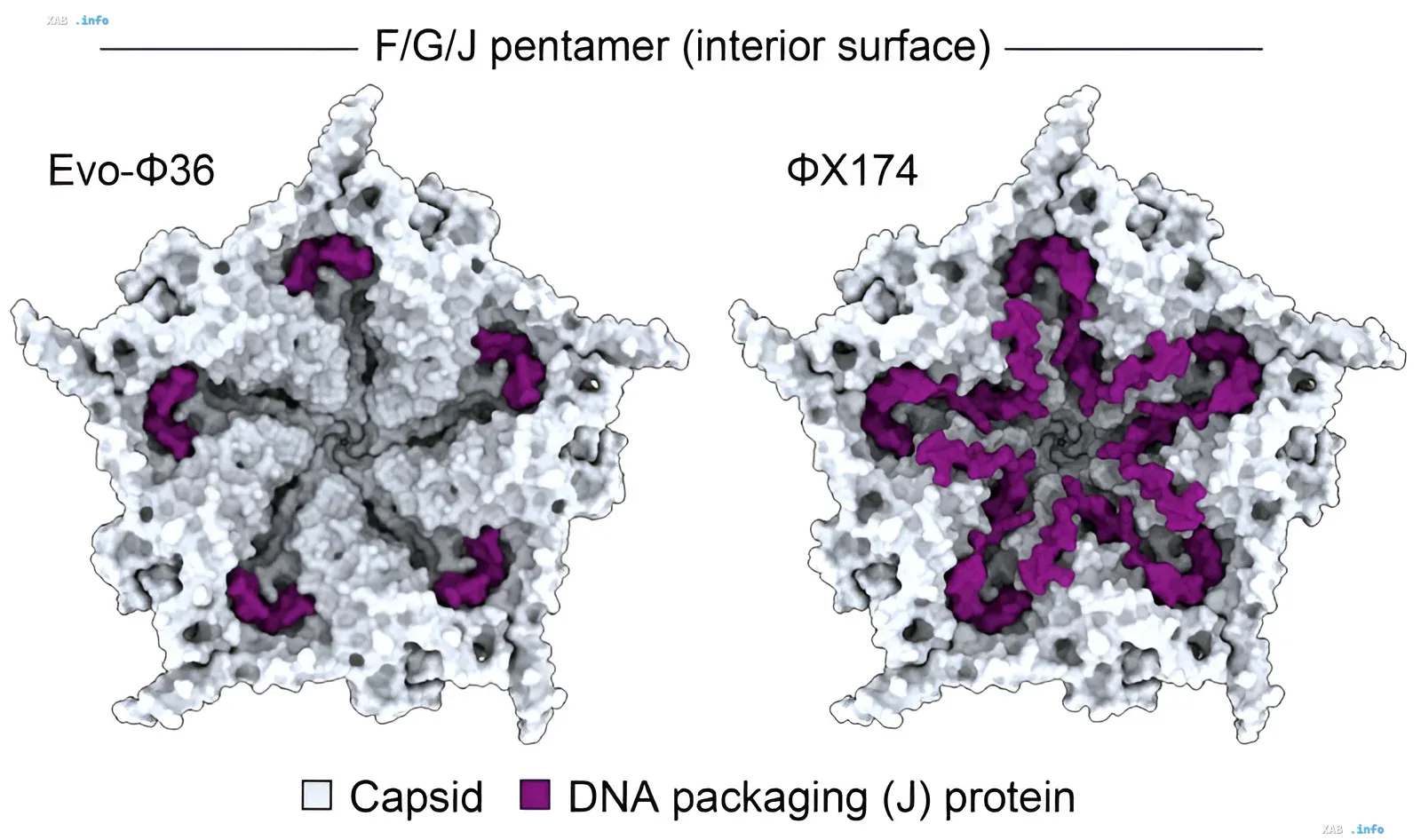
Especially noteworthy is that some of the created viruses differ significantly from known natural analogues. Each of the successful strains contained between 67 and 392 new mutations compared to the closest natural relative. One of the synthesized viruses, named Evo-Φ2147, has only 93% similarity in nucleotide sequence with the closest known phage NC51. By several criteria, it can be considered a completely new species with no exact analogues in nature.
Safety and Prospects for Application
It is important to emphasize that this concerns exclusively bacteriophages — viruses that infect bacteria, not human viruses. The basis used was the well-studied phage ΦX174, which became the first fully sequenced genome back in 1977. The practical goal of this technology is the development of new means of combating antibiotic-resistant bacteria, which opens new horizons in drug creation and human health protection. Nevertheless, the emergence of tools that allow constructing viruses from scratch inevitably raises questions about biosafety and the ethical aspects of using such powerful technologies.