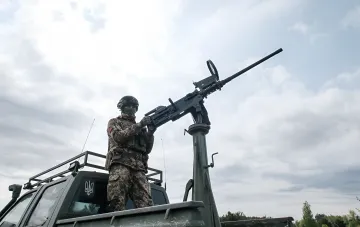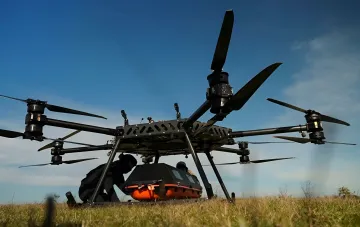
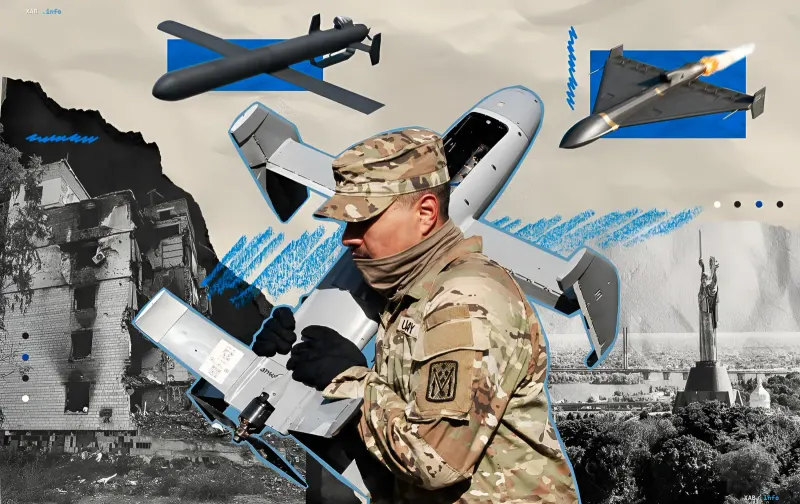
For the second month in a row, Russian forces have been actively terrorizing Kyiv and surrounding regions with new jet-powered modifications of drones such as Geran-4 and Geran-5. Due to the high speed of these air targets, air raid alerts in the Ukrainian capital have become significantly longer than periods of relative calm between threats. Ukraine already possesses technologies and prototype interceptor drones capable of hitting such targets, but the key challenge remains scaling up their mass production.
The Core Threat: Why Jet Drones Are Difficult for Air Defense
For over a month of intensive deployment of jet-powered drones, the enemy has managed to strike a number of civilian warehouses and private production facilities. A particularly dangerous incident was the strike on ammunition warehouses in the Kyiv region, which caused casualties, after which attacks shifted to digital infrastructure and the energy sector. The main technical difficulty for air defense forces is the colossal speed of the targets: jet drones reach 400 to 450 km/h, meaning most standard quadcopter interceptors simply cannot keep up.
Ukrainian Interceptor Development and New Technologies
The domestic defense-industrial complex is actively responding to the challenge by offering new technological solutions. In August, the Ministry of Defense reported receiving the first high-speed jet interceptor Alexa Spatium, and developers from Wild Hornets are preparing the Sting S model for mass production using the Hornet Vision Ctrl remote control system. In parallel, SkyFall and Vluchnyk have introduced their own devices, P1-SUN Jetkiller and Zorelit v5, capable of speeds over 400 km/h and intercepting enemy assets at high altitudes.
Contradictory Data
Despite successful tests of individual prototypes, assessments by experts and officials regarding current countermeasure effectiveness diverge. Some manufacturers claim the destruction of dozens of jet targets during tests and readiness for immediate scaling, while independent analysts and military experts point to a continuing shortage of expensive anti-aircraft systems and the need for full automation of detection processes. In addition, open sources show discrepancies in data regarding the ultimate speed characteristics of the enemy's newest strike drone modifications and their effective interception altitudes.
Scaling Challenges and Prospects
The key barrier to fully securing the skies from jet drones remains the production rate of interceptors. The country's leadership and specialized agencies state the need to scale production of effective drones to thousands of units. Only the full integration of artificial intelligence systems for automatic guidance, financial support, and direct contracts with military units will allow changing the situation in the air and ensuring reliable protection of critical infrastructure.