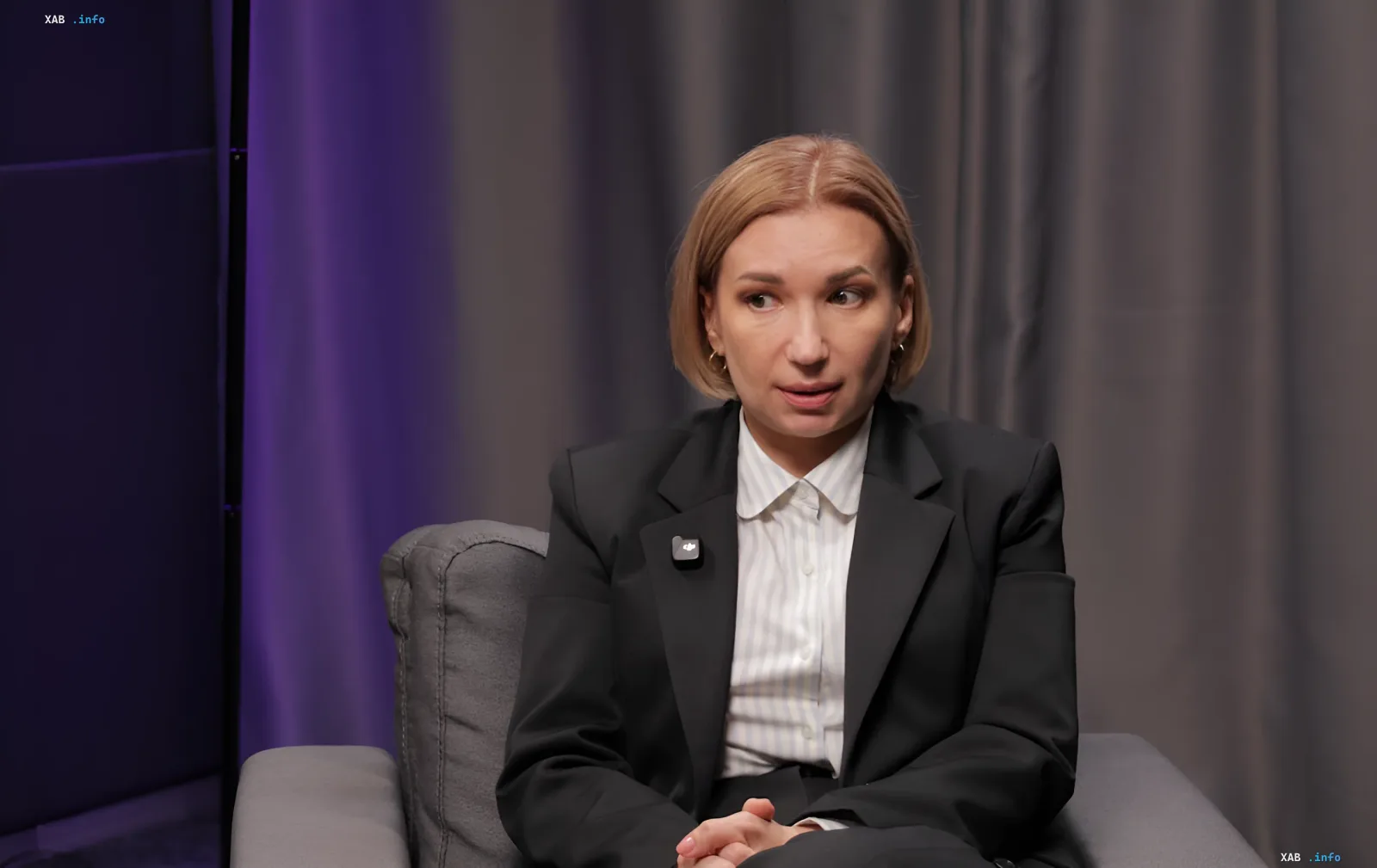
The question of whether elections can be held amid a full-scale war remains one of the most debated in Ukrainian society. On the RBC-Ukraine show “Don’t Interrupt!” with Volodymyr Kurenniy, Olga Aivazovska, head of the board of the OPORA Civil Network and a former participant of the Minsk process, explained in detail why attempts to organize voting now carry enormous risks to the legitimacy of power and could lead to political chaos, and how, in her view, the country should prepare for the first postwar elections.
A “Window of Opportunity” for Moscow
In response to the argument that “democracy cannot be Putin’s hostage,” Aivazovska stated that it is precisely the Russian leader who is interested in holding elections in Ukraine. In her words, Moscow sees this as a “unique window of opportunity” to undermine the legitimacy of the institutions of power and push society into sharp political debate without a universally recognized result. The expert recalled that even within the framework of the Minsk process, the Russians viewed Ukrainian elections as a key instrument of influence, and before 2014 they invested significant resources in funding parties and media — as an example she cited the OPZZH party with three TV channels, presumably bought with Kremlin-linked funds.
Why Electronic Voting and Postal Voting Are Risks
Aivazovska emphasized that the issue is not only about organizing the process, but also about whether society will accept its result: “You can run the process, but if there is no trust in it — the result will not have legitimacy.” She stated that Russia has “a thousand and one recipes” for destabilization, and is therefore categorically against electronic voting, calling it the easiest path for the enemy — to hack the system or launch a campaign about “massive fraud.” She also considered postal voting invalid, since the Ukrainian postal service could become a direct target of attacks. The expert named classic in-person voting as the most protected form.
Legitimacy of Power and Trust Figures
Asked whether it is time to change the system given scandals and corruption, Aivazovska cited the figures: trust in the president, in her words, remains substantial — over 65%, which she called a very high level of legitimacy, especially for a politician effectively serving a second term. The expert noted that before the full-scale invasion, Volodymyr Zelenskyy’s rating was about 25% lower than it is now, and emphasized that the authorities elected in 2019–2020 have no problems with society and institutions recognizing their right to make lawful decisions.
The Path to a Failed State and the Rule-of-Law Problem
Acknowledging serious problems with good governance and the rule of law, Aivazovska pointed out that they did not arise yesterday: before 2022, Ukraine had a highly developed electoral democracy (a score of over 8 out of 10 in international ratings), while the level of the rule of law and anti-corruption efforts stood at about 2 out of 10 — “telephone law” and the looting of state funds were in effect. She warned that elections during a war will a priori not be competitive, since under martial law the authorities will have all the instruments of influence, while the opposition and new forces will not. In her words, a scenario with 10% turnout or massive shelling on election day would lead to election by a minuscule number of votes and become a path to a failed state — a state that has lost its legitimate foundation.
Outlook: A 10–15 Year War?
Commenting on the hypothesis of decades of war, Aivazovska expressed doubt that the economies of both states could withstand such a conflict: if neither side wins, the conflict usually ends when both sides are exhausted, after which negotiations begin. She also raised the question of what procedural voting could change in the absence of conditions for freedom of speech, freedom of movement, and political competition, and called for being proactive and independently determining the conditions under which the first postwar elections will become truly protected.