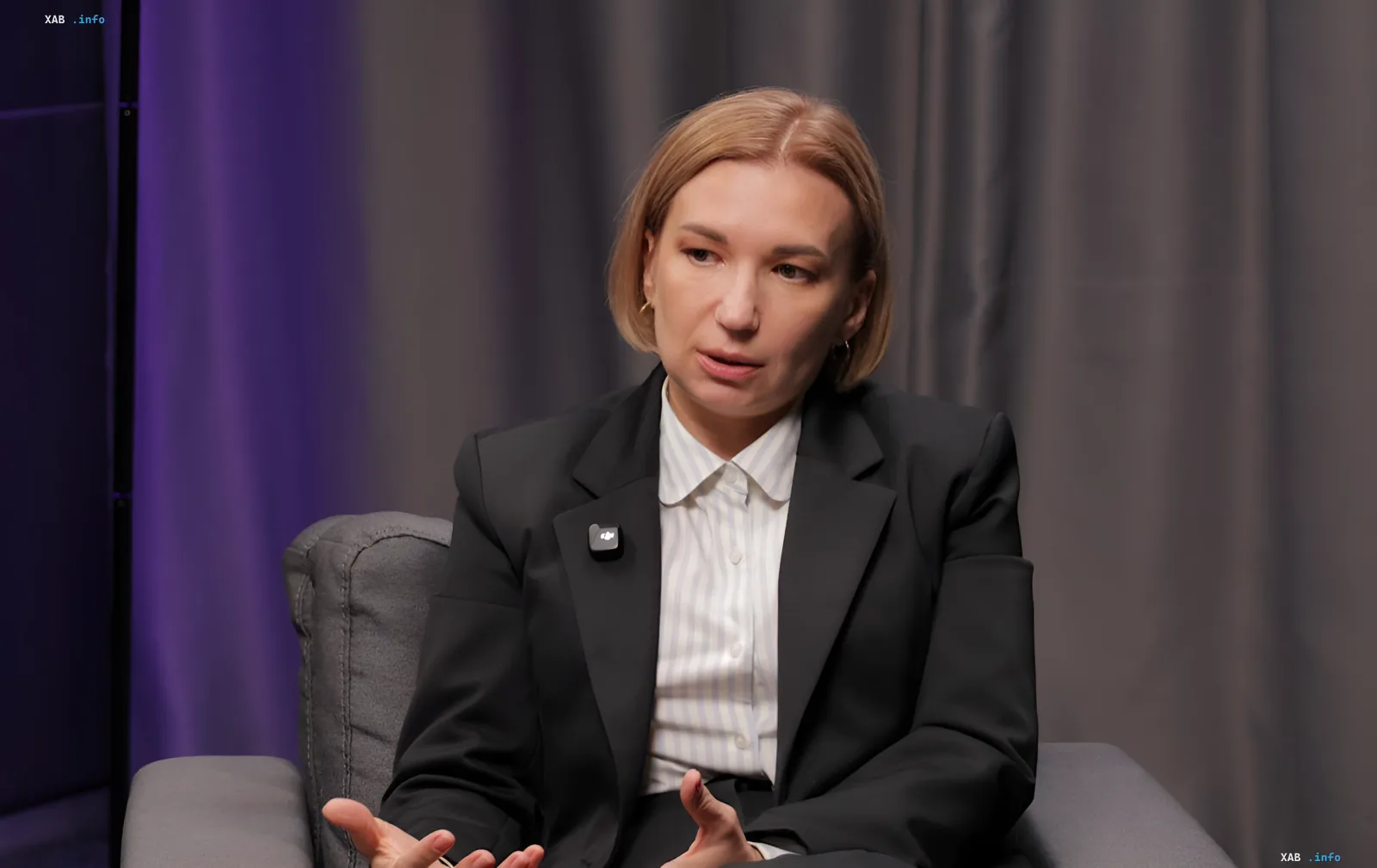
Olena Aivazovska, Chair of the Board of the civil network OPORA, warned in an interview with RBC-Ukraine for the project "Don't Interrupt!" with Volodymyr Kurenno that the key institutions of Ukraine's legal system — the Constitutional Court and the Central Election Commission — are on the verge of a systemic crisis of capacity. According to her, the Constitutional Court is currently functioning, however, in November 2026 the term of office of one of the judges expires, and in the spring of 2027 — that of another. "The term of office is not re-elected and not extended," the expert emphasized, adding that without an effective selection of new judges, the Court's composition would fall below 12 members, depriving it of the quorum needed to make decisions.
The Constitutional Court's Quorum Is at Risk: Why This Is Critical Under Martial Law
Aivazovska drew attention to the fact that during the period of martial law, the role of the Constitutional Court takes on a decisive significance: it is the Court that holds the exclusive right to interpret the Constitution and serves as a key element of the system of checks and balances. Losing the quorum in such a situation means a de facto paralysis of constitutional oversight in a country where, according to the expert, legal guarantees for citizens and institutions are particularly important. The expert emphasized that the selection of new judges must be completed effectively and on time to avoid an institutional vacuum.
CEC: 17 Commission Members Simultaneously Lose Their Seven-Year Mandate on October 3
A separate block of Aivazovska's warnings concerns the Central Election Commission. On October 3, 2026, the seven-year term of office of all 17 members of the CEC expires simultaneously — those who began their work simultaneously seven years ago. The head of OPORA explained that after this date, no one formally prohibits the commission members from continuing to work, since the provision prohibiting participation in sessions after the expiration of the term was previously removed from the legislation. Nevertheless, in the expert's opinion, optimal scenarios for renewing the composition or extending the mandates within the legal framework are necessary to preserve the legitimacy of the electoral process.
Pilot Elections in Zakarpattia: Legal and Political Barriers
In the same interview, Aivazovska commented on the initiatives to hold pilot or separate local elections in Zakarpattia — a region she called the safest. In her assessment, during martial law such elections are legally impossible. Moreover, the expert warned that such an initiative, even if formally possible, could provoke a large-scale political crisis. Earlier, President Volodymyr Zelenskyy stated that millions of Ukrainians are currently abroad, and this factor will be one of the key ones in organizing the upcoming elections, while also emphasizing the problem of ensuring the ability to vote for residents of temporarily occupied territories.
Contradictory Data
When comparing Aivazovska's current statements with earlier publications on the topic of the terms of office of Constitutional Court judges, a chronological inconsistency emerges. In January 2025, a number of Ukrainian media outlets (in particular, pravda.com.ua) reported that on January 27, 2025, the terms of office of three Constitutional Court judges expire at once, after which the court formally loses its quorum but continues to work. At the same time, in September 2026, Aivazovska speaks of the expiration of one judge's term in November 2026 and another's in the spring of 2027. The difference in the number of judges and dates may be explained by the fact that some of the mandates that expired in 2025 were already filled or extended within subsequent legislative decisions, or that the discussion concerns different groups of judges. The exact current number of serving Constitutional Court judges as of September 18, 2026, is not unambiguously confirmed in the provided sources, which requires additional verification.