On 29 August 2026, Albania decided not to allow the oil tanker HANUMAN (IMO 9295048) to enter the port of Durrës. According to the Main Directorate for Intelligence of the Ministry of Defence of Ukraine (GUR MoU), the reason was that the vessel had previously been listed in the War&Sanctions portal database as an active participant in Russia's 'shadow fleet'. This was reported by RBC-Ukraine, citing an official statement from Ukrainian military intelligence. The GUR emphasised that Albania's decision is an 'important testament to international sanctions solidarity' and demonstrates the readiness of European states to deny infrastructure services to vessels used to circumvent restrictions.
HANUMAN's Operational Activity: Routes and Volumes
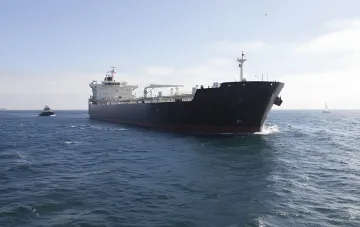
According to Ukrainian intelligence, the tanker HANUMAN has been under its observation for a long time — as early as January 2026, the vessel was entered into the War&Sanctions portal database as an active participant in Russia's 'shadow fleet'. The scale of its operations, according to the GUR, is significant: since the beginning of 2025, the tanker has exported no less than 452,000 tonnes of Russian fuel. The vessel made voyages from Novorossiysk to Turkey, Senegal and the UAE, as well as to the transshipment area near the Italian city of Augusta. Such routes are characteristic of the 'shadow fleet': vessels use risky and opaque shipping practices that allow Russia to circumvent international sanctions and direct revenues from oil exports to finance military actions against Ukraine.
Logistical Infrastructure and Links to Sanctioned Figures
According to the GUR, the logistical support for HANUMAN's voyages was provided by the Russian company Altopraye Marine LLC, based in Novorossiysk. Ukrainian intelligence claims that the company was founded and is managed by one of the top executives linked to the sanctioned Russian oligarch Gennady Timchenko, who is described as a close ally of Vladimir Putin. 'Altopraye Marine' also figures in the servicing of other tankers of Russia's 'shadow fleet', in particular EVENTIN (IMO 9308065) and CORDELIA MOON (current name — WALRUS, IMO 9297888). Both vessels are under international sanctions and were linked to incidents that posed a threat to environmental safety. Moreover, according to Ukrainian intelligence, the company is involved in the operations of vessels owned by Rosewood Shipping LLC, belonging to Oksana Marchenko — the wife of Viktor Medvedchuk.
Broad Sanctions Pressure on the 'Shadow Fleet' in 2026
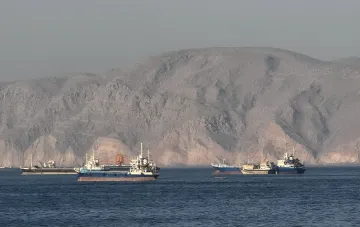
Albania's refusal to provide port services to HANUMAN fits into a broader context of intensifying international pressure on Russia's 'shadow fleet'. In July 2026, the European Union added another 41 vessels to the restrictions against the 'shadow fleet'. In parallel, according to the BBC, the United States intensified its own measures to curb the activities of such vessels, which, according to Western analysts, creates multi-vector sanctions pressure on Russia. The appearance of the 'shadow fleet' in regions such as the Strait of Hormuz indicates a geographical expansion of the routes by which Russia attempts to export hydrocarbons in circumvention of the restrictions.
Contradictory Data
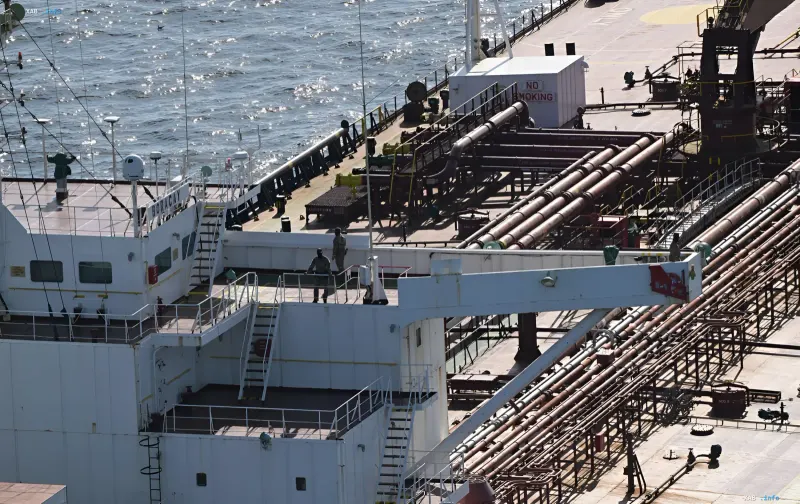
A number of key facts set out in the GUR MoU statement had not, at the time of publication, received independent confirmation by third parties. In particular, the data on export volumes (no less than 452,000 tonnes since the beginning of 2025), the specific voyage routes, and the organisational links between the company 'Altopraye Marine' and Timchenko and the Medvedchuk family rely exclusively on information from Ukrainian military intelligence. The Russian side, for its part, disputes the very term 'shadow fleet': according to the publication 'Federal Press Bureau', in the Russian Federation Council the 'hidden meaning' of the Western term was pointed out, positioning it as an instrument of political pressure rather than an objective description of shipping practices. Thus, the factual picture depends on whose methodology for classifying vessels — that of Ukrainian intelligence, European regulators, or Russian officials — is considered authoritative. In addition, the contextual image accompanying the publication shows the deck of a tanker with the name 'BORACAY', which does not allow it to be unambiguously identified as HANUMAN without additional data.
Significance of the Precedent for the Sanctions Regime
Albania's decision not to allow HANUMAN into the port of Durrës sets an additional precedent for port states: refusing to service a vessel that appears in sanctions registers becomes an available tool even for countries that are not among the largest sanctions coordinators. For Russian oil exports, this means a narrowing of the geography of available transshipment and servicing ports, which, combined with the July EU package of restrictions and the intensification of American pressure, may lead to a further rise in logistical costs and a reduction in the volumes of formally legal exports.