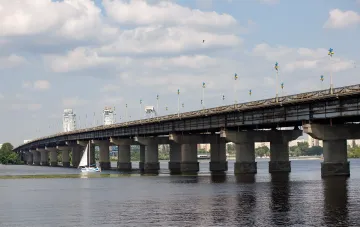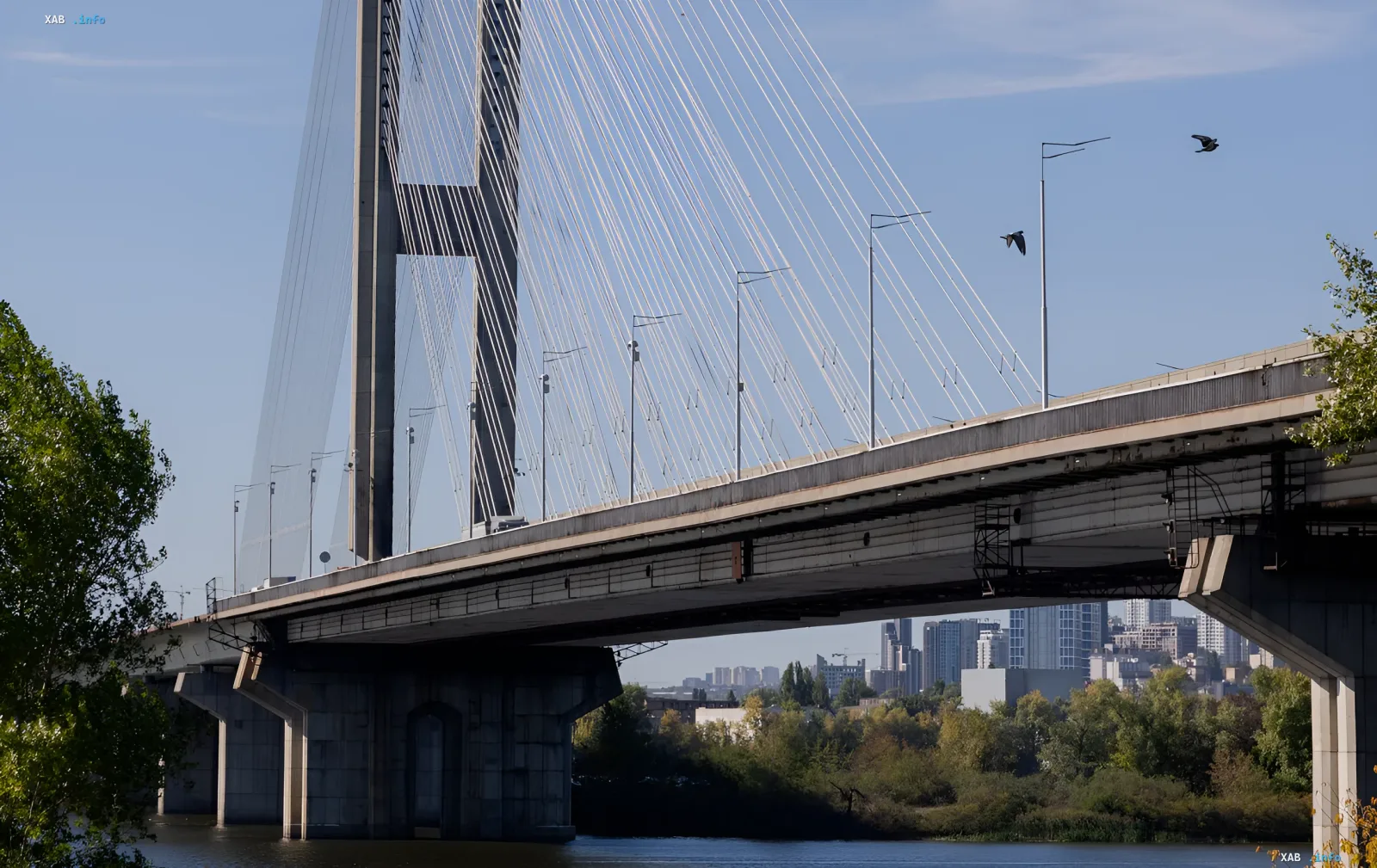
The capacity of Kyiv's bridges in the event of damage cannot be fully replaced by any alternative transportation methods. A realistic and practical solution remains the strengthening of crossings and the creation of additional emergency repair teams, according to Vitaliy Selik, head of the Kyiv Urban Council, on the RBC-Ukraine podcast "TSE BAZA".
Limitations of Pontoon Crossings
According to the expert, pontoon bridges are a good solution in terms of quick restoration, but they have a number of critical limitations. Making crossings where they were during World War II is no longer possible due to dense urbanization. In addition, movement across a pontoon bridge is limited to a maximum of two lanes at speeds of no more than 10-15 km/h, whereas on operating Kyiv bridges, speeds reach 60-80 km/h.
Problems of River Transport
The idea of launching river transport also faces serious obstacles. Kyiv experiences winters with ice, which completely halts navigation from December to April. Existing river waterbuses move at 15-20 km/h and can carry only up to 200 people, which fails to cover passenger flow needs. Purchasing used vessels in Istanbul or Lisbon encounters safety and logistical difficulties following the Kakhovka HPP disaster.
Impossibility of Building Tunnels
Talks about completing the "Stalin metro" or large-scale auto tunnels under the Dnieper do not withstand criticism. Restoring the 1938 project would require manual labor of thousands, and building auto tunnels 12-14 meters in diameter would take 4 to 6 years at a cost 3-5 times higher than a bridge crossing. Their further maintenance would also be extremely expensive.