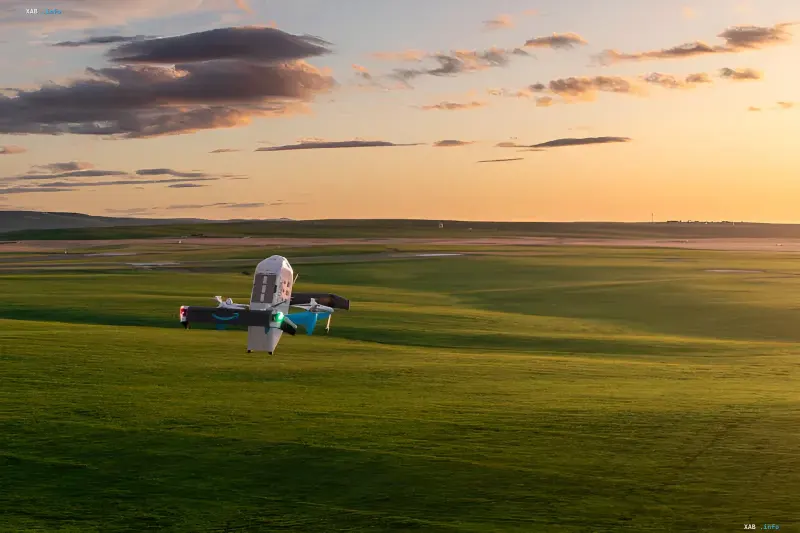
US technology giant Amazon has announced a major expansion of its Prime Air drone delivery service. According to the company, by the end of 2026 the service's coverage area is set to grow sixfold, reaching "nearly 500 cities and communities" across the United States. This is one of the most aggressive plans for deploying autonomous logistics in the company's history, moving parcel delivery from the air out of the pilot-project stage and into a mass commercial service.
Launch Geography and Current Coverage
In the near term, Prime Air delivery will be launched in several major metropolitan areas: Chicago (Illinois), Syracuse (New York), Cleveland (Ohio), Atlanta (Georgia), and Boise (Idaho). By the end of the year, additional communities will be added to this list. As of now, according to the company, drone delivery is already operating in 11 communities across the US, which serves as the starting point for the announced sixfold growth in coverage.
Service Technical Specifications
Each Prime Air base serves an area of approximately 450 square kilometers. The service's primary goal is the rapid delivery of parcels weighing up to 2.3 kilograms. According to Amazon, this year customers received several hundred thousand orders via drones, with most parcels being delivered roughly an hour after the order was placed. The company positions these metrics as a key competitive advantage over traditional ground-based logistics.
Safety and Incident History
Against the backdrop of the network's expansion, Amazon once again highlighted the safety measures in place for its drones. The company stated that it has implemented an "industry-leading collision detection and avoidance system." This statement appears to be an attempt to allay public concern: previously, Amazon drones have crashed into construction cranes, internet cables, and apartment buildings, as well as fallen into private gardens. It is precisely these incidents that drive the main public demand on regulators and operators for greater reliability.
Contradictory Data
Open sources contain discrepancies that should be taken into account when assessing the company's claims. On the one hand, Amazon touts record growth in coverage to nearly 500 communities and hundreds of thousands of successful deliveries this year. On the other hand, it was previously reported that the drone delivery service had a two-month suspension in Texas and Arizona, after which the service only resumed operations. This indicates that the rollout is not linear: it is affected by regulatory constraints, weather conditions, and individual incidents. Moreover, the phrasing "nearly 500" cities is not a guarantee of an exact figure, but rather an approximate target for the end of the year, leaving room for adjustments.