The third quarter of 2026 was a turning point for AMD not so much in absolute figures as in its business structure. The company reported a record quarterly revenue of $13.4 billion, up 45% year-over-year. However, behind this impressive growth lies a structural shift that is hard to ignore: data centers now generate about 64% of total income, while traditional consumer segments—PC processors, graphics cards, and console chips—are steadily losing weight. AMD publicly insists it is not abandoning the consumer market, but the company's own forecasts for 2027 and the redistribution of efforts between segments indicate that priorities have already been shifted.
Record Revenue and Dominance of the Server Business
The main growth driver in the reporting quarter was the data center chip business. Sales of EPYC server processors and Instinct accelerators reached $8.5 billion, almost double the result of the same period last year. This particular area provided the lion's share of growth and pushed AMD to an all-time revenue high. For a company that positioned itself just a few years ago as a universal semiconductor supplier for all types of computing, a 64% share of total revenue in a single segment is no longer just growth, but a change in business model. The server and AI-oriented business has ceased to be 'auxiliary' and effectively defined AMD's financial profile.
Gaming Segment in Free Fall
The most dramatic trend is in the gaming segment. Its revenue dropped by 40% year-over-year to $773 million. The decline affected both components: semi-custom chips for gaming consoles and discrete Radeon graphics cards. Previously, weakness in one of these areas could be partially offset by growth in the other, but in the third quarter of 2026, both fronts showed negative dynamics simultaneously. For a company that has heavily invested in marketing among gamers and built an entire ecosystem around Radeon in recent years, this dynamic is telling: the gaming audience is no longer the revenue engine it was two or three years ago.
Ryzen Holds Up, but Gradually Loses Weight
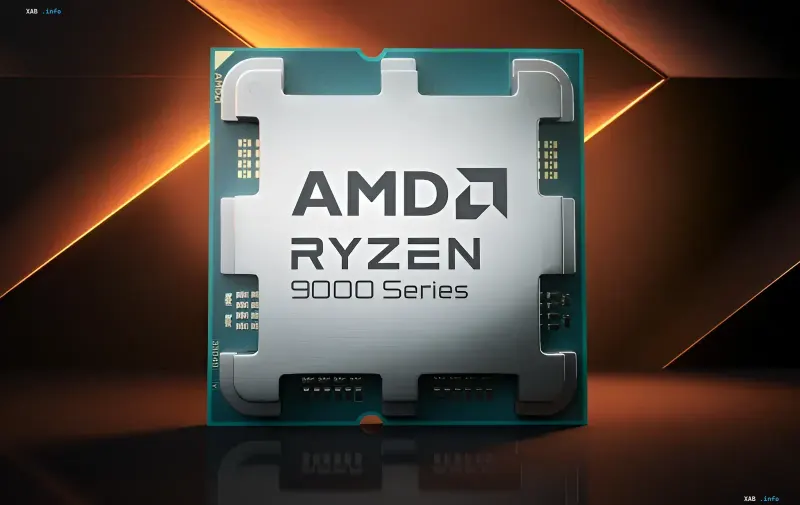
The client segment, which includes Ryzen processors for desktop and mobile PCs, is showing a more resilient picture so far. Segment revenue reached $2.9 billion, up 7% from a year ago. Growth was driven primarily by mobile Ryzen and enterprise systems based on Ryzen PRO. However, compared to the previous quarter, revenue decreased by 4% as rising memory and component prices force buyers to delay purchasing new computers. Sales of higher-end processors only partially offset the softening overall demand. Over the past five quarters, the client segment's share of AMD's total revenue has dropped from approximately 30% to 22%. At the same time, PC processor sales themselves have not collapsed in absolute terms—it's just that the server business is growing so fast that the client segment looks increasingly modest against its backdrop. AMD does not disclose separate revenue for the Ryzen lineup, so the client segment cannot be considered its exact equivalent, but the trend of declining relative weight is obvious.
Forecasts: The Gap Between Segments Will Grow
In the near term, the imbalance will intensify. In the fourth quarter of 2026, AMD expects data center semiconductor revenue to grow by about 50% compared to the third quarter, while the combined revenues of the client and gaming segments are projected to decline by more than 20%. An even more alarming signal is the forecast for 2027: AMD factors a double-digit percentage decline in global PC shipments into its plans, driven by rising prices for memory and other components. Thus, the company is effectively warning the market that the consumer segment is facing a period of structural contraction rather than a temporary slump.
Lisa Su's Strategy: 'The PC Market Matters,' but as a Residual Principle
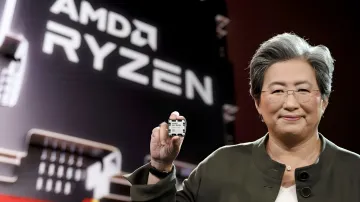
"The PC market remains important to us," AMD CEO Lisa Su emphasized during the post-earnings conference call. At the same time, the company intends to focus not on the mass market, but on enterprise systems, high-end consumer PCs, and retail desktop PCs. It is there that AMD sees the greatest growth opportunities and expects to outperform the market as a whole. Su also noted that supply chain flexibility allows production capacity to be reallocated between PC processors and server solutions depending on demand. In essence, this is an admission that the consumer segment is served on a 'residual principle': main resources and efforts are directed where growth is maximal—into data centers and the AI segment.
The takeaway from AMD's quarterly report can be stated simply: Ryzen and Radeon are not going anywhere, but gamers and regular PC buyers have clearly ceased to be a priority for the company. Lisa Su's assurances about the importance of the computer market sound confident, but AMD's financial results and own forecasts speak louder than any words about where the company is actually heading. AMD is increasingly turning into a server and AI company, while the consumer market is becoming a niche direction with an emphasis on premium and corporate segments.