AMD has finalized its acquisition of the Canadian developer of specialized AI chips, Taalas. According to deal details, the final valuation could reach $2.9 billion, with $1.4 billion attributed to contingent payments based on specific milestones. In an official statement, AMD emphasizes that the startup's developments will be integrated into its own accelerator roadmap, with the company intending to create system solutions that operate in tandem with the Instinct GPU line.
The Deal and Its Value
The deal proceeded in several stages: back in August, AMD announced the agreement and its intention to acquire the Toronto-based startup, though financial terms were not disclosed at that time. Now, according to primary sources, the acquisition is complete, and the transaction parameters have been revealed: an upper limit of $2.9 billion, including $1.4 billion in earn-out payments. Thus, AMD gains access to an alternative AI chip architecture at a time when industry focus is shifting from model training to inference.
How Taalas Technology Works
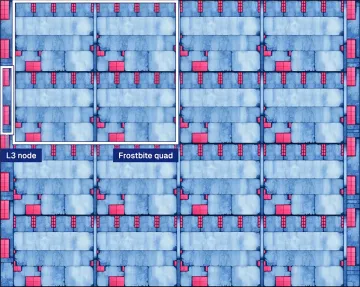
The key feature of Taalas microchips is that the weights of the neural network model are physically embedded into the chip's structure. This approach combines parameter storage and computation on a single die, eliminating the need for traditional high-speed memory typically required by accelerators during query processing, as well as complex packaging solutions. According to startup representatives, hardware-binding a specific model to the chip provides higher computational efficiency compared to existing alternatives.
The First Chip, HC1, and Its Limitations
In February, Taalas introduced its first processor of this class, the HC1, which featured the embedded Llama 3.1 8B model. According to the company's own benchmarks, the chip generated about 17,000 tokens per second, with Taalas claiming this was nearly 9 times faster than Cerebras' results at the time. However, the architecture has a significant limitation: the embedded model cannot be changed via software updates; it requires manufacturing a new microchip, a process that, according to source material, takes about two months.
Integration into AMD's Product Line
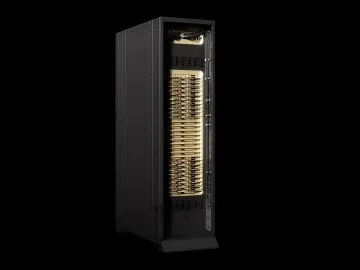
AMD intends to use Taalas technology not to replace Instinct GPUs, but to complement them. Specialized chips will perform inference—running already trained models and generating responses—for specific neural networks, while Instinct accelerators will remain part of the overall computing system. In its official announcement, the company also mentions EPYC processors, the ROCm software platform, and Helios rack solutions as elements of its AI infrastructure.
Strategic Context and Outlook
The purchase expands AMD's portfolio in specialized inference solutions and provides an additional type of chip for the fast-growing data center market. The industry context confirms the trend: according to 3DNews, even market leader Nvidia is not shying away from such acquisitions, recently purchasing the startup Groq. However, AMD has not yet disclosed in which future accelerators the Taalas technology will appear or when such products will hit the market.